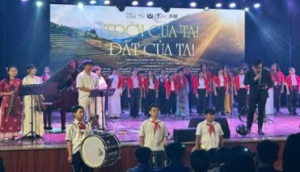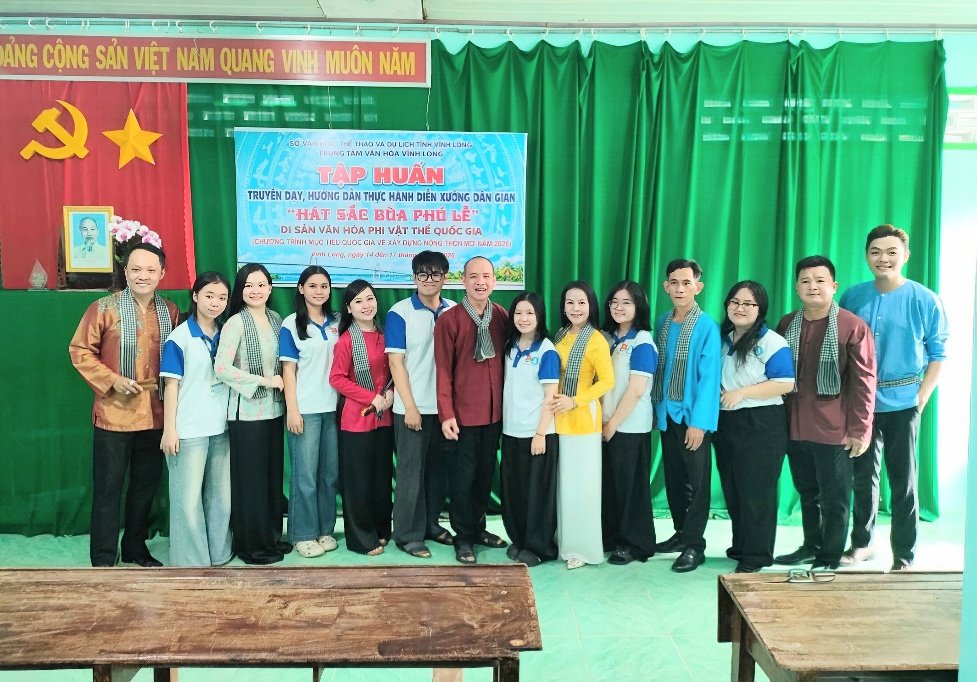
Source: Vo Minh Vien (September 14, 2026)
In line with the National Target Program on New Rural Development for the 2026–2030 period, a training workshop on teaching and practicing the folk performing art of “Phu Le Sac Bua Singing” was held in Bao Thanh Commune, Vinh Long Province. Co-organized by the Vinh Long Department of Culture, Sports and Tourism and the People’s Committee of Bao Thanh Commune from September 14 to 17, 2026, the program aims to raise public awareness and appreciation of this traditional art form, as well as identify talented individuals who share a deep passion for folk performance.
Phu Le Sac Bua Singing
Sac Bua singing is a unique traditional folk performing art associated with New Year blessing customs, once widespread across all three regions of Vietnam. On Lunar New Year, Sac Bua troupes dress in traditional attire and carry musical instruments such as lutes, drums, and coin clappers (sênh tiền) to perform and share blessings from house to house throughout the spring festival. Once the festival ends, they return to their farming duties until gathering again the following year. Specifically, Phu Le Sac Bua singing boasts a history of over 200 years, representing a distinct artistic tradition rooted in the former Ba Tri District of Ben Tre Province (now part of Vinh Long Province).
According to the article Sac Bua Singing in Vietnamese Culture by Phan Thi Hong Xuan and Nguyen Ngoc Thanh Vy, the origins of Sac Bua singing are explained as follows:
When researching the origins of Phu Le Sac Bua singing, evidence suggests it was directly handed down from Sac Bua singing in South Central Vietnam. However, its deeper roots can be traced back to the sec pua singing of the Muong ethnic group. In the Muong epic “De dat de nuoc” (“Birth of the Earth and Water”) (1), sec pua is explicitly mentioned (“De dat de nuoc incorporates the folk cultural heritage of the ethnic group, including folk philosophy in the form of proverbs, folk songs, and costumed performances. The lyrics are poetic songs with narrative music that integrate elements of xuong, rang, vi, xa, tanh teu (lullabies), and gongs in xec pua…”) (2).
To this day, sec pua singing among the Muong people is still performed during Lunar New Year as a long-standing traditional custom. Furthermore, linguistic classification places both the Viet and Muong groups within the Viet-Muong branch of the Austroasiatic language family, reflecting close linguistic and cultural affinities. Author Tran Ngoc Binh noted: “The ancestors of the Muong share a common origin with the Viet (Kinh) people, as established by the linguistic connection between the Vietnamese and Muong languages.”
At present, this folk performing art is undergoing revival, having previously faced the risk of oblivion. The primary reasons included low public visibility—largely confined to the former Ba Tri area in Ben Tre—along with a declining number of master artisans and performing troupes. Consequently, organizing training workshops to teach and practice “Phu Le Sac Bua Singing” serves as a crucial initiative aimed at raising public awareness, engaging the community, and ultimately preserving this precious national heritage.
Bringing heritage closer to the wider community
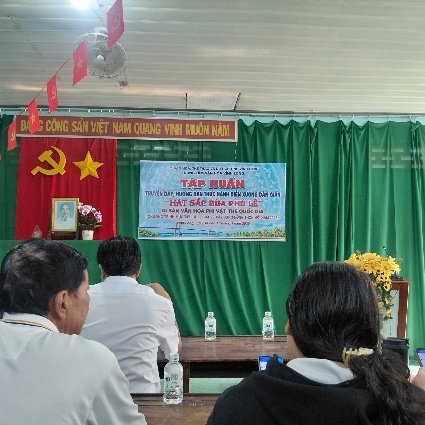
Figure 2: Opening ceremony of the training workshop on teaching and practicing Phu Le Sac Bua singing
Source: Minh Luan (September 14, 2026)
From September 14 to 17, 2026, the Vinh Long Cultural Center (under the Department of Culture, Sports and Tourism) conducted a training workshop to teach and practice the folk performance of “Phu Le Sac Bua Singing” at the Bao Thanh Commune People’s Committee. The workshop took place in a lively atmosphere, drawing numerous local cultural activists, artisans, youth union members, senior residents, and a group of students from Ho Chi Minh City University of Culture eager to explore this traditional art.
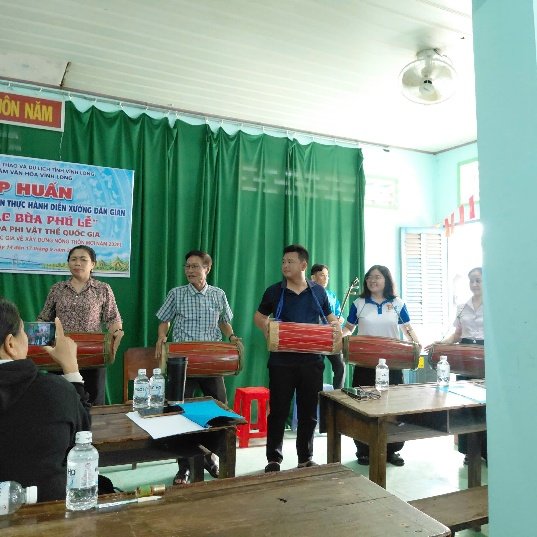
Source: Minh Luan (September 14, 2026)
Through the workshop, participants acquired rich knowledge and hands-on guidance on using traditional instruments and singing techniques directly from experienced artisans. The class had the honor of welcoming artisan Vo Minh Vien, former Vice Director of the Vinh Long Cultural Center, who shared invaluable insights into the origins, musical instruments, and operational structure of a Sac Bua troupe. These foundational lessons provided trainees with a solid understanding of Phu Le Sac Bua singing. Trainees were also provided with comprehensive study materials and received certificates upon completion of the course.
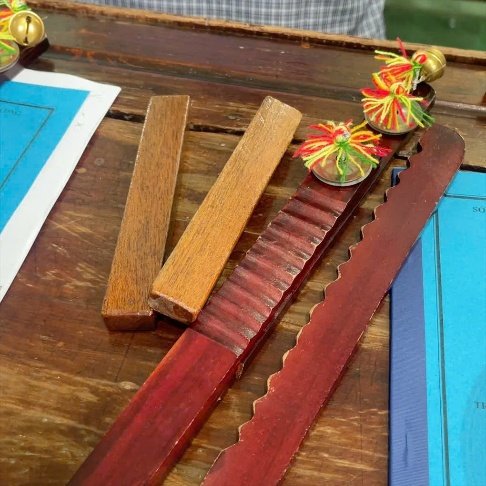
Source: Kim Duyen (September 14, 2026)
Artisan Vo Minh Vien shared that the workshop did not expect every participant to become a master performer immediately. Rather, the hope was that each participant would become a cultural catalyst, actively promoting Phu Le Sac Bua singing and building wider public recognition. In this way, the initiative brings heritage closer to the community, nurturing a “living stream” that ensures the sustainable preservation and robust growth of this heritage in the future.
Connecting Cultural Heritage with the National Target Program on New Rural Development
A key highlight of this training workshop was its integration with the 2026 National Target Program on New Rural Development. This strategic step reflects a comprehensive vision by the local cultural sector to place culture at the heart of socio-economic development.
Within the National Criteria for New Rural Development, enhancing grassroots cultural life is an essential objective requiring long-term sustainability. Reviving and sustaining local Phu Le Sac Bua performing troupes not only directly fulfills criteria for improving community cultural enjoyment but also fosters a healthy social environment and strengthens neighborhood bonds.
Preserving and promoting the National Intangible Cultural Heritage of “Phu Le Sac Bua Singing” goes beyond archiving document pages or recording ancient tunes; its core lies in expanding public recognition so the heritage truly “lives” and thrives within the community. The training workshop in Vinh Long serves as a vital bridge, bringing this folk performance art to a broader audience—especially the younger generation, who will keep the flame alive and carry the heritage into the future.
Minh Luan
NOTES AND REFERENCES
[1] De dat de nuoc (Muong language: Te tac te dac – “Birth of the Earth and Water”) is an epic myth and monumental folk literary work of the Muong ethnic group in Vietnam. Ten versions have been collected, ranging from an average of 8,000 lines to the longest at 16,000 lines. It recounts the origins and ancient struggles of the Muong people, embodying ancient Muong cosmogony and worldview. Preserved and passed down orally, it is most fully articulated through mo (ritual chanting songs