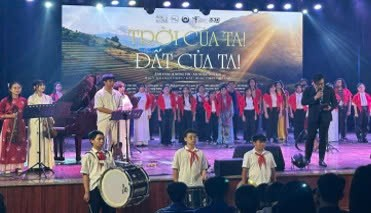
Learning about culture is not merely acquiring knowledge documented in textbooks or theoretical principles taught in lectures; it is a direct process of immersing oneself in, observing, and decoding the vivid expressions of culture in contemporary artistic life. It is precisely through these practical experiences that the knowledge of Cultural Theory truly becomes accessible, profound, and practical. On the evening of September 12, 2026, at Ho Chi Minh City University of Culture, I had the privilege of joining my fellow students at a special experimental concert titled “Our Sky, Our Land”. This meaningful artistic project was organized by SJK in collaboration with Soul Music & Performing Arts Academy and the Music In The Dark project. The evening was not only a premier artistic showcase, but also an emotionally rich practical lesson that enabled me to reflect deeply on the laws of cultural inheritance and acculturation, as well as the social functions of musical art.
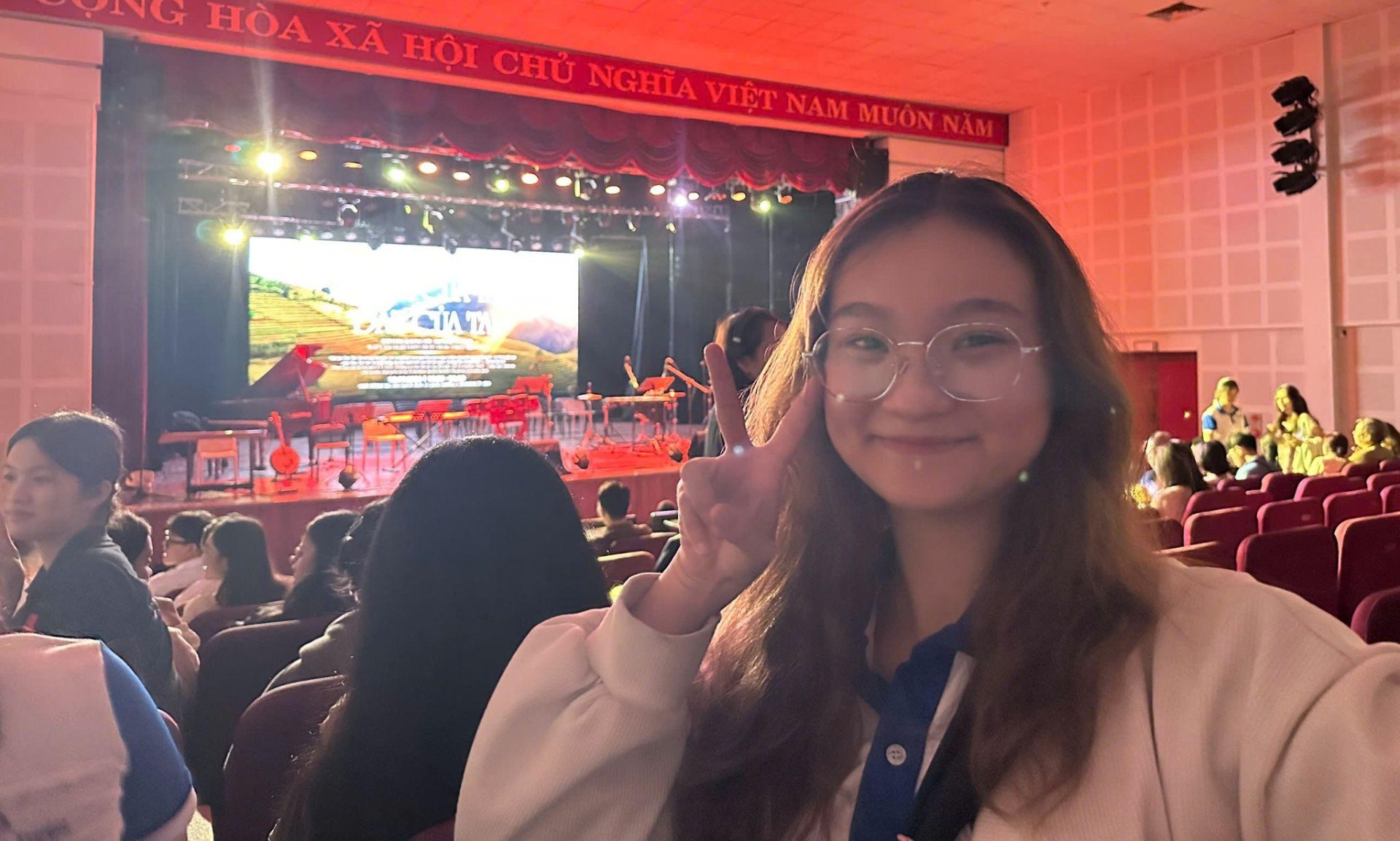
Source: Doan Thi Ngoc Diep, September 12, 2026.
The space of the concert was designed as a journey leading the audience through various emotional dimensions. Right from the entrance, flickering candles lined the staircases leading up to the hall, creating a solemn and serene transitional space that separated listeners from the hustle and bustle outside. Stepping inside, the dimly lit auditorium echoed with the chirping of birds, evoking a pure, ancestral ecological realm. The formal and refined bilingual English-Vietnamese narration articulated the openness and integration of Vietnamese culture, maintaining a confident stance in artistic dialogue with the modern public.
In cultural theory, the principles of inheritance and development dictate that traditions must evolve, interact, and absorb new elements to prevent stagnation. This was visually and dynamically manifested right on the opening stage through a visual dialogue between two halves of the performance space. On the left, artists dressed gracefully in traditional Ao Dai sat serenely alongside traditional Vietnamese instruments such as the đàn bầu (monochord), đàn tranh (zither), and nguyệt cầm (moon lute). Contrasting this on the right was the modern, sophisticated aura of artists in crisp white shirts seated beside Western drum kits and advanced percussion setups.
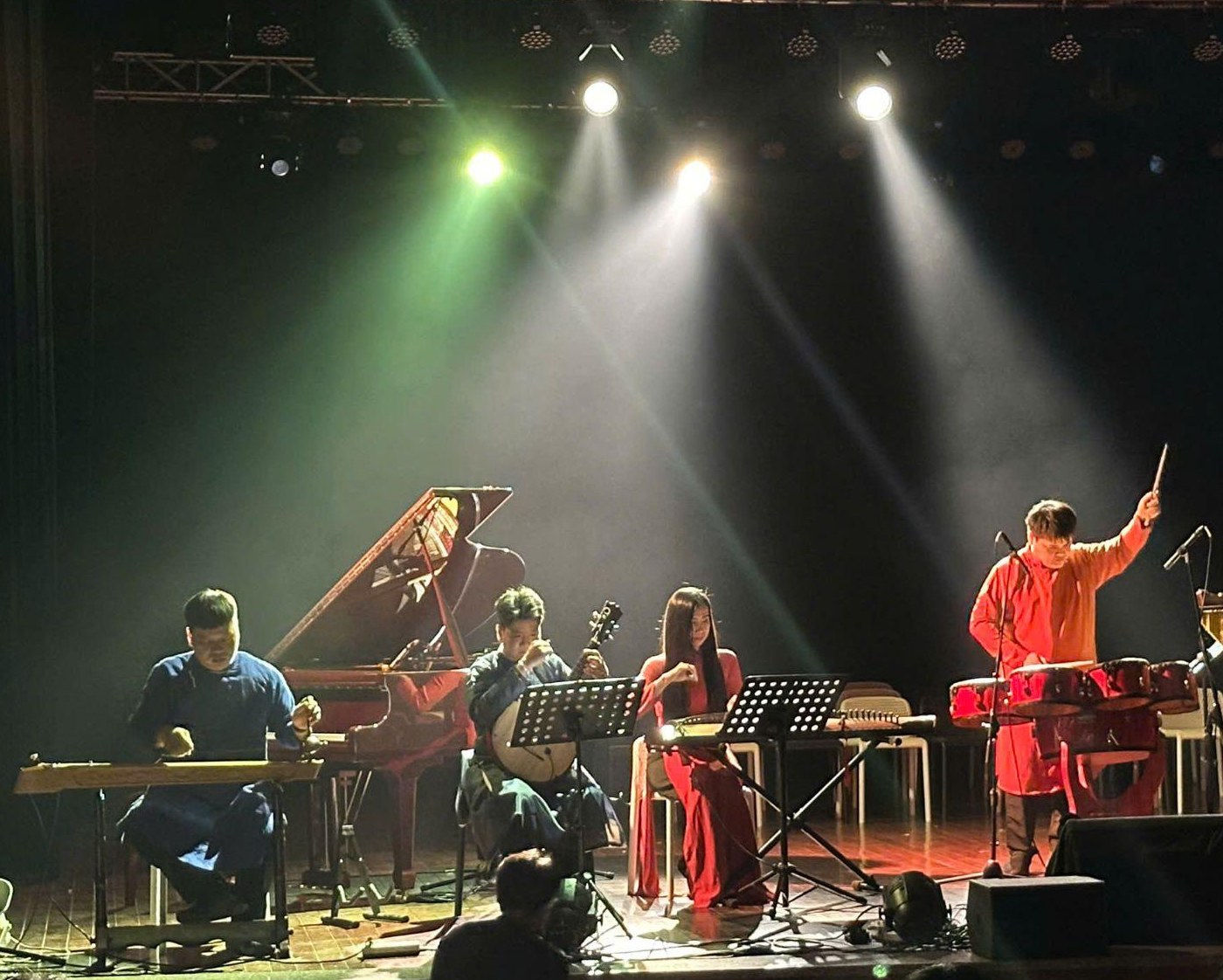
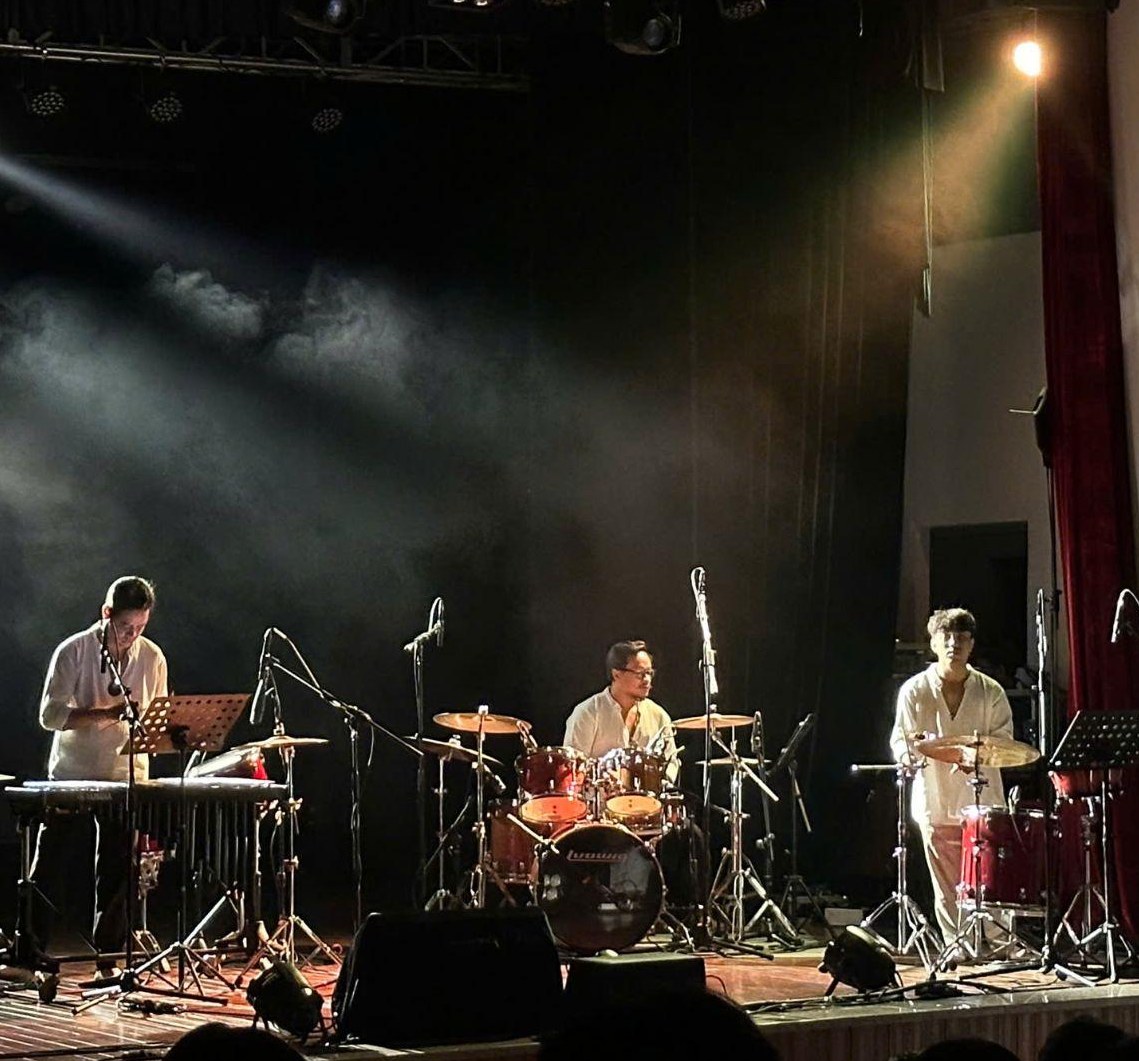
Figure 2: Visual dialogue and artistic intersection between traditional musical instruments and modern Western percussion on the stage of “Our Sky, Our Land”.
Source: Doan Thi Ngoc Diep, September 12, 2026.
This dialogue did not breed division or rejection; rather, under converging beams of overhead light, the two traditions blended seamlessly into a unified symphony. The opening rhythm transitioned gracefully from the rustic, contemplative notes of the bamboo pipe to driving drumbeats evoking the reverberations of Central Highlands gongs, before smoothly shifting through the bamboo flute to lead into the traditional world. The deep vibrations of the đàn bầu, the melodic tinkling of the đàn tranh, and the vibrant timbre of the modern tì bà (pipa) demonstrated that cultural acculturation does not dilute core identity; on the contrary, it serves as a vehicle for national identity to renew itself and flourish in contemporary contexts.
The program continued to lead the audience through three continuous musical chapters, accentuating culture’s cognitive, aesthetic-educational, and collective memory-reinforcing functions:
Chapter 1, titled “Dawn of the Earth,” clearly reflected the soul-nourishing and educational functions of art. The melody began with a mother’s sweet lullaby, reconnecting listeners with images of village bamboo groves, maternal love, and core human values. The haunting voice of the bamboo flute took center stage in “Lullaby of the Country” (Đất nước lời ru), harmonizing with the soulful violins of two female artists performing “I Love You, My Child” (Mẹ yêu con), weaving a pure soundscape that touched the deep subconscious roots of every Vietnamese child.
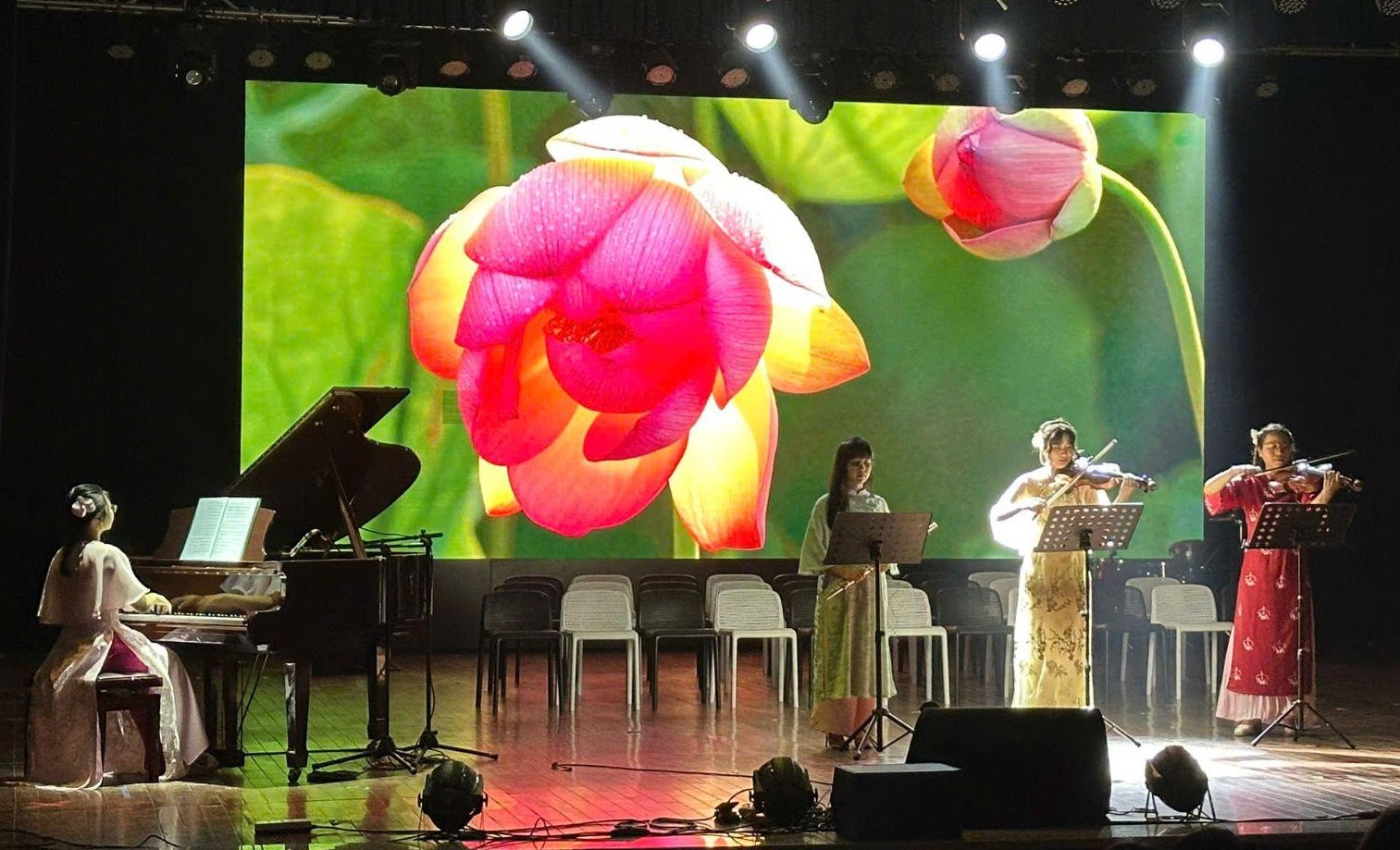
Source: Doan Thi Ngoc Diep, September 12, 2026.
Moving into Chapter 2, “Light in the Dark,” the performance reached its peak of aesthetic transcendence and philosophical depth. As every light in the hall was extinguished, visual boundaries dissolved entirely, leaving audience members in absolute stillness to face their own consciousness. Surrounded by total darkness, a momentary thought crossed my mind: “In complete darkness, how can the musicians see the keys to perform?” However, the appearance and performance of a visually impaired pianist provided a deeply moving answer. The pinnacle of art lies not on the superficial visual surface, but in the intense resonance within the soul. Love for one’s homeland does not require grandiose slogans; it has always flowed quietly through the veins of every Vietnamese person since infancy through a mother’s lullabies.
In that profound darkness, the piano notes and vocals of the heroic anthem “Rise Up and March” (Dậy mà đi) rang out like a blazing torch in the night, igniting the indomitable spirit and self-reliance of an entire nation. The wave of emotion intensified through a series of passionate songs such as “Voluntary” (Tự nguyện), “Sounds of Pestles on Bom Bo Village” (Tiếng chày trên sóc Bom Bo), and “Comrade” (Đồng chí). From a Cultural Theory perspective, the music in this chapter transcended mere entertainment, fulfilling its role in value orientation and collective memory consolidation. Performing in complete darkness (Music In The Dark) transformed a physical limitation into an extraordinary medium of spiritual energy, exemplifying the humanistic strength and resilient character of the Vietnamese people.
Building upon that momentum, Chapter 3, “New Horizons,” ignited immense emotion throughout the hall. As the dark chapter of hardship drew to a close, the LED screen illuminated precious historical documentary footage of national reunification and complete independence. The triumphant, optimistic melodies of “Life is Still Beautiful” (Cuộc đời vẫn đẹp sao) and “First Spring” (Mùa xuân đầu tiên) resonated like a victory song, dispelling the embers of war to usher in an era of peace and independence.
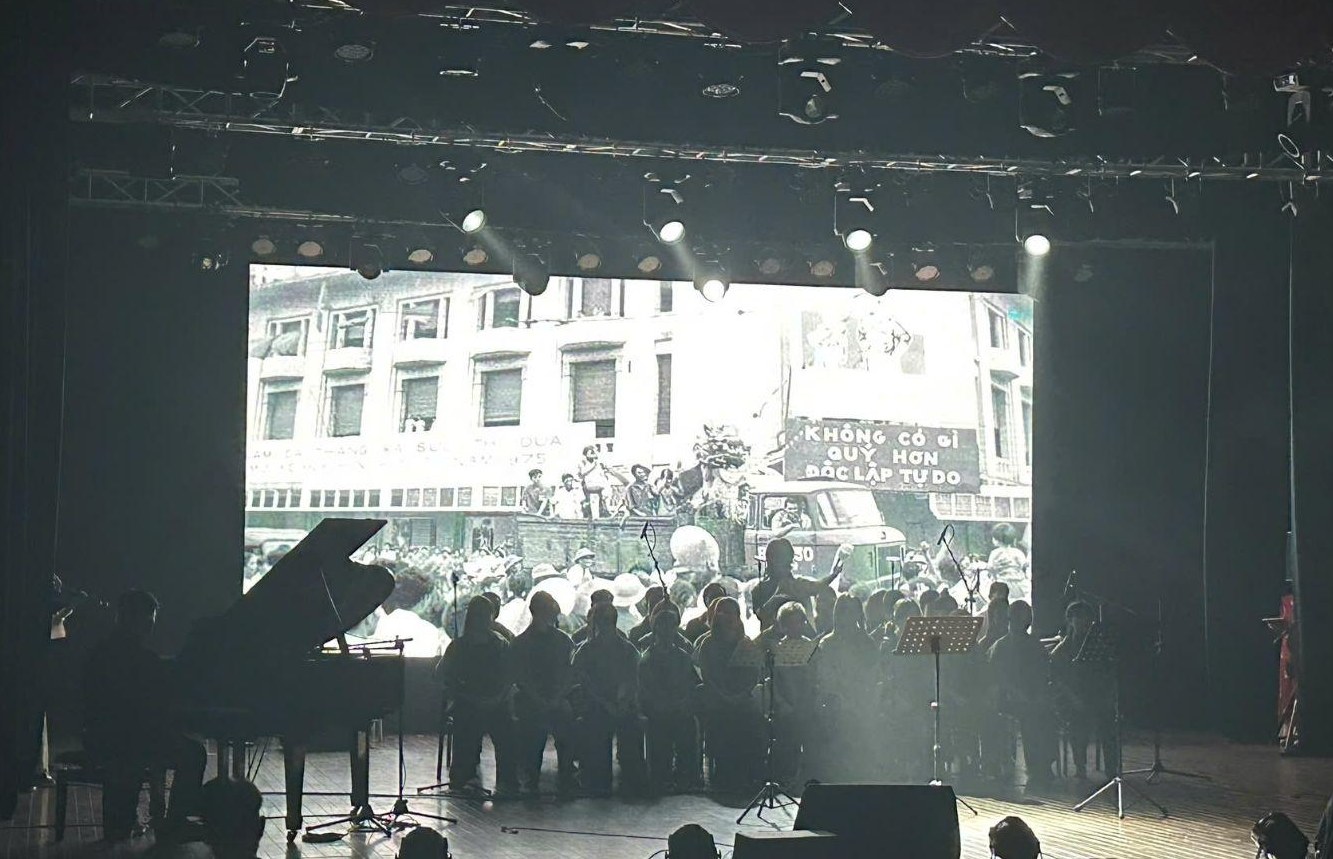
Source: Doan Thi Ngoc Diep, September 12, 2026.
The most innovative moment that left an indelible mark on me in this chapter was the seamless bridging of stage and audience. Breaking free from the conventional limits of a one-way performance, singers unexpectedly emerged directly from the audience seating area. Accompanied by the acoustic strumming of a guitar, the artists and the audience sang together in unison, joining in joyful, energetic songs reflecting the spirit of the modern era. Through the lens of Cultural Theory, this was the moment musical art elevated into an interactive cultural practice and genuine community engagement. Culture is not an austere monument to be observed from afar; culture lives within our breath, our smiles, and human connection. The acoustic guitar chords and collective singing filling the auditorium fully realized the function of community cohesion, displaying the vibrant, enduring continuity of today’s younger generation toward the spiritual legacy left by our ancestors.
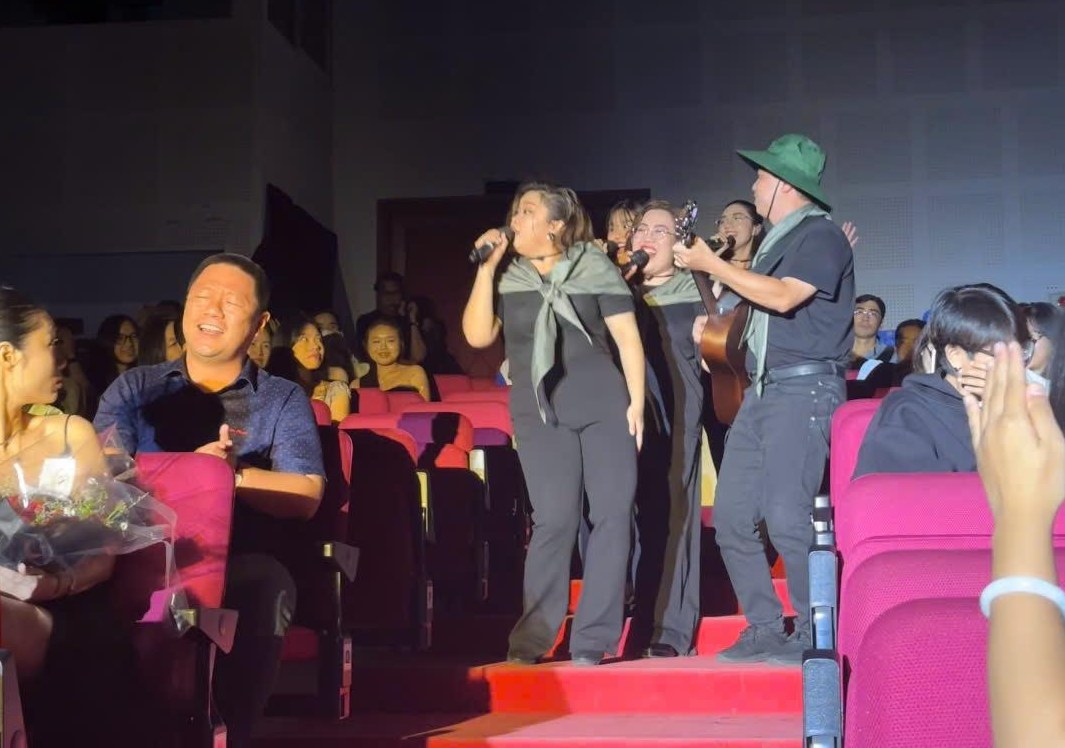
Source: Doan Thi Ngoc Diep, September 12, 2026.
Journeying through each musical chapter of “Our Sky, Our Land”, I realized that the true appeal of an artistic event lies not merely in technical brilliance or elaborate staging, but at its core in its intellectual depth and the cultural values imparted to the audience. The concert offered me, as a Cultural Management student, invaluable practical perspectives. First and foremost was the lesson of innovative thinking in heritage preservation: national identity is not a static, closed entity; rather, the courageous synthesis of traditional instruments with modern Western styles, blending heritage tones with contemporary rhythms, is the key to connecting heritage with youth preferences. Furthermore, the event showcased profound humanistic depth in event management, where the “Music In The Dark” model provided an equitable platform for visually impaired artists, transforming the stage into a space that fulfills the humanizing potential of arts and culture. Above all, art reaches its pinnacle when event organization leverages interactivity to foster community cohesion—dismantling traditional stage boundaries so that audience members are no longer passive recipients, but co-creators sharing collective emotion. This remains the most natural and sustainable path for cultural practitioners to awaken and nurture patriotism in every heart.
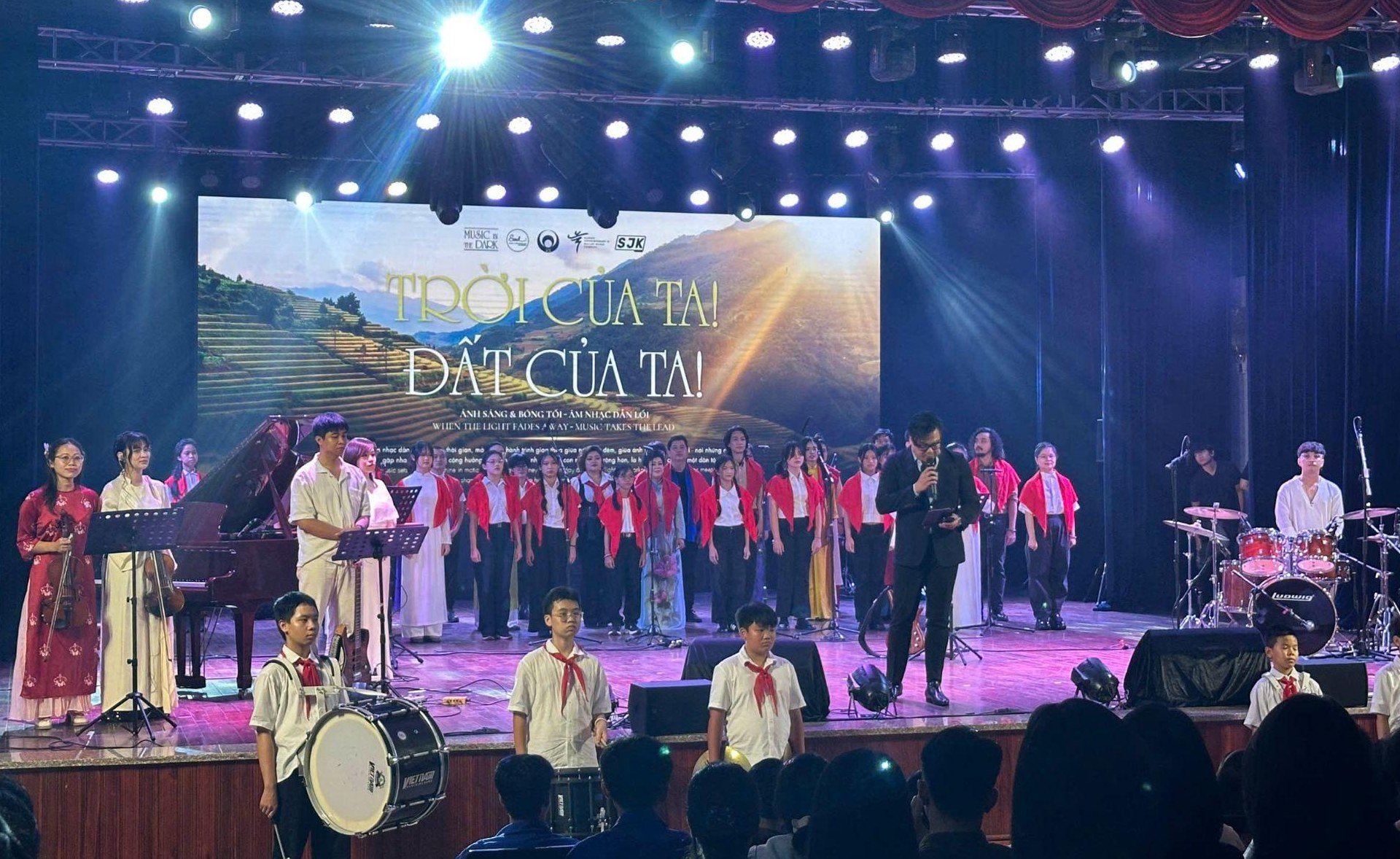
Source: Doan Thi Ngoc Diep, September 12, 2026.
The program concluded with thunderous applause and a profound sense of pride. I extend my sincere gratitude to the Organizing Committee, faculty members, artists from the Music In The Dark project, and the Soul Choir for delivering a deeply moving performance. This experience will serve as an invaluable practical lesson, igniting passion and a sense of responsibility as I pursue my studies and career in Cultural Management—starting right from the Cultural Theory course I am currently taking.
Student Doan Thi Ngoc Diep
Faculty of Culture and Arts Management
Ho Chi Minh City University of Culture
REFERENCES
Soul Institute of Arts – SIA (2026). MUSIC IN THE DARK 2026 OUR SKY! OUR LAND! – Sensory Journey: Light → Darkness → Light.
https://sia.edu.vn/en/, Accessed at 14:00 on September 13, 2026
Soul Institute of Arts – SIA (2026). MUSIC IN THE DARK 2026 – OUR SKY! OUR LAND!
https://www.facebook.com/sia.edu.vn/, Accessed at 14:30 on September 13, 2026