Source: VINPEARL (Taken on November 3, 2025)
After reading the article “Do Not Usurp the Heritage Value of Hoan Kiem Lake”, the detail that made me reflect the most was in the final footnote: the moment a mother hastily took a photo with her child by the lake, fearing that “one day this landscape might no longer exist.” That anxiety is, in reality, the “urban amnesia syndrome” present in almost every developing city. As a Cultural Management student living and studying in Ho Chi Minh City, watching many familiar street corners gradually yield to towering concrete blocks, the article’s message resonated deeply with me. Through the lens of Cultural Theory, this is not merely a cry for help for an architectural landscape, but a profound lesson in protecting “urban memory”—the vital lifeline connecting people to their heritage.
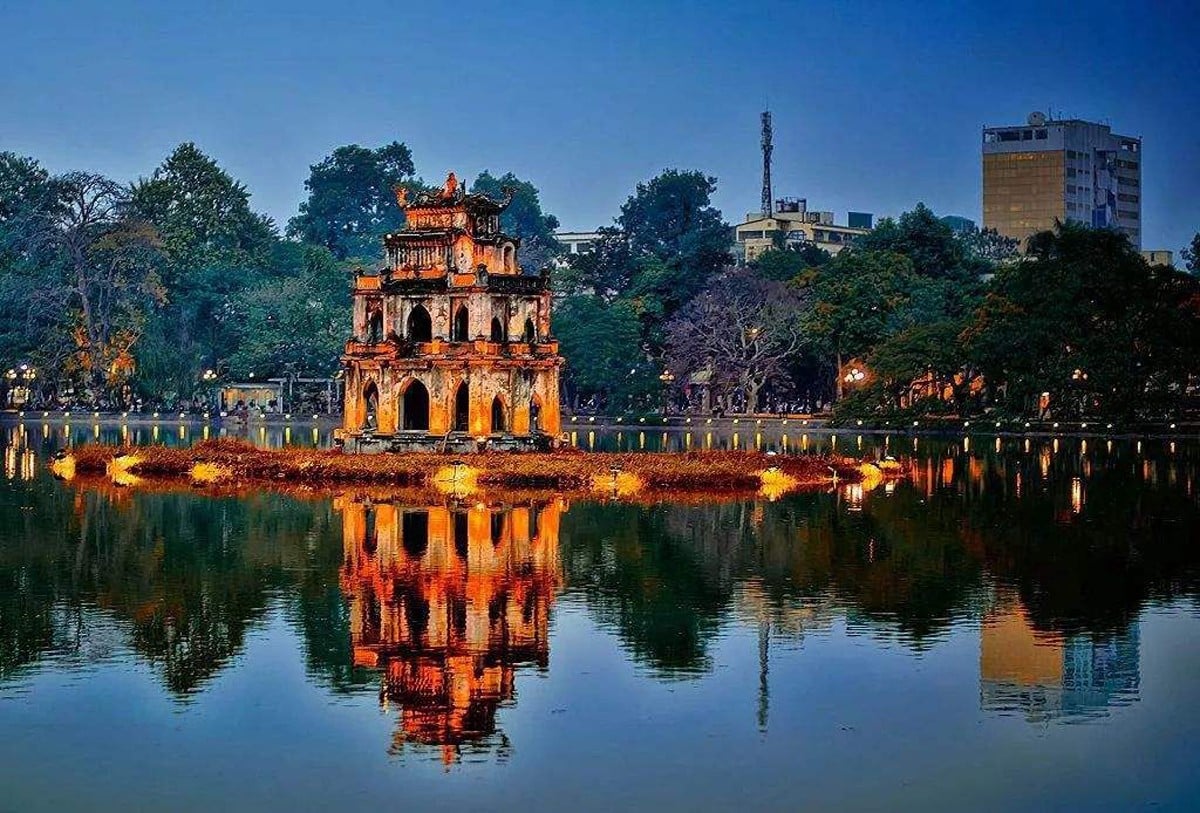
Cultural Theory consistently emphasizes a core characteristic: Culture possesses “historicity,” and humans are the “subjects” who create culture. Author Nguyen Thi Hau’s article brilliantly illustrates this theory by peeling away Hoan Kiem Lake’s physical shell. The lake is not merely a natural body of water or the simple sum of Turtle Tower and Ngoc Son Temple. It is an accumulation of sensory experiences: the routine of a casual stroll, the background hum of conversation, or the sudden sense of relief when stepping out from narrow streets into an open space.
In our field of study, this is called “living heritage.” A space truly holds cultural value only when it embodies the life rhythm and memories of the community. If managers view heritage solely through a physical lens—measuring square meters or construction materials—while neglecting the intangible emotional ties of the people, even the most beautiful urban plans will become mechanical and lifeless.

Source: Kenh14.vn (Date taken: October 6, 2024)
Placed in a contemporary context, the article exposes a common pitfall in thinking: the usurpation and commercialization of heritage. Sometimes, urban planners adopt a “demolish and rebuild” mindset, believing that bigger, more glamorous, and grander automatically means better. In the name of “development,” they introduce a completely alien landscape.
The author poses a sharp question, which is also a vital principle in Cultural Impact Assessment: “How can Hoan Kiem Lake change while Hanoi residents can still recognize their Hoan Kiem Lake?”. Innovation is inevitable, and infrastructure must be upgraded to serve daily life. However, the boundary of intervention lies here: do not transform heritage to the point where local residents themselves feel lost and alienated right in their own homeland. A magnificent project that loses its soul is destruction, not preservation.
Source: Tuoi Tre (Date taken: September 9, 2026)
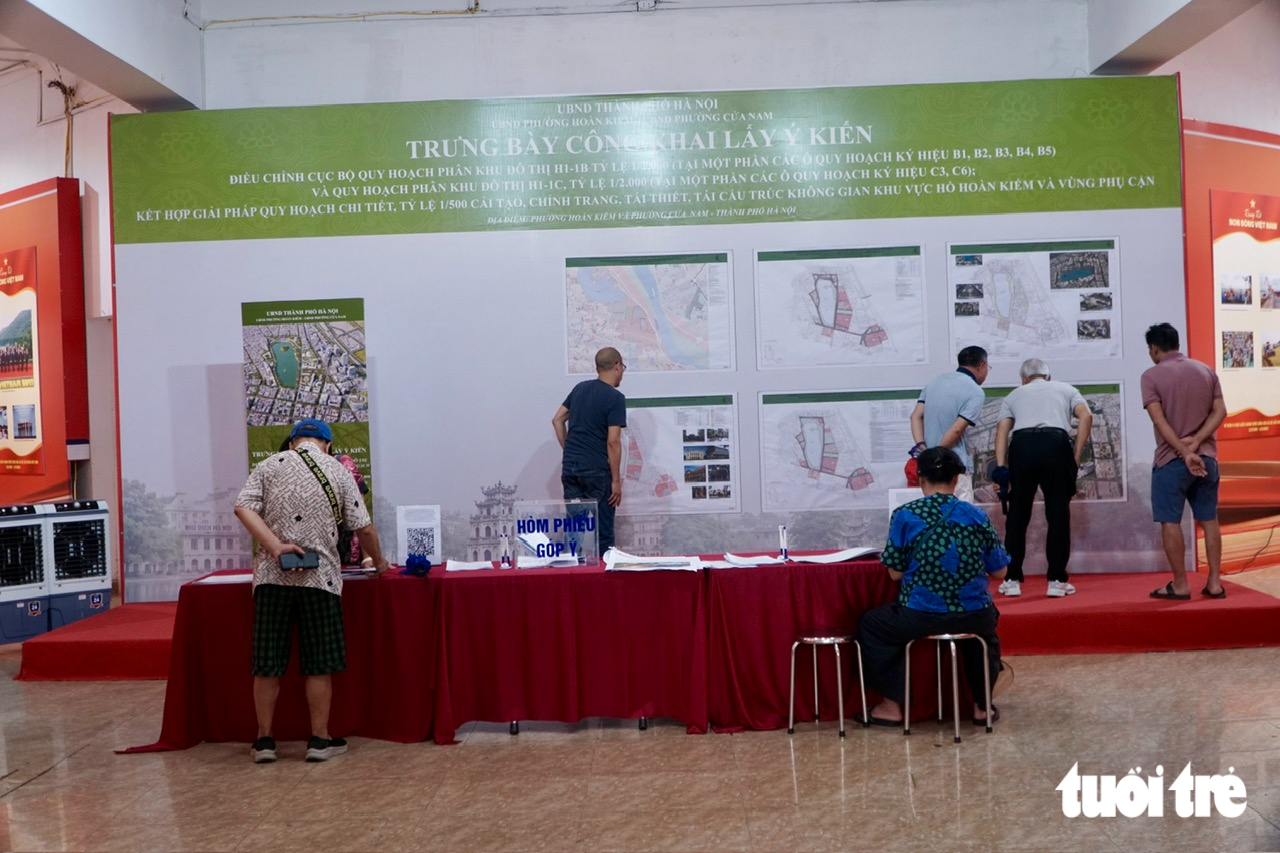
The story of planning around Hoan Kiem Lake is not limited to the capital; it serves as a broader wake-up call. Looking out at the changes in Ho Chi Minh City through the lectures of Cultural Theory, I observe deep parallels. The disappearance of familiar public spaces and historic commercial centers, or their transformation into sleek, cold architectural blocks, has left profound regrets in the hearts of residents. This demonstrates that managing heritage space is not a routine land-use planning problem, but a delicate approach to dealing with the past. It requires managers to preserve the necessary “open spaces” where the community can anchor its soul.
From the article “Do Not Usurp the Heritage Value of Hoan Kiem Lake”, dry academic theories seem to have transformed into the pressing breath of real life. The concern expressed through the mother’s hurried photo is a reminder to our future generation of Cultural Management students of our true mission. With knowledge gained from Cultural Theory, I deeply realize that our core duty is not to chase ostentatious projects, but to serve as a sturdy bridge that maintains harmony between the modern rhythm of life and the soul of the past. Only then can every citizen continue to find a “place of belonging” right in the heart of an ever-growing metropolis.
Finally, I would like to express my deepest gratitude to author Nguyen Thi Hau. With her sharp insights and dedication to heritage values, her article not only inspires those pursuing cultural studies, but also helps Cultural Management students like me feel prouder and more confident in our chosen career path.
Nguyen Vu Hong Ngoc, Class: 25DTCSKVH2
Faculty of Cultural and Arts Management
Ho Chi Minh City University of Culture
REFERENCES:
Nguyen Thi Hau (September 10, 2026), Do Not Usurp the Heritage Value of Hoan Kiem Lake, https://haukhaoco2010.blogspot.com/2026/09/ung-chiem-dung-gia-tri-di-san-cua-ho.html?m=1 (Accessed: September 13, 2026)
Pham Ngoc Trung (2012). Textbook on Cultural Theory. National Political Publishing House.
CAND Television (September 10, 2026), Spatial Planning for Hoan Kiem Lake – Expectations for Breakthroughs and Preservation Challenges. https://antv.gov.vn/xa-hoi-4/quy-hoach-khong-gian-ho-guom-ky-vong-dot-pha-va-thach-thuc-bao-ton-AEBA2E20D.html (Accessed: September 13, 2026)