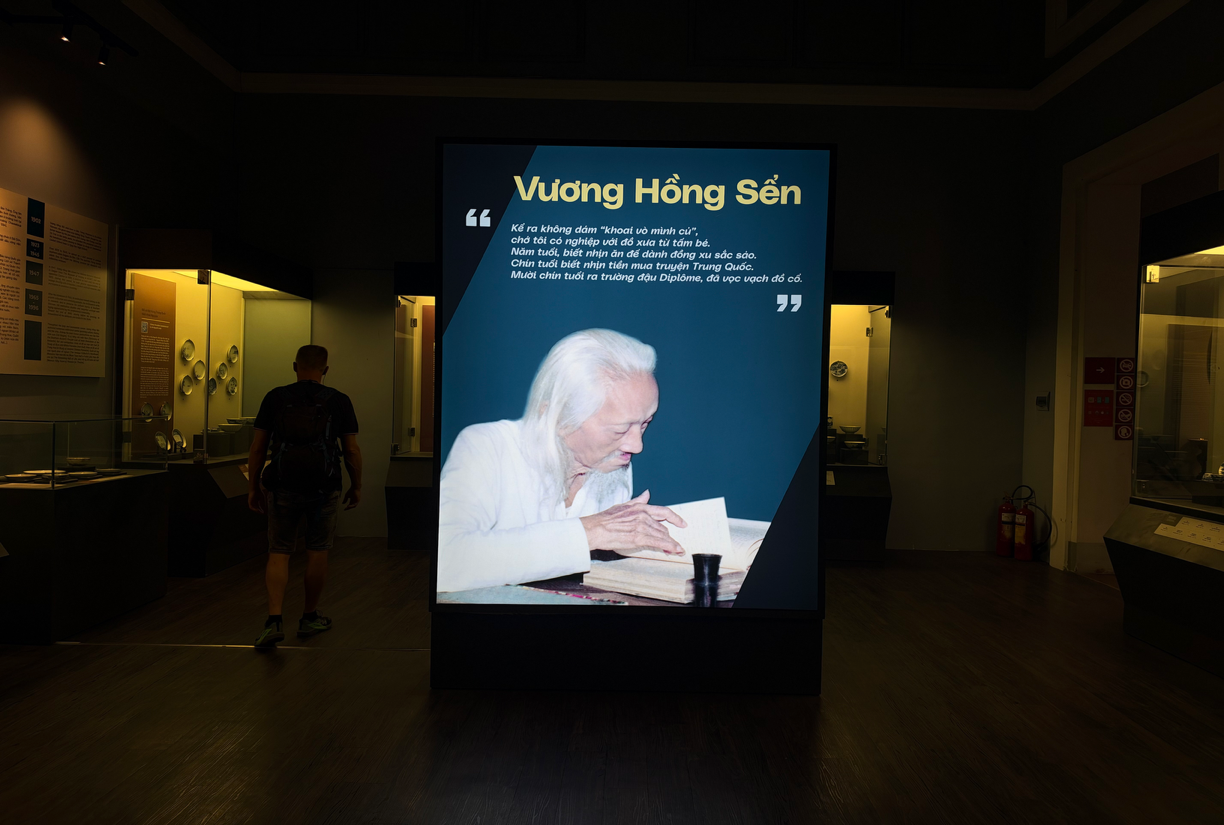
“I don’t dare to “scrape potatoes”, but I have been interested in antiques since I was young. When I was five years old, I learned to fast to save coins. At nine years old, I learned to endure money to buy Chinese stories. At nineteen, I graduated from school with a Diploma and dabbled in antiques.” Those simple autobiographical lines show that the passion for antiques has stuck with Vuong Hong Sen since childhood. From his initial hobby, he gradually formed a valuable historical and cultural collection heritage, which is still studied and preserved today through the Vuong Hong Sen Collection at the Ho Chi Minh City Museum of History.
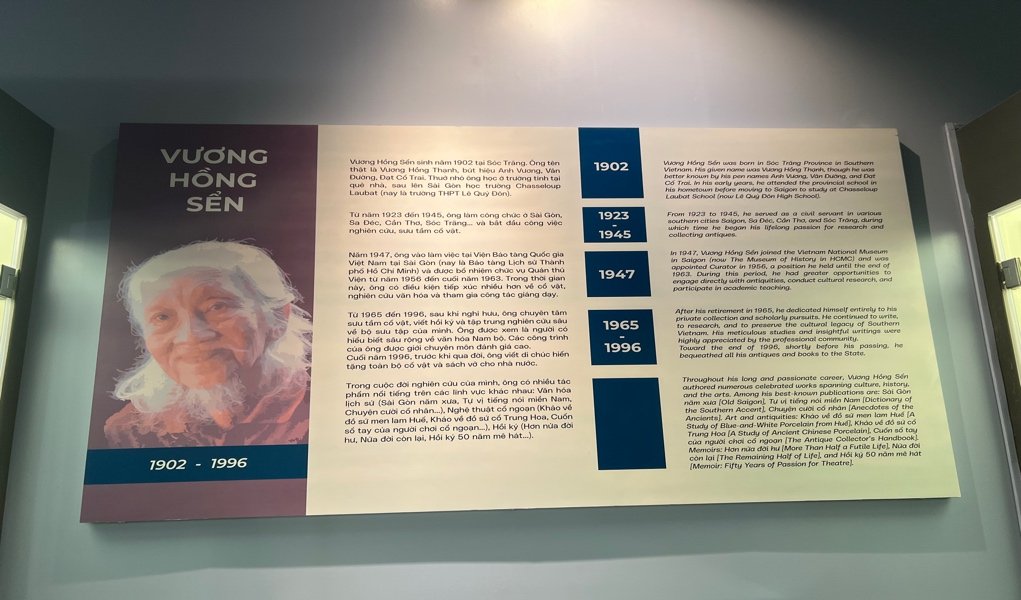
Vương Hồng Sển (1902–1996), born Vương Hồng Thạnh in Sóc Trăng Province, was a prominent scholar, Southern Vietnamese cultural researcher, and renowned antiques collector. Beginning in 1947, he served at the National Museum of Vietnam in Saigon, now the History Museum of Ho Chi Minh City. Following his retirement, he devoted his later years to research, writing, and collecting artifacts. His enduring literary legacy includes seminal works such as Sài Gòn năm xưa (Saigon of the Past), Hơn nửa đời hư (More Than Half a Wasted Life), and Cuốn sổ tay của người chơi cổ ngoạn (An Antiquarian’s Handbook). Before his death, he bequeathed his entire collection to the state.
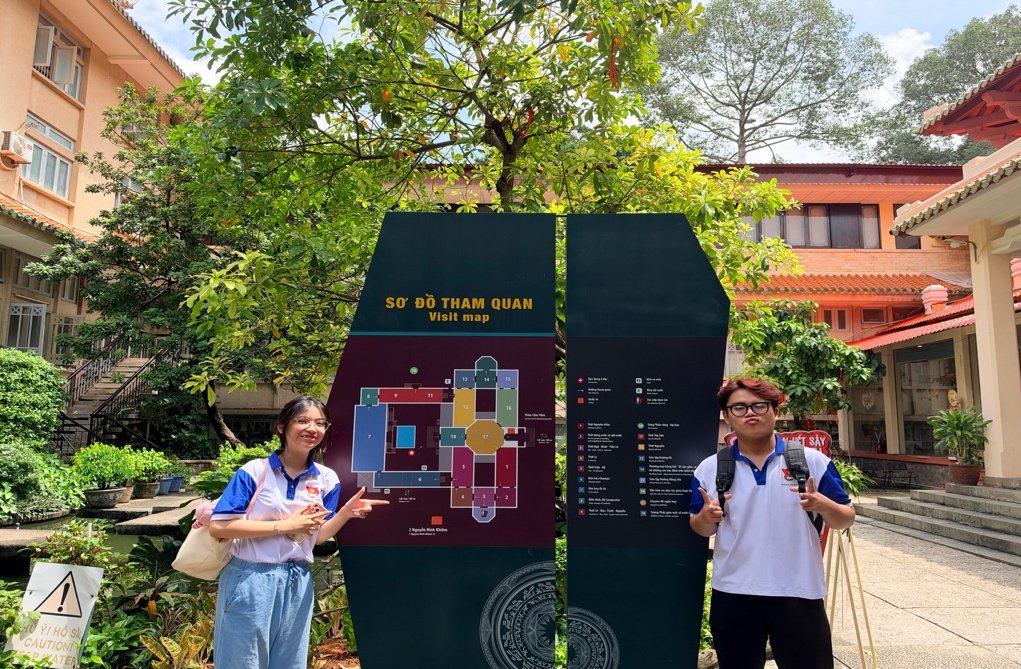
Building on Vương Hồng Sển’s legacy, the research team conducted a field study at the History Museum of Ho Chi Minh City, located at 2 Nguyễn Bỉnh Khiêm Street, Bến Nghé Ward, former District 1. The visit allowed researchers to directly inspect the Vương Hồng Sển Collection, examining both the curated artifacts and their museum presentation. The trip brought theoretical research from books and archives into vivid, physical focus.
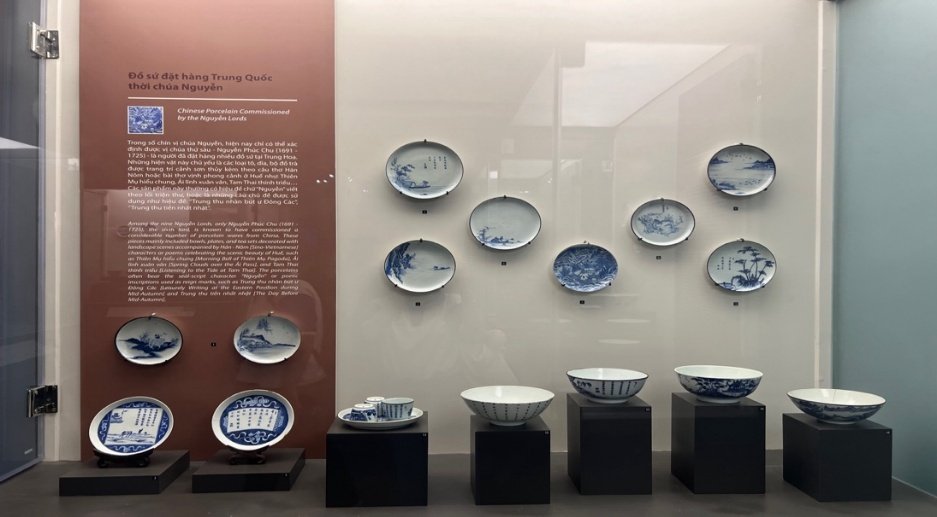
During the tour, the team was particularly struck by the collection’s porcelain bowls, plates, and teaware featuring landscape paintings paired with Hán-Nôm calligraphy and poetic tributes to Huế landmarks, such as Thiên Mụ hiểu chung (Morning Bell at Thiên Mụ Pagoda), Ải lĩnh xuân vân (Spring Clouds over Ocean Pass), and Tam Thai thính triều (Listening to the Tide at Tam Thai Mountain). Several pieces bear the seal character “Nguyễn” rendered in seal script, alongside inscriptions such as “Mid
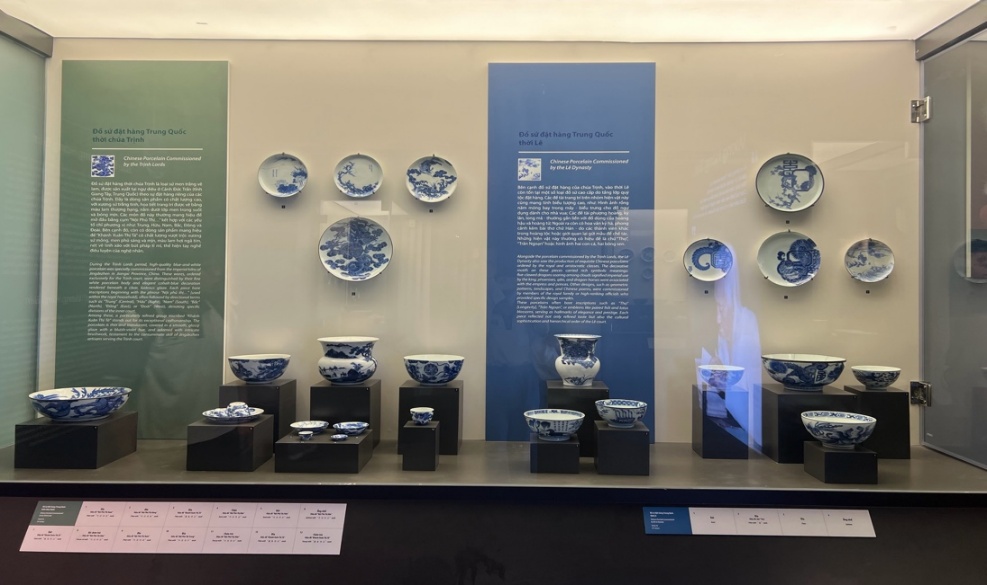
Examining the Lê-Trịnh era blue-and-white ceramics, the research team was struck by the intricate craftsmanship and diverse motif styles. Large plates, bowls, and basins—adorned with reign marks and Chinese or Nôm inscriptions—offer a vivid glimpse into the decorative arts and cultural life of the ruling royalty and lords of the era.
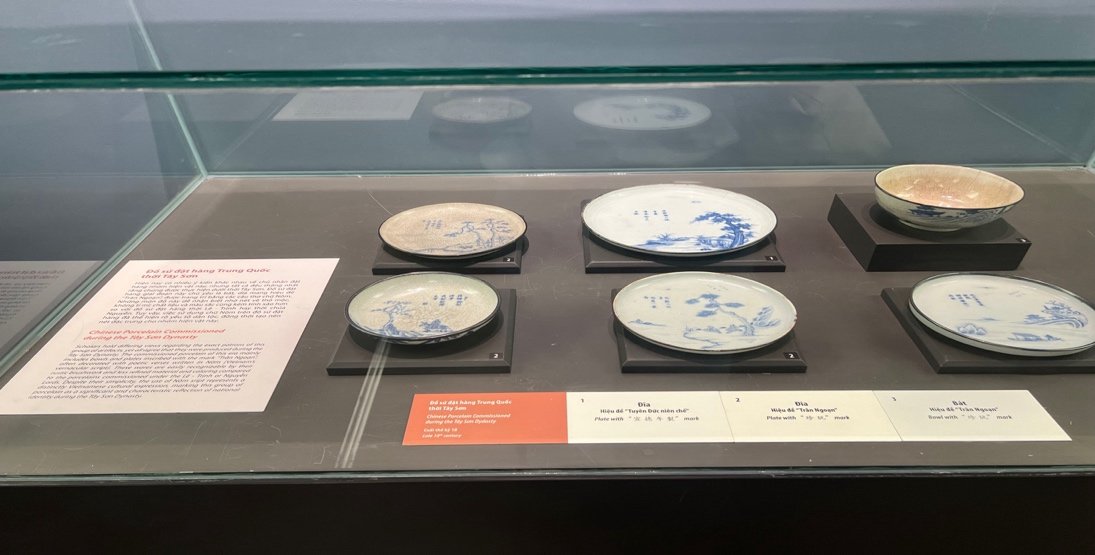
Pausing before the Tây Sơn era artifacts, the team was drawn to their rustic, understated beauty that nonetheless retains a distinct character. Bowls and plates bearing the “Trân Ngoạn” mark feature decorative Nôm poetry, evoking a sense of intimate warmth compared to the ceramics of the Lê-Trịnh or Nguyễn lords. With simpler brushwork, modest materials, and muted hues, these pieces subtly reflect a turbulent chapter in the nation’s history.
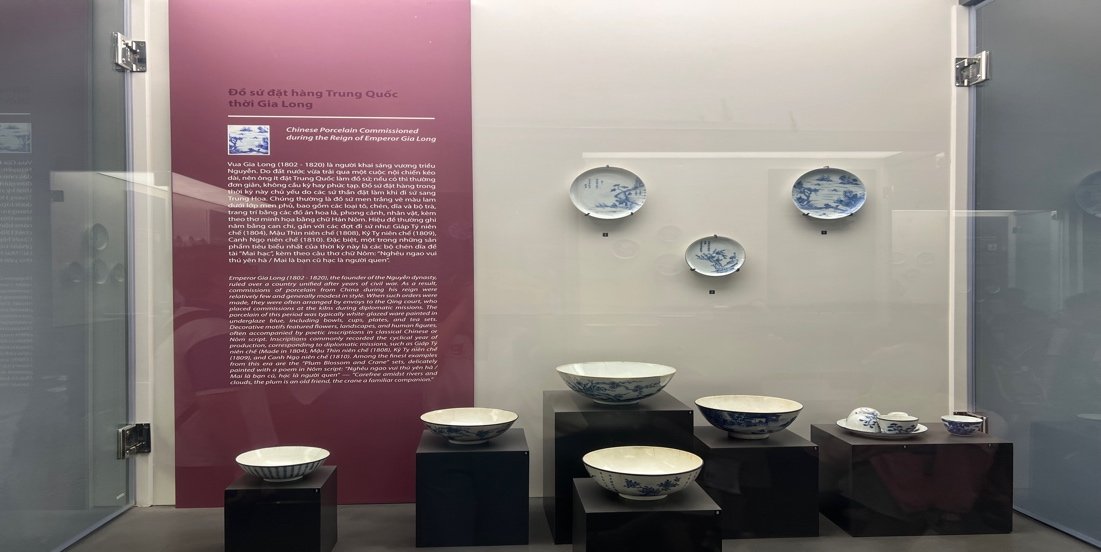
In the gallery dedicated to the Gia Long reign, the team observed blue-and-white porcelain bowls, cups, plates, and tea sets decorated with flora, landscapes, figures, and poetic inscriptions in Chinese and Nôm script. Reign marks indicating precise production dates, such as “Giáp Tý niên chế” (made in 1804) and “Mậu Thìn niên chế” (made in 1808), help contextualize the provenance of these works. The “Plum Blossom and Crane” motif, paired with Nôm verses, left a lasting impression for its understated elegance and resonant symbolism.
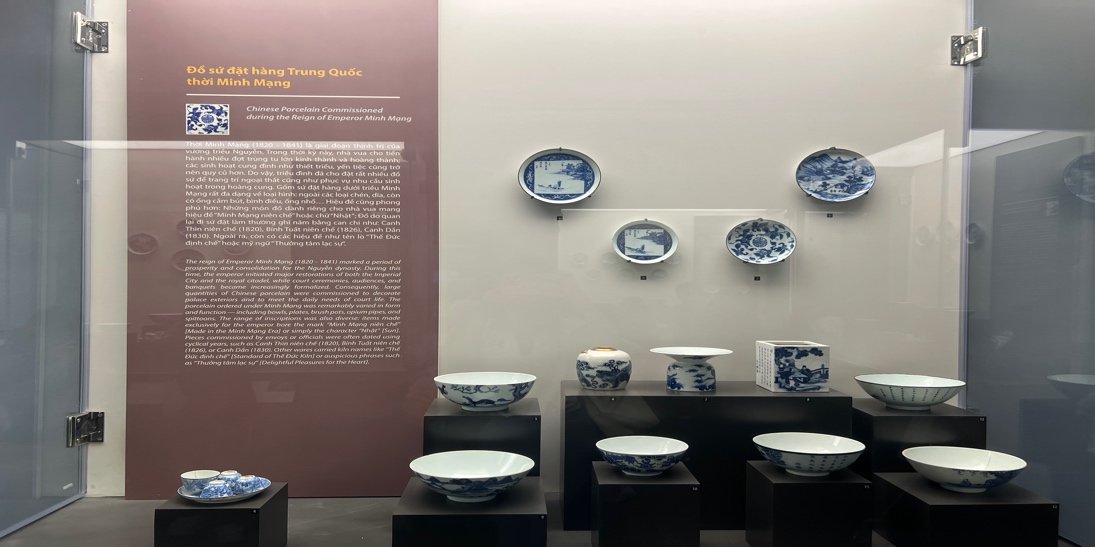
Moving deeper into the exhibition, the team noted marked distinctions in the ceramics produced under Emperor Minh Mạng compared to earlier periods. The collection features a wide array of items—from cups and plates to brush pots, vases, and spittoons—bearing diverse hallmarks such as “Minh Mạng niên chế,” the character “Nhật” (Sun), and sexagenary cycle year marks. These refined details illuminate both the evolution of Vietnamese porcelain and the daily rituals of the imperial court.
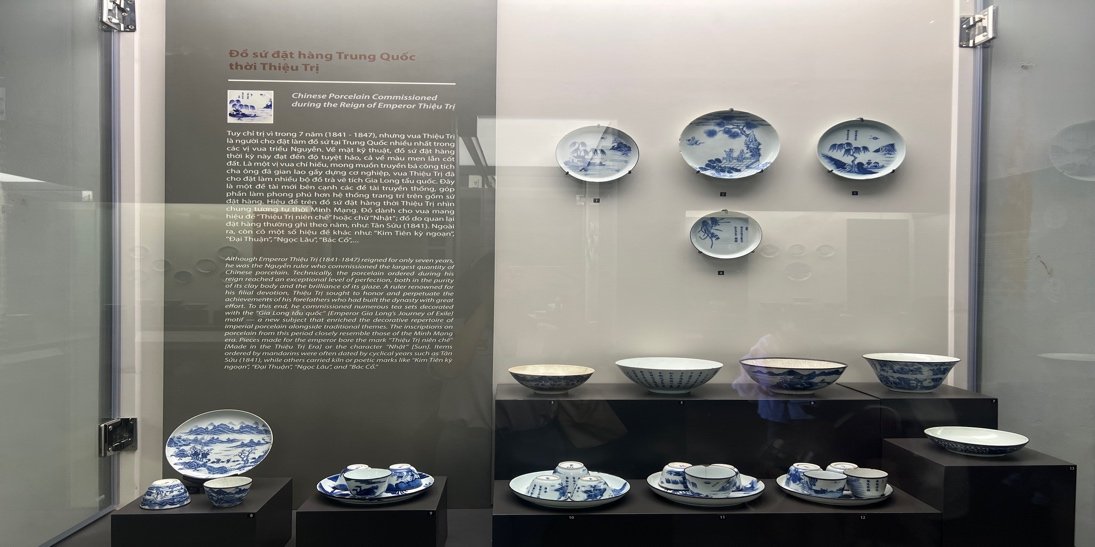
From the exhibits on display, the research team learned that despite reigning for just seven years (1841–1847), Emperor Thiệu Trị commissioned a vast quantity of custom porcelain from China. This collection is distinguished by its refined glazes and exquisite clay bodies, featuring various reign marks and inscriptions such as “Thiệu Trị niên chế” (Made during the Thiệu Trị reign), the character “Nhật” (Sun), “Kim Tiên kỳ ngoạn”, “Đại Thuận”, “Ngọc Lâu”, and “Bác Cổ”. Among these, the team was particularly drawn to the tea sets themed “Gia Long tẩu quốc” (King Gia Long’s flight across the country), as the imagery and historical narratives on the artifacts shed light on how Emperor Thiệu Trị honored and commemorated Emperor Gia Long’s legacy.
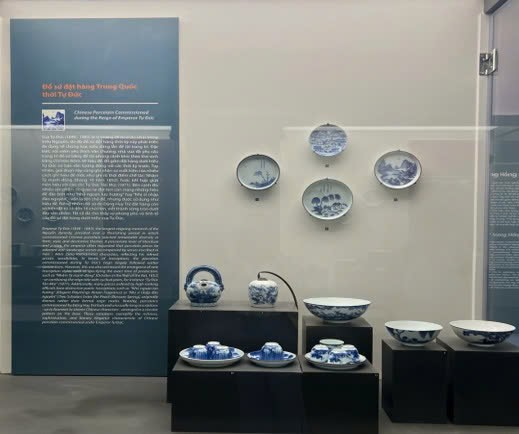
In the final leg of the tour, artifacts from the Tự Đức era offered the team a fresh perspective on commissioned imperial porcelain. Porcelain from this period features a rich variety of forms, types, and motifs, notably highlighted by landscape designs paired with Classical Chinese and Nom poetry. Inscriptions such as “Nhã ngoạn lưu hương” and “Nhị sĩ nhập đào nguyên,” alongside a diverse array of reign marks, left a lasting impression on the researchers. Through each artifact, the team gained a deep appreciation for the sophistication and diversity of custom-ordered porcelain under King Tự Đức’s reign, while obtaining a clearer picture of how this ceramic art form evolved across different eras.
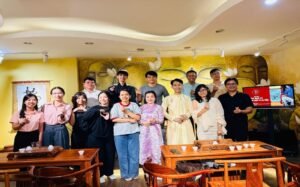
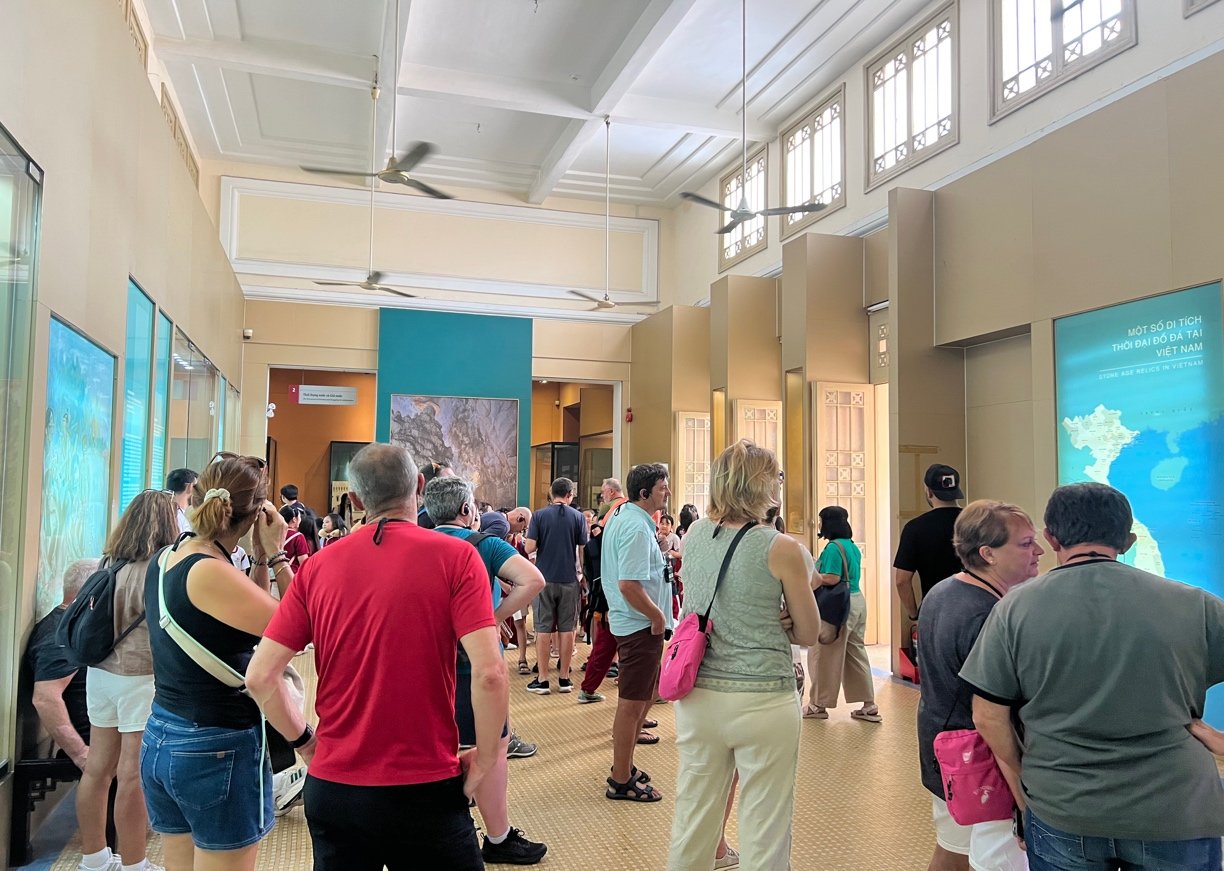
Following their first-hand inspection of the artifacts in Room 16, the research team met with curators at the Ho Chi Minh City Museum of History to gain further insight into the preservation and exhibition of the Vương Hồng Sển Collection. Museum officials explained that their curatorial approach extends beyond standard metadata—such as chronological period, material, and provenance—to emphasize the personal narrative of Vương Hồng Sển himself, focusing on his lifelong dedication to collecting and researching antiquities. Given the collection’s diverse mediums, which encompass ceramics, porcelain, and woodwork, conservation efforts require precise controls over lighting, humidity, ambient conditions, and display methods tailored to each material type.
The team also examined visitor engagement within Room 16. While overall museum attendance remains steady, curators noted that distinct visitor metrics for Room 16 are not tracked separately, making precise foot-traffic numbers difficult to quantify. Most general visitors discover the collection incidentally as part of the museum’s standard tour route. Conversely, those who actively seek out the exhibit are typically specialists, collectors, or cultural enthusiasts with a specific interest in Southern Vietnamese history and antiquities. These insights corroborate the team’s survey findings, which revealed that a significant segment of the public remains unfamiliar with Vương Hồng Sển and his cultural legacy. Ultimately, the findings underscore a critical reality: formal museum exhibition alone does not guarantee widespread public awareness.
Beyond static displays, the museum actively engages the public through educational programs, seminars, hands-on experiences, and heritage outreach initiatives. During discussions, museum staff highlighted “A Century of Vietnamese History”—an upcoming event scheduled for January 2026—which will feature dedicated content exploring the life, career, and cultural legacy of Vương Hồng Sển. The research group noted that honoring his contributions extends far beyond Room 16, finding a natural home in educational initiatives, media campaigns, and public outreach programs.
To make the Vương Hồng Sển Collection more accessible to younger audiences, the group suggested modern engagement strategies. These include producing short-form social media content, sharing compelling narratives behind individual artifacts, and partnering with universities and student clubs to host seminars, interactive workshops, and educational tours. However, all gallery-based activities must remain strictly aligned with preservation standards and artifact safety protocols.
The site visit offered the group a deeper, more tangible perspective on Vương Hồng Sển and his extraordinary collection. Previously, their understanding was built primarily on books, news reports, and academic literature. Seeing the artifacts firsthand in Room 16 brought into sharp focus the meticulous care and passion he poured into his lifelong pursuit. Beyond their aesthetic brilliance, these pieces embody the history, daily life, and cultural heritage of past generations. From the viewpoint of Cultural and Arts Management students, the team recognized that a collection’s true worth lies not merely in its size or age, but in the stories, knowledge, and cultural memory preserved within each artifact.
Drawing on core concepts from cultural theory, the research team recognized that these artifacts are far more than mere relics of
Overall, combining practical observations with interviews with museum staff helped the group have a more specific view of the Vuong Hong Sen Collection as well as the work of preserving and promoting heritage values. The trip not only helped the group understand more about an antique collector but also helped connect knowledge from Cultural Theory with the reality of Cultural and Arts Management. Thereby, the group realized that heritage conservation is not only about preserving artifacts but also needs to introduce and bring cultural values associated with artifacts closer to the public, especially the younger generation.
Truong Tran Khanh Bang & Le Yap Sasha
Class 25DTCSKVH2