Introduction: From the Lecture Hall to An Tất Viên: Why Fieldwork Matters
Throughout our Cultural Theory coursework, we explored numerous concepts surrounding cultural values, everyday cultural practices, collective memory, identity, and intergenerational heritage transmission. Yet, for students, grasping these concepts remains incomplete if confined strictly to classroom lectures. Field research thus bridges academic theory and real-world application, allowing us to observe cultural dynamics within a concrete physical setting and benchmark our academic coursework against living realities.
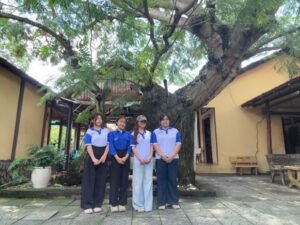
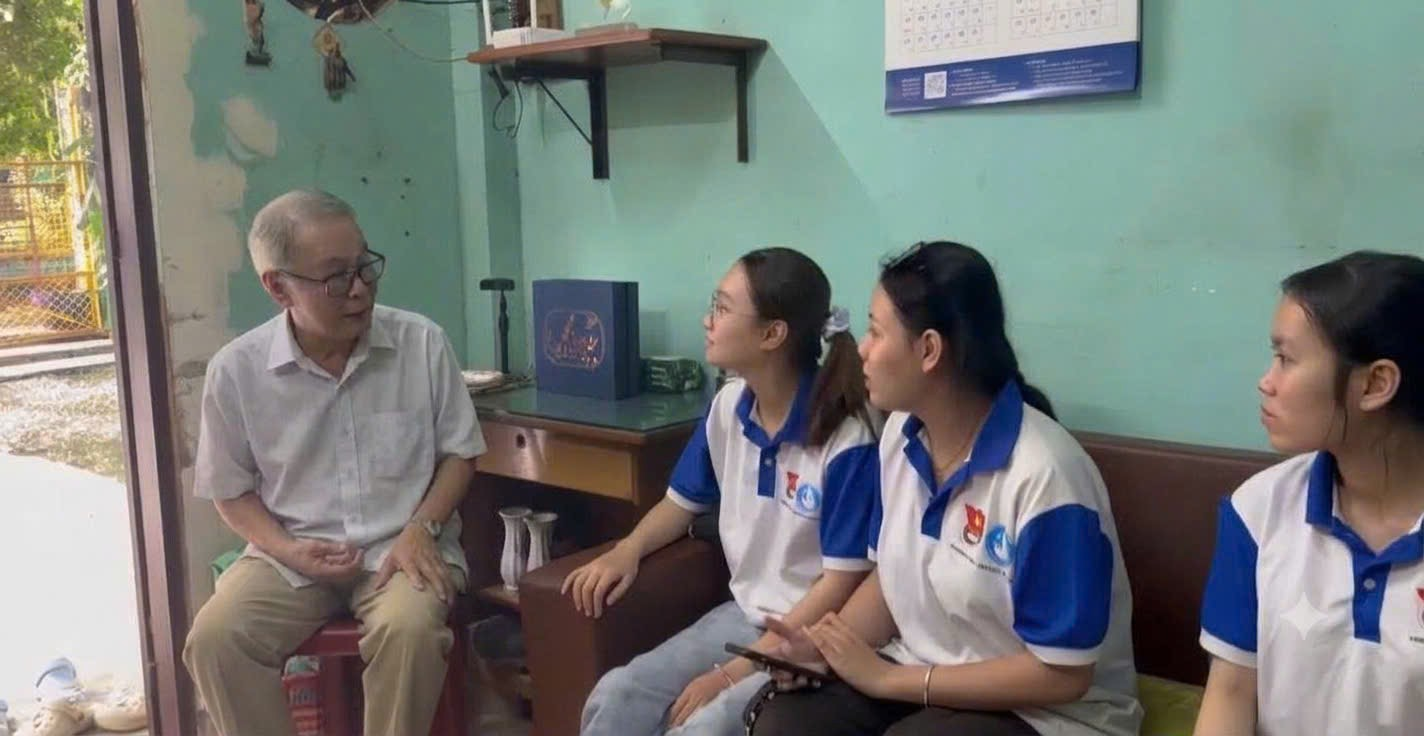
On September 20, 2026, our student team conducted a field study at An Tất Viên in Hồ Chí Minh City’s former Gò Vấp District. Far beyond a routine excursion, this practical academic exercise enabled us to directly apply core principles of cultural theory to a real-world setting.
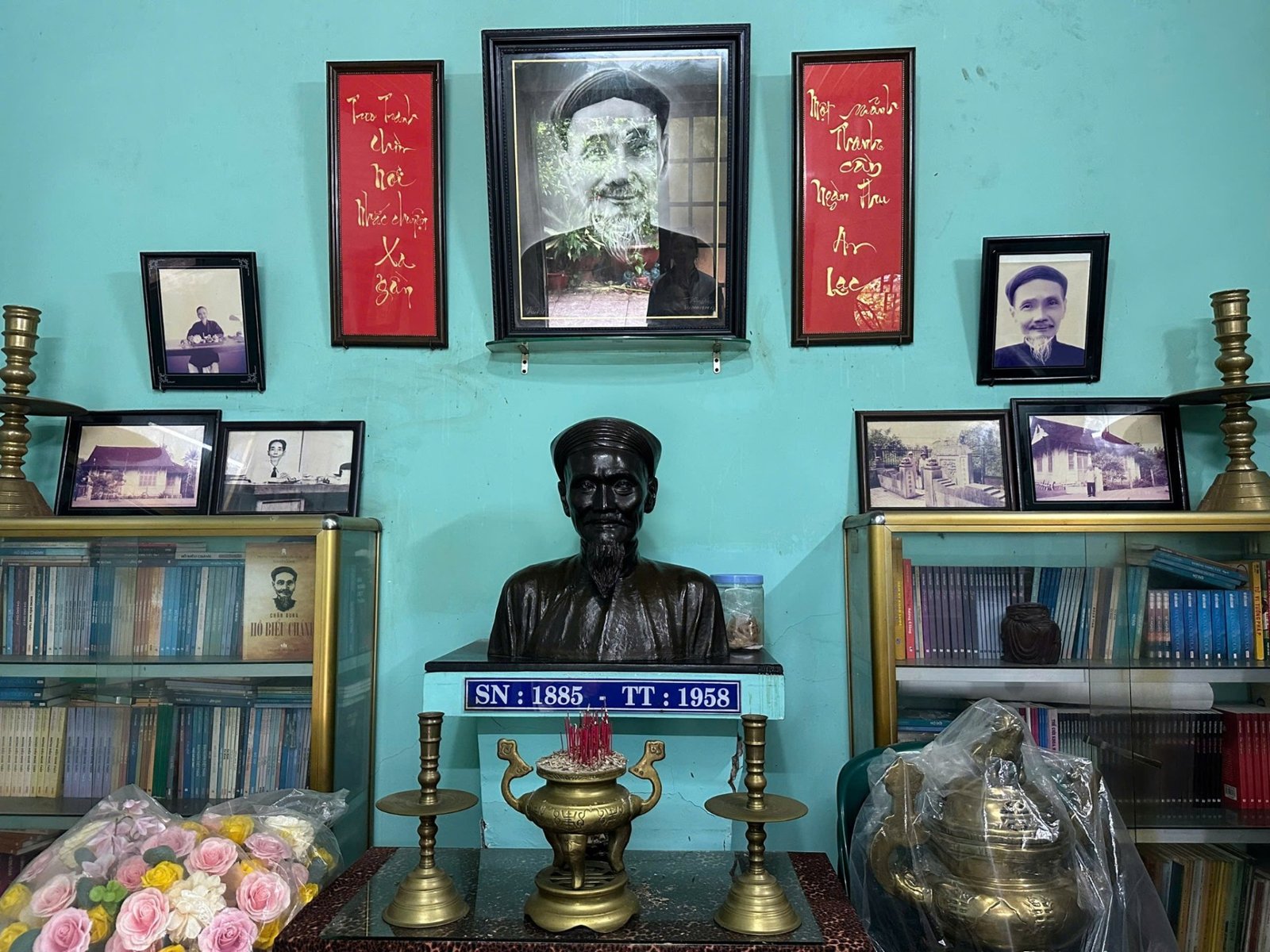
While university lectures frame culture through abstract definitions, An Tất Viên materializes those concepts through tangible heritage relics: a bronze bust, preserved literary works, archival photographs, genealogical records, a dedicated ancestral shrine, and the final resting place of celebrated novelist Hồ Biểu Chánh and his family.
When Theory Moves Beyond the Printed Page
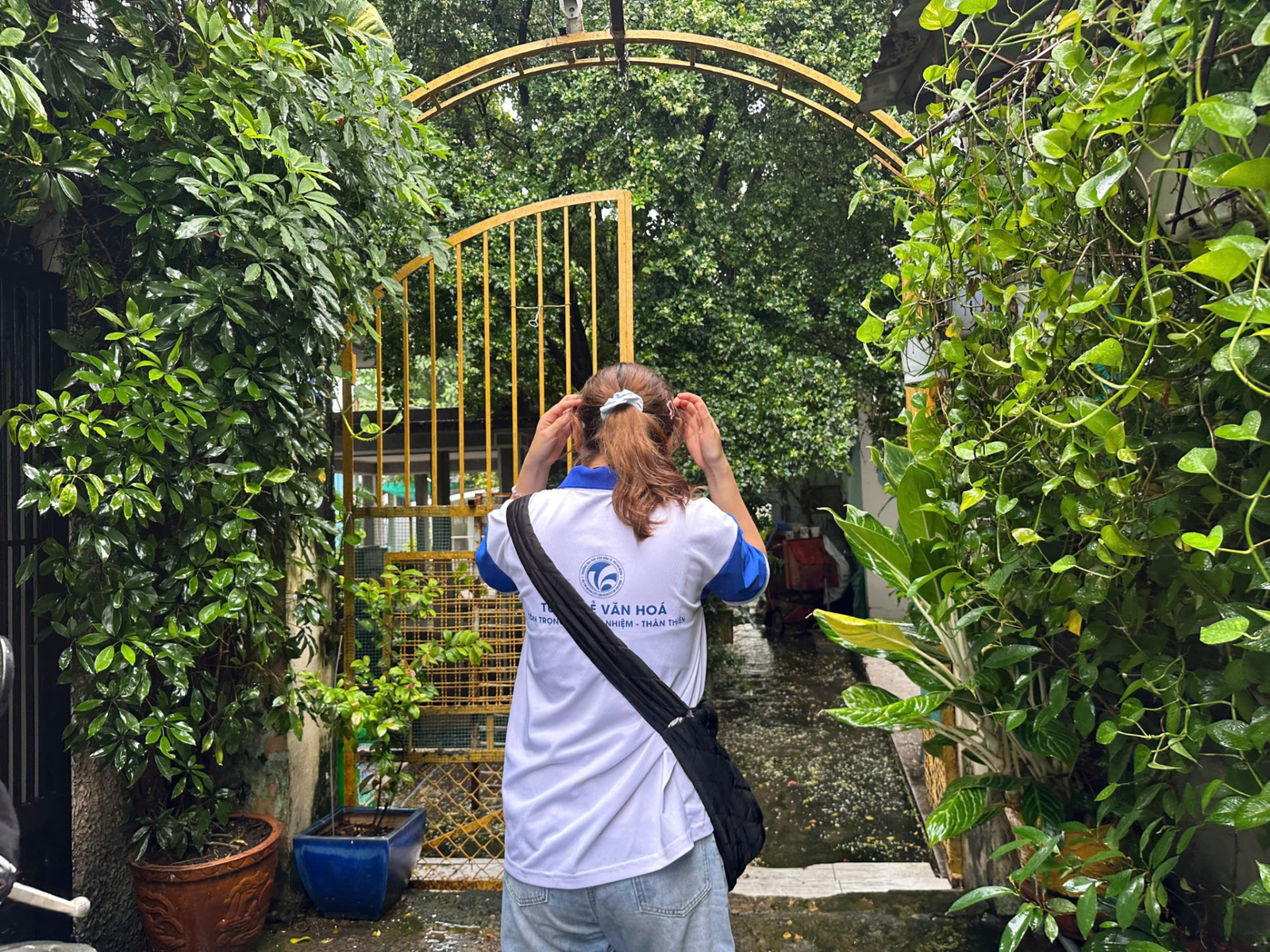
What first struck us upon entering An Tất Viên was the seamless interplay between vibrant urban life and a space dedicated to memory. Tucked away amid the bustle of Gò Vấp District, the sanctuary offers a tranquil haven. Verdant greenery, potted plants, ancestral altars, photographs, and literary works transform this memorial space into a bridge connecting past and present.
What proves particularly thought-provoking is that the true value of this space lies not in its grandeur. A modest venue can still safeguard a monumental cultural legacy as long as it preserves the living memory of a person, a family, and a historical era. From our perspective as cultural studies students, it serves as an intimate reminder that cultural heritage exists not only in monumental structures, but is also preserved within everyday, domestic spaces.
Before the visit, Hồ Biểu Chánh existed for us primarily through textbooks, literary works, and academic lectures. Yet, standing before his bronze bust, his original works, family photographs, and memorial space, our perception of the acclaimed author became far more vivid and tangible.
The books preserved here represent far more than mere literary archives. They testify to an ongoing journey of reading, research, and remembrance. Meanwhile, faded photographs, family portraits, and sacred altar artifacts unveil another layer of memory: the story of a man honored not only through his literary legacy, but also through the personal devotion of succeeding generations.
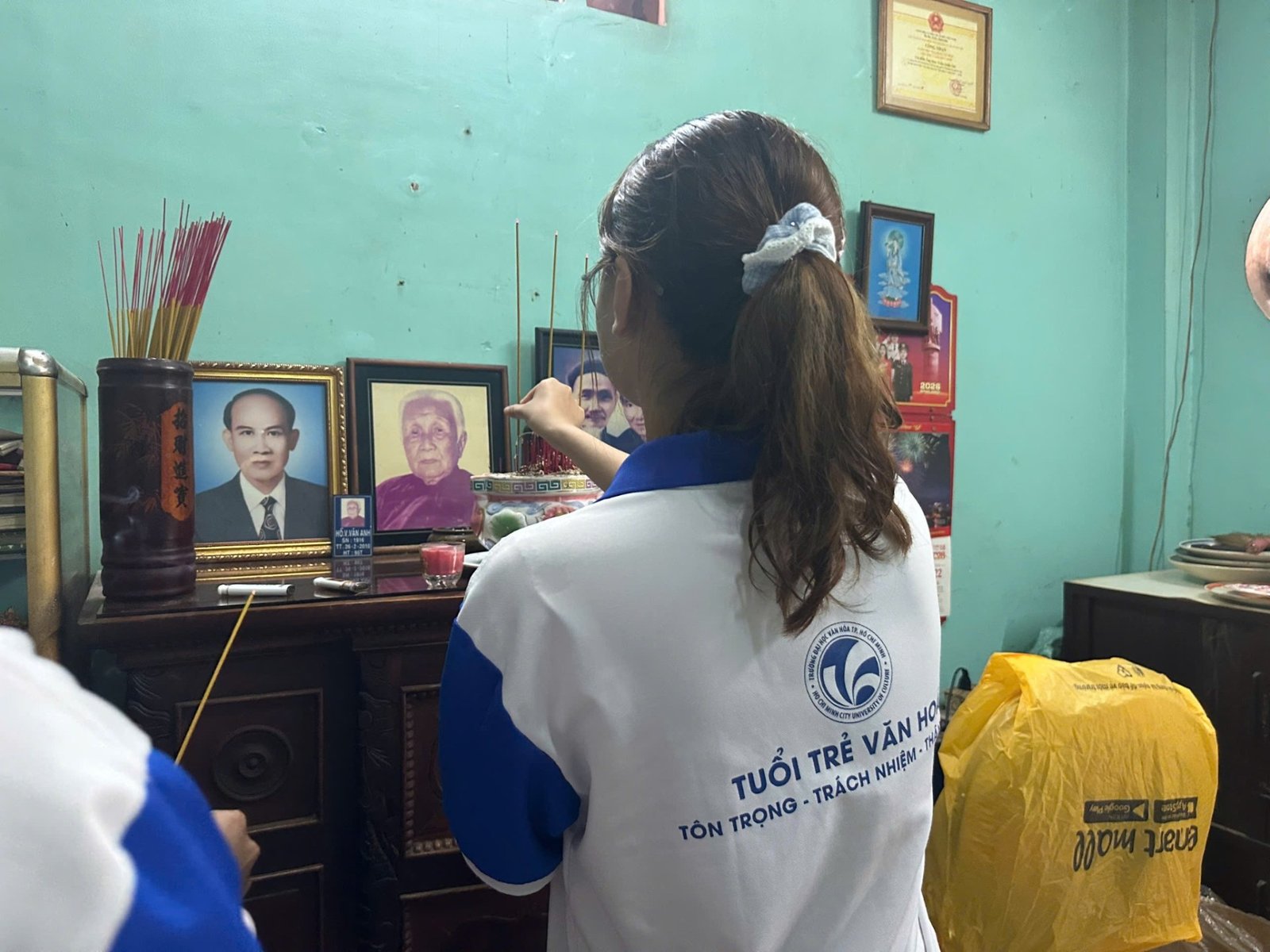
The moment students lit incense before the ancestral altar added profound emotional depth to the field study. It was more than a commemorative ritual; it was a meaningful gesture of reverence by today’s youth toward a literary giant who left an indelible imprint on the cultural landscape of Southern Vietnam.
A Family Lineage, Multiple Generations, and the Architecture of Memory
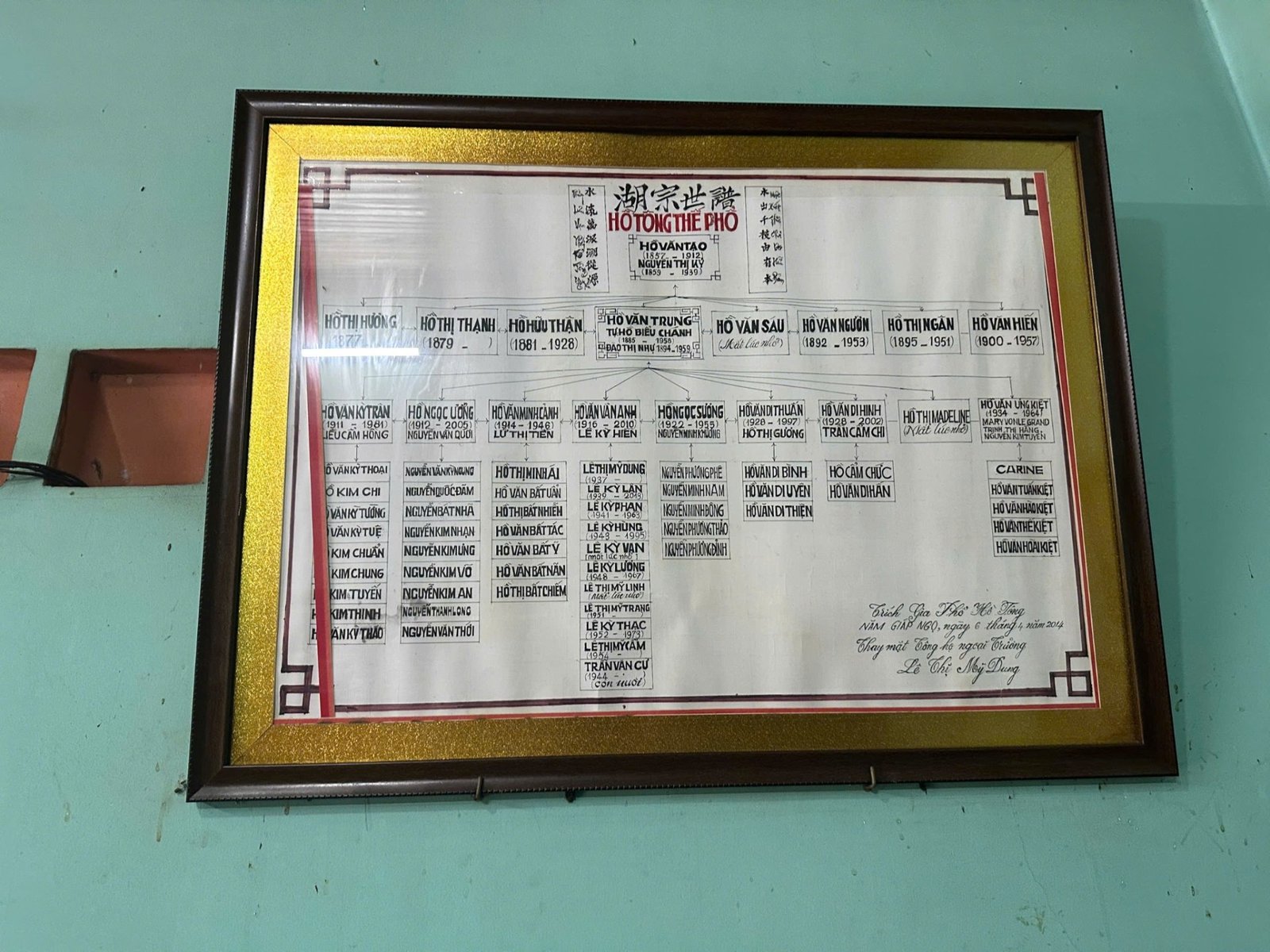
One detail that caught our attention and prompted deep reflection was the intricate genealogical chart of the Hồ Biểu Chánh family. Tracing the interconnected names across generations made us realize that behind every iconic cultural figure lies more than just an individual career. There exists an entire ecosystem of family, relationships, successive generations, and a continuous, dedicated effort to preserve historical memory.
From the perspective of Cultural Theory, this offers a broader framework for understanding heritage. Heritage is not merely a preserved artifact or a physical monument; it resides in the capacity to recount the human story, capture the spirit of an era, and sustain the foundational values that shape collective memory.
What Happens When a Generation Forgets Its Antecedents?
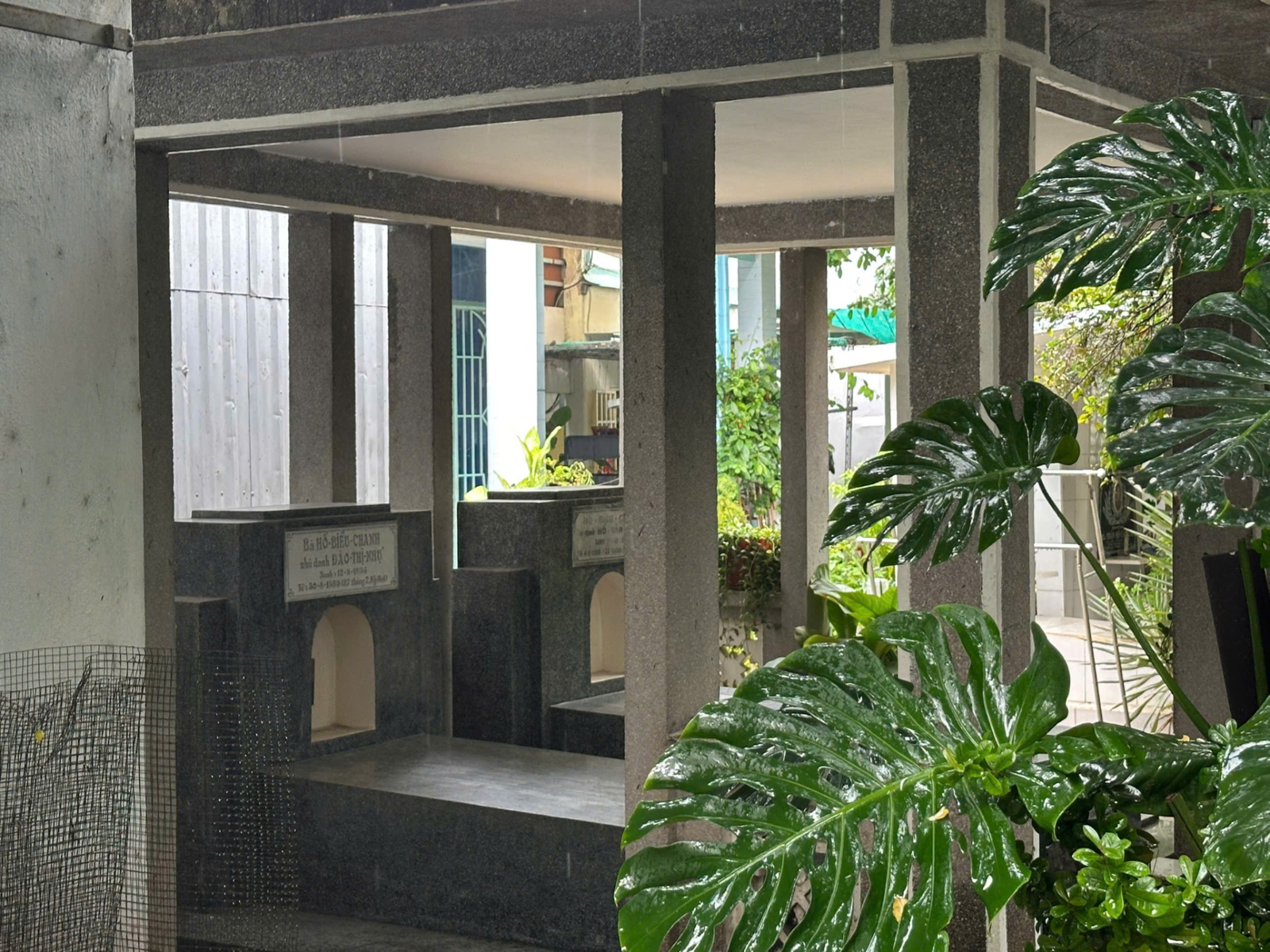
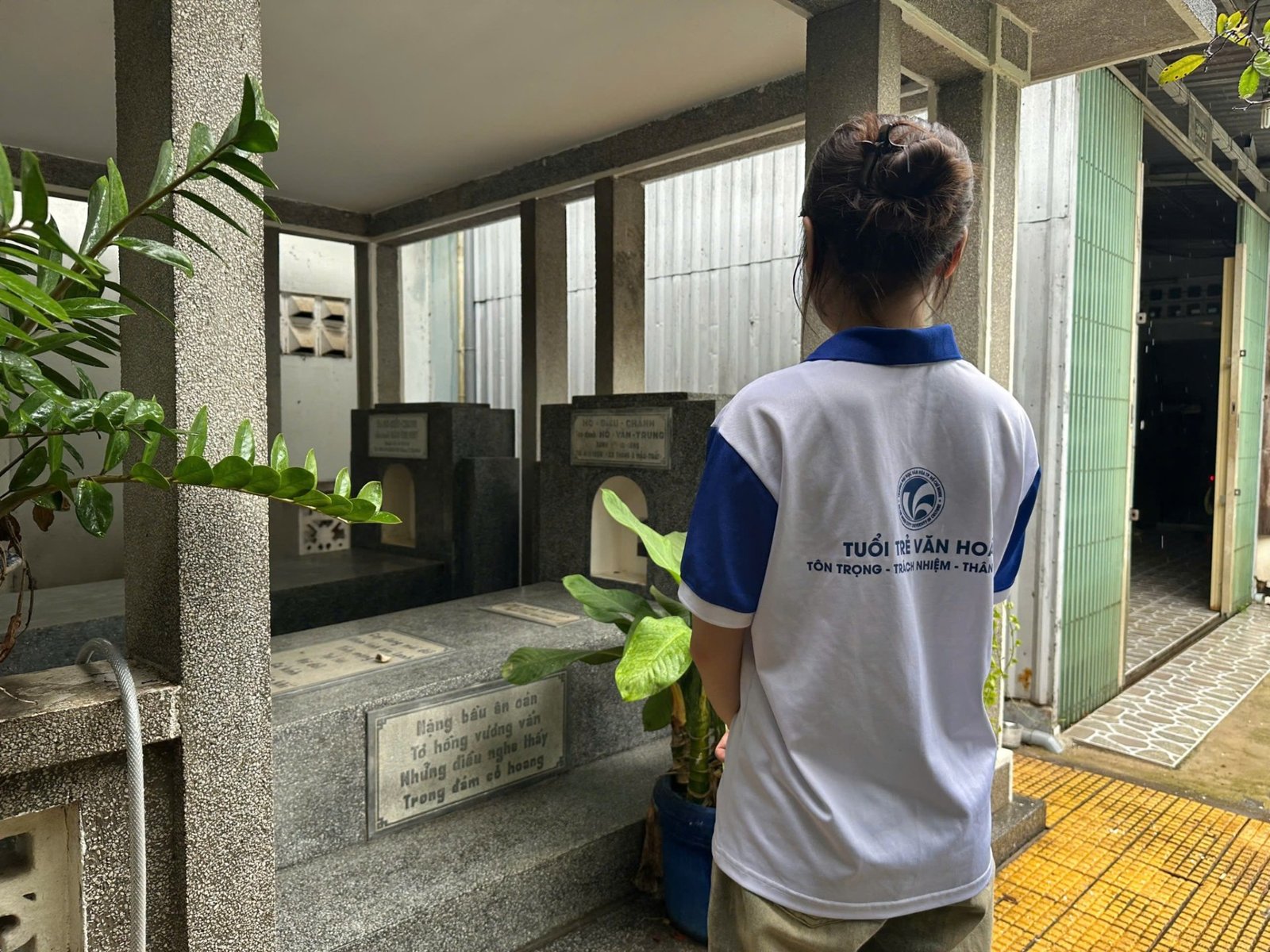
Standing before the resting places of Hồ Biểu Chánh and his family members, we felt the past transform from an abstract historical concept into something tangible. Here, history has a physical location, visible traces, and living stewards who actively tend to its preservation.
This experience sparked an inevitable question: What becomes of cultural memory if a generation loses touch with the stories of those who came before? A historical site can be physically preserved, but for heritage to remain a
Therefore, cultural preservation cannot stop at merely safeguarding a structure or an artifact. It must also be tied to education, media engagement, and creating opportunities for younger generations to access heritage through relatable means. This realization became even clearer to us through this field survey.
From Field Survey to the Perspective of Cultural Management Students
Following the trip, our perspective on cultural management expanded significantly. It goes beyond merely organizing events or administering cultural activities; it encompasses identifying intrinsic values, preserving memories, structuring information, fostering community engagement, and creating the right conditions for heritage to remain accessible in contemporary life.
While academic theory provided us with the analytical tools to ask meaningful questions about culture, the field research allowed us to observe those answers unfolding in real life. This is perhaps the greatest value of field-based learning: classroom knowledge validated through firsthand experience, keen observation, and critical reflection.
A Gesture of Gratitude
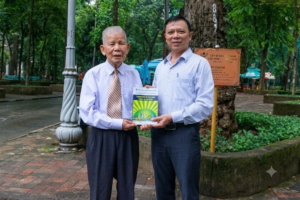
The field survey would not have been as deeply meaningful without the warm reception and thoughtful insights shared by Mr. Trần Quốc Oai, the great-grandson of author Hồ Biểu Chánh.
Our research group extends our heartfelt gratitude to Mr. Tran Quoc Oai for his warm reception and for generously sharing invaluable stories and insights regarding his family, the memorial site, and the heritage preserved at An Tat Vien. His personal reflections not only enriched our field survey with rare primary documentation, but also lent it a profound emotional dimension — a depth of memory handed down directly by those who continue to safeguard it.
Epilogue: Leaving An Tat Vien with a renewed perspective on cultural heritage
Departing the estate, what we carried away extended far beyond the photographs stored on our phones. It was a transformed perspective on culture itself. Cultural heritage can reside within the pages of a published book, but it can equally flourish within a family narrative. It lives within a memorial space, a ancestral genealogy, an aged photograph, or the quiet reverence of a descendant bowing before an ancestor’s altar.
This experience epitomizes the true value of bridging academic theory with real-world exploration. Moving from the university lecture hall to the tranquil grounds of An Tat Vien, abstract cultural concepts ceased to be static text on a page. They came alive — embodied within a physical sanctuary, a rich narrative, and the dedicated individuals who continue to keep history alive.
For our research team, this field study yielded more than just a deeper understanding of Ho Bieu Chanh. It instilled a fundamental truth: a literary legacy remains truly alive only as long as there are those who remember, study, and continue to tell its story.
Vu Thi Ngoc Thao, Class 25DTCSKVH2
REFERENCES
Huỳnh Thị Lành. (2006). Vị trí của Hồ Biểu Chánh trong văn xuôi quốc ngữ Việt Nam đầu thế kỷ XX (1900–1930) [The Position of Hồ Biểu Chánh in Early 20th-Century Vietnamese Quốco-Nữ Prose (1900–1930)] [Doctoral dissertation in Philology, Ho Chi Minh City University of Education]. General Sciences Library of Ho Chi Minh City.
Vietnam Writers’ Association. (2024, May 18). Hồ Biểu Chánh – Văn tài đầu thế kỷ 20 [Hồ Biểu Chánh – A Literary Talent of the Early 20th Century]. Vietnam Writers’ Association.