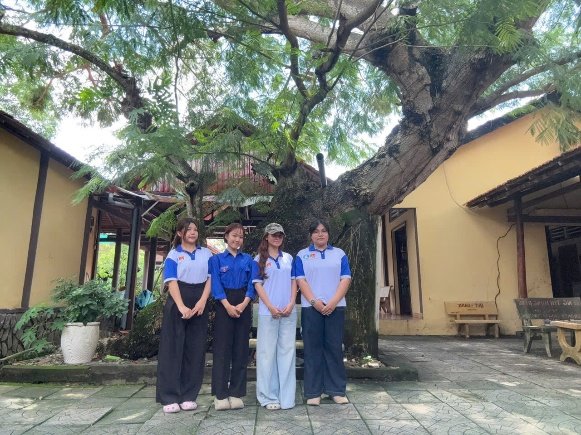
During the process of studying Cultural Theory, I realized that cultural values do not only exist in books or through concepts learned in class but are also present in specific spaces, in monuments, artifacts and in the memories of the community. Therefore, the field trip to Ton Thanh Pagoda on September 21, 2026 with group members left me with many thoughts. This is not only a trip to serve the research topic on Ton Thanh Pagoda – the mark of Nguyen Dinh Chieu in old Long An, but also an opportunity for me to directly see and feel the cultural values that I had previously only accessed through documents.
Before the trip, my group chose Ton Thanh Pagoda as the research object because this is a place with a long history and a special connection with Nguyen Dinh Chieu. According to information from Long An tourism industry, Ton Thanh Pagoda was formed in 1808 and in the period 1859–1861, Nguyen Dinh Chieu was attached to this place. Therefore, when researching the topic, I was not only interested in the history of the temple’s formation but also wanted to better understand how a monument can preserve the memory of a historical figure and the cultural values formed over many generations.
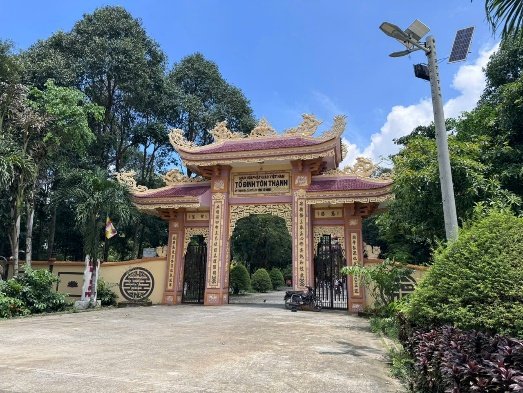
Stepping foot inside Tôn Thạnh Pagoda, my immediate impression was that the atmosphere offered a profoundly different experience from merely reading about the site in books. The Buddhist statues, stone steles, historic architecture, and lush greenery surrounding the grounds evoke a tangible sense of connecting directly with a chapter of history preserved across generations. I was particularly drawn to the relics associated with the revered 19th-century patriot and poet Nguyễn Đình Chiểu. Historical records noted that he resided at Tôn Thạnh Pagoda from 1859 to 1861. Yet, standing within these very grounds, it became strikingly clear that history is far from a distant concept — it lives on within spaces actively maintained and cherished by local communities today.
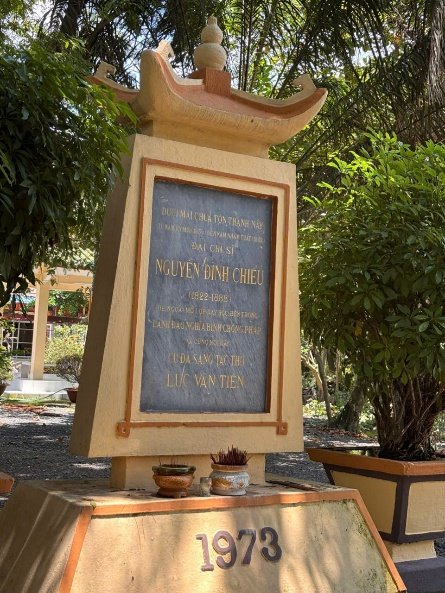
Examining the pagoda’s stone tablets, statues, and architectural structures reveals that the true worth of a heritage site extends far beyond its age. Behind every artifact and quiet corner lie stories of human endurance, spiritual life, and collective memory. Tôn Thạnh Pagoda stands not merely as an architectural or religious sanctuary, but as a monument of immense historical and cultural significance — deeply interwoven with the land of Cần Giuộc, the legacy of Nguyễn Đình Chiểu, and the cultural tapestry of southern Vietnam.
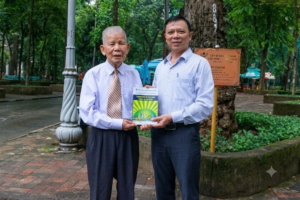
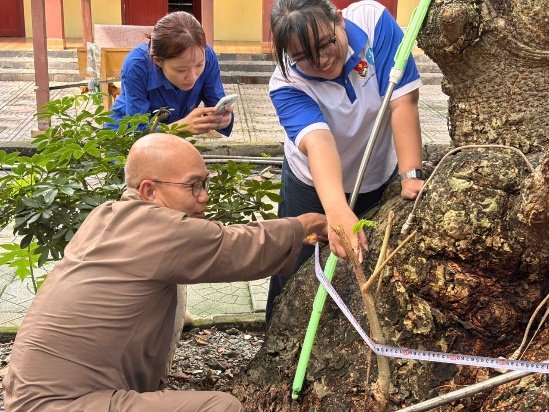
One of the most striking moments of my visit was standing before the ancient flamboyant tree in the temple courtyard. According to the head monk, the current tree is roughly a century old. It is not the original mother tree, but rather an offshoot or branch that regenerated after its predecessor died. Given its advanced age and earlier signs of trunk cracking, the monk primarily prunes its branches and reinforces the structure with steel supports to prevent it from collapsing. Learning this history changed how I viewed the tree. To a casual observer, it might seem like just another ancient tree in a temple courtyard. But understanding its survival and the care invested in its preservation makes it feel like a living embodiment of the sanctuary’s collective memory.
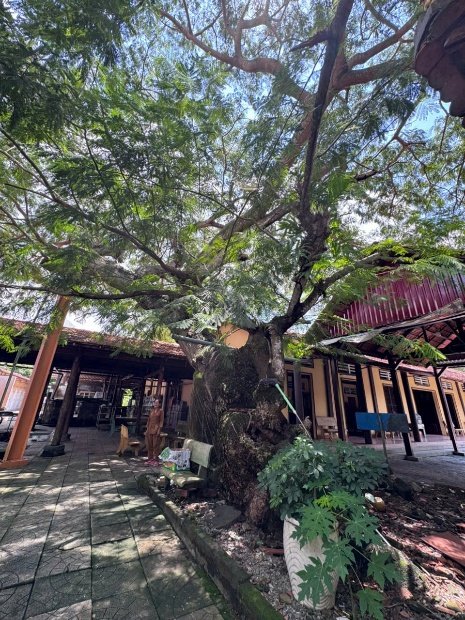
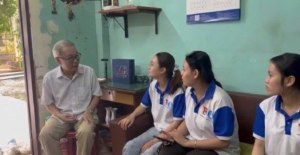
From the perspective of a Cultural Management student, I believe the Royal Poinciana tree warrants continued research and preservation as an integral component tied to the landscape and cultural memory of Tôn Thạnh Pagoda. Specifically, proposing its inclusion in the Vietnam Heritage Tree system requires a comprehensive process of survey and verification — evaluating the tree’s age, origin, biological characteristics, historical connection to the pagoda, and significance to the local community. What I realized is that heritage conservation goes beyond simply preserving an ancient artifact; it demands understanding the stories and deeper meaning that object conveys. Therefore, rather than focusing solely on whether the tree meets the formal criteria for recognition, our priority should be ensuring proper care, documenting records, and promoting its value so the younger generation appreciates it as a cherished element of the pagoda’s sacred space. Following the tour, our group had the opportunity to interview the abbot directly to gain deeper insights into Tôn Thạnh Pagoda’s history and preservation efforts. What struck me most was that the pagoda’s history is not defined by a single founding date, but rather expressed through the continuity
What left a deeper impression on me was the abbot’s candid acknowledgment that historical documentation on Nguyễn Đình Chiểu remains incomplete, requiring ongoing research and cross-referencing across multiple sources. This was a poignant reminder that cultural research cannot rely on a single narrative as a definitive conclusion. Cultural administrators must honor oral histories and inherited memories, but they must equally commit to verifying, cross-checking, and supplementing records to ensure heritage preservation and public interpretation rest on a sound scientific foundation.
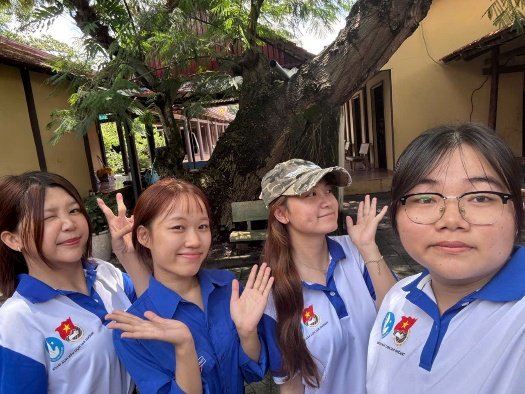
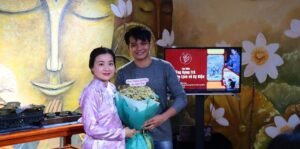
Another character that caught my attention during my research was Ms. Chau Anh Phung. According to the abbot, she once came to Ton Thanh Pagoda to stay, learn, collect and preserve many documents related to the pagoda; At the same time, there is a process of compiling, translating and writing introductory articles about Ton Thanh Pagoda. In particular, she was the one who proposed and introduced to the State the value of the pagoda and the need to pay attention and consider recognizing the monument. This information makes me understand that preserving a heritage does not only start with the state management agency but also has the contributions of individuals who love and dedicate themselves to the heritage. The National Museum of History also recognized the role of Ms. Chau Anh Phung in the process of researching Nguyen Dinh Chieu and providing documents related to Ton Thanh Pagoda.
Reflecting on Chau Anh Phung’s story left me with a profound realization. When an individual devotes substantial time to researching, collecting, and promoting a heritage site, they can elevate local treasures into widely recognized cultural landmarks. Yet, this also raises pressing questions about the responsibilities of future generations. If the passion of those who dedicated their lives to preserving these archives is not passed down, the stories surrounding these historic places risk fading into obscurity. As a cultural management student, I feel a deep personal responsibility to actively research, document, and champion our local cultural heritage.
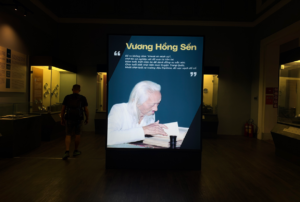
Following our visit to Ton Thanh Pagoda, our group toured the Nguyen Dinh Chieu Memorial House. While the pagoda offered a evocative window into the cultural landscape tied to his life and deeds, the memorial house painted a vivid portrait of his character, legacy, and enduring contributions. Browsing through the photographs, historical documents, and commemorative spaces, I came to realize that honoring a historical figure extends far beyond preserving their name — it means keeping their spiritual and moral legacy alive. For Nguyen Dinh Chieu, that legacy is rooted in fierce patriotism, compassion, integrity, and civic duty, values that resonate just as powerfully with today’s youth.
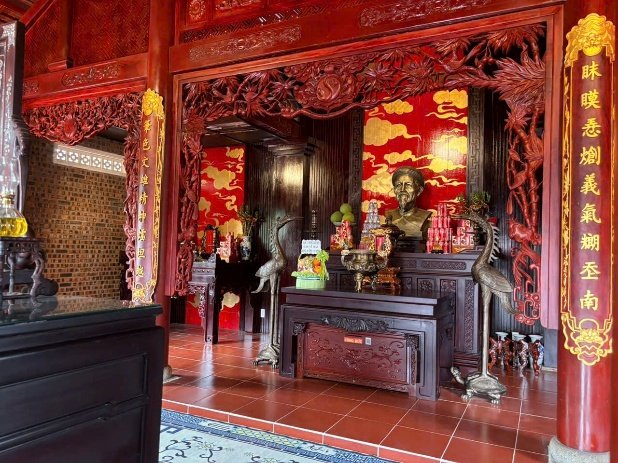
The field trip also deepened my understanding of cultural values — a concept I had previously encountered only in my Cultural Theory coursework. I used to believe that cultural value was primarily embodied in iconic architecture, tangible artifacts, or renowned works of art. However, visiting Tôn Thạnh Pagoda firsthand revealed that cultural value equally resides in memory, storytelling, faith, and the deep emotional bond people form with a place. A temple holds profound historical value through its association with significant figures and epochal milestones; simultaneously, it carries immense spiritual weight as a living heritage, meticulously preserved and passed down through generations of the local community.
For me, the most meaningful takeaway from this journey was not merely memorizing historical data about Tôn Thạnh Pagoda, but grasping how to actively engage with and honor these cultural assets. As a Cultural Management student, I believe our first duty is to rigorously explore heritage through structured research — conducting field surveys, interviewing local experts, consulting archives, and cross-referencing historical sources. Furthermore, students can play a pivotal role in amplifying heritage awareness through youth-oriented formats, including long-form storytelling, photography, multimedia videos, experiential tours, and digital media campaigns. Crucially, these promotional efforts must be grounded in deep respect for the site’s sanctity, ensuring historical monuments do not devolve into superficial photo opportunities stripped of their intrinsic historical and cultural soul.
The story of the ancient flame tree and the historical records detailing the life of Chau Anh Phung underscored a vital truth: cultural preservation must start with the smallest details. An ancient tree, a stone stele, a local legend passed down through generations, or a personal archive collected by a passionate individual can all become crucial historical resources when properly documented and safeguarded. They serve as a stark reminder that cultural managers must look beyond officially recognized heritage sites — actively discovering, researching, and proposing safeguards for fragile legacies on the brink of obscurity.
By the end of the field trip, my research on Tôn Thạnh Pagoda had transformed from a routine academic assignment into a profound personal journey. Standing within the sacred sanctuary, examining century-old artifacts, listening to the head monk’s reflections, and learning about both the ancient flame tree and the hardship faced by Chau Anh Phung — followed by a visit to the Nguyễn Đình Chiểu Memorial House — offered me a deeply intimate perspective on culture and heritage. I came to realize that a historical monument only truly breathes when its intrinsic values are understood, cherished, and passed down to future generations. For me, this field excursion on September 21, 2026, proved to be an unforgettable, transformative experience.
Text: To Thi Huyen; Photos: Research Team
Faculty of Cultural and Arts Management
Ho Chi Minh City University of Culture
REFERENCES
1. Long An Tourism Portal, Touching the soul of the Southern countryside along the lower Vàm Cỏ River.
https://dulich.longan.gov.vn/tin-tuc/cham-vao-hon-que-nam-
2. Long An Tourism Portal, Visiting the Chợ Đào Region in Cần Đước.
https://dulich.longan.gov.vn/tin-tuc/ve-can-duoc-tham-xu-cho-dao-286