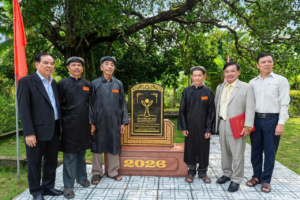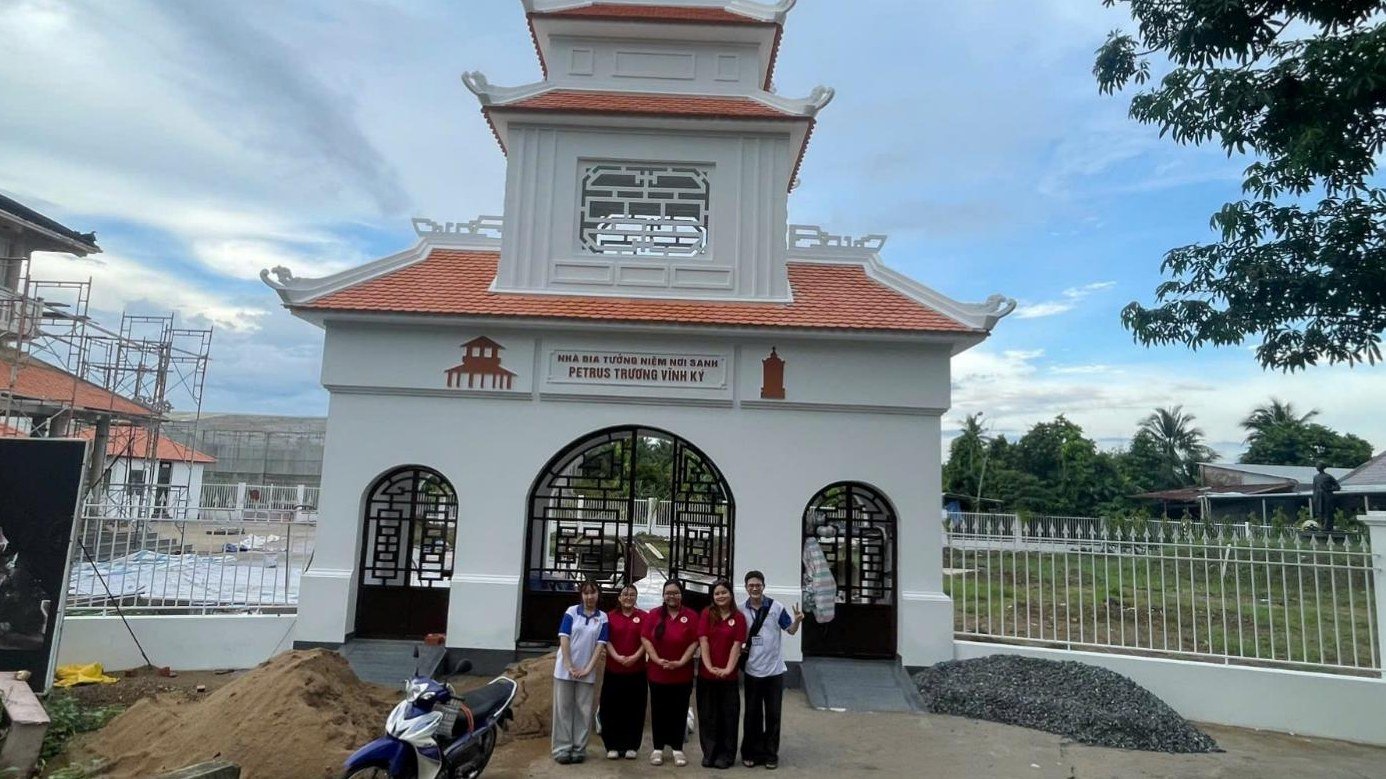
Source: Author team, 2026.
Within the framework of the module Development of community cultural life taught by lecturer, Dr. Pham Van Luan guided, our group had the opportunity to conduct a field survey in Cai Mon. Through the trip, we not only learned about Truong Vinh Ky Stele House but also found other places related to his name such as Cai Mon church, Truong Vinh Ky bridge, a route named after Truong Vinh Ky and Truong Vinh Ky High School, an over hundred year old Mangosteen orchard with the mark of scientist Truong Vinh Ky… Those seemingly familiar places helped me realize that the mark of a historical figure lies not only in one work. memorial program but can also be present in many different spaces of community life.
Trương Vĩnh Ký was born on December 6, 1837, in Vĩnh Thành village, historically known as Cái Mơn. Widely recognized by his pen name Pétrus Ký, he was a pioneering intellectual who made profound contributions across education, linguistics, journalism, and research. In 1938, a memorial stele house was erected in his honor in Vĩnh Bắc hamlet, Vĩnh Thành commune, Chợ Lách district, in the Mekong Delta province of Bến Tre, near the Cái Mơn stream. The memorial features a quadrilateral, tower-roofed structure supported by 16 pillars, housing a 2.5-meter-tall blue stone stele. Inscriptions carved into the stone in French, Classical Chinese, and Vietnamese reflect the legacy of a scholar who spent his life at the crossroads of diverse cultural traditions. In February 2019, the Bến Tre Provincial People’s Committee designated the Trương Vĩnh Ký Memorial Stele House as a provincial historical and cultural relic, ensuring its protection under Vietnam’s Law on Cultural Heritage. However, after nearly a century of exposure to time and environmental elements, key structural components have shown severe degradation: roof tiles and concrete elements are peeling and cracking, while the foundation has subsided below the surrounding ground level, threatening both its structural integrity and aesthetic appeal.
Driven by a deep reverence for cultural heritage and pride in Trương Vĩnh Ký’s enduring legacy, Trần Anh Thuy, chairman of the Bến Tre Young Entrepreneurs Association, spearheaded the initiative to restore the historic site after years of planning. The restoration project aims to preserve and rehabilitate the memorial while transforming it into a vibrant cultural and historical space. This landmark endeavor seeks to honor Trương Vĩnh Ký’s monumental life and career while celebrating the legendary scholarly tradition of the Cái Mơn region.
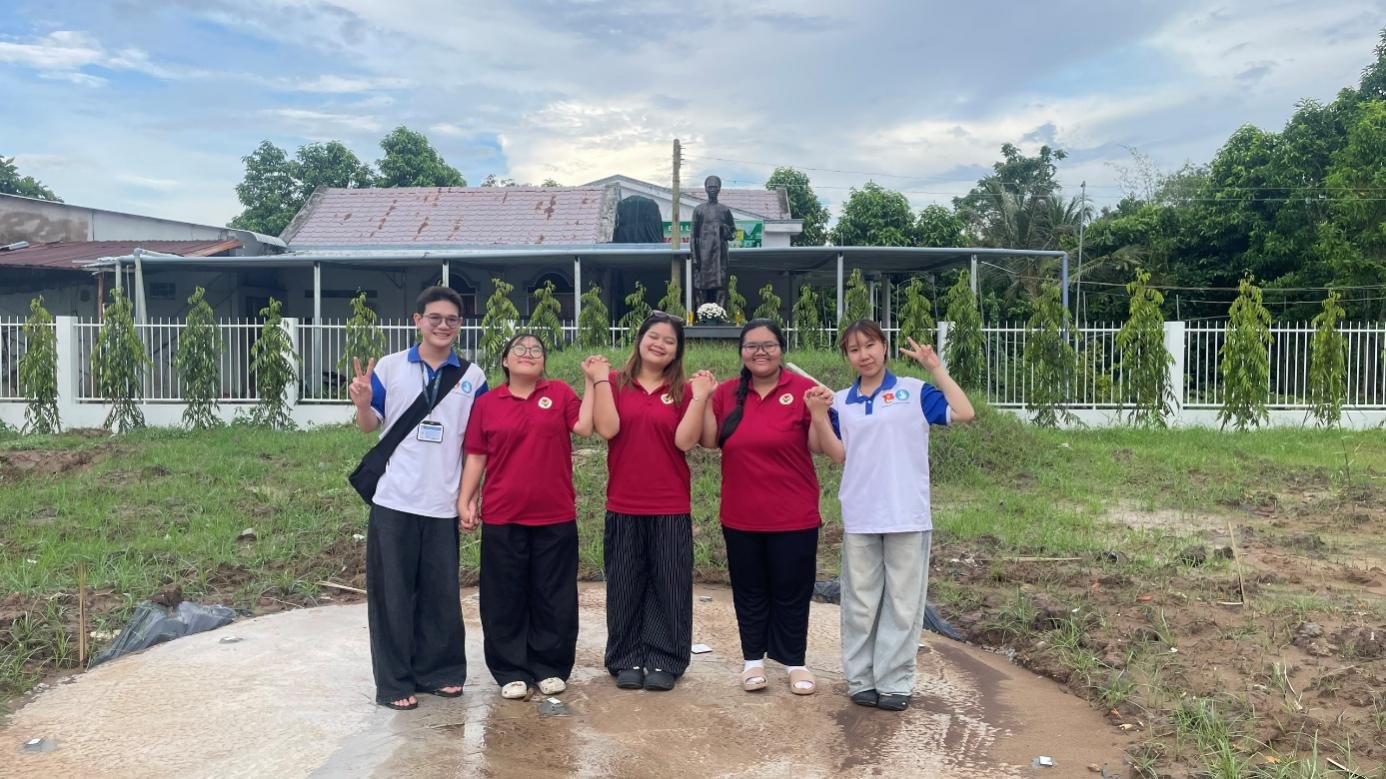
Source: Author team, 2026.
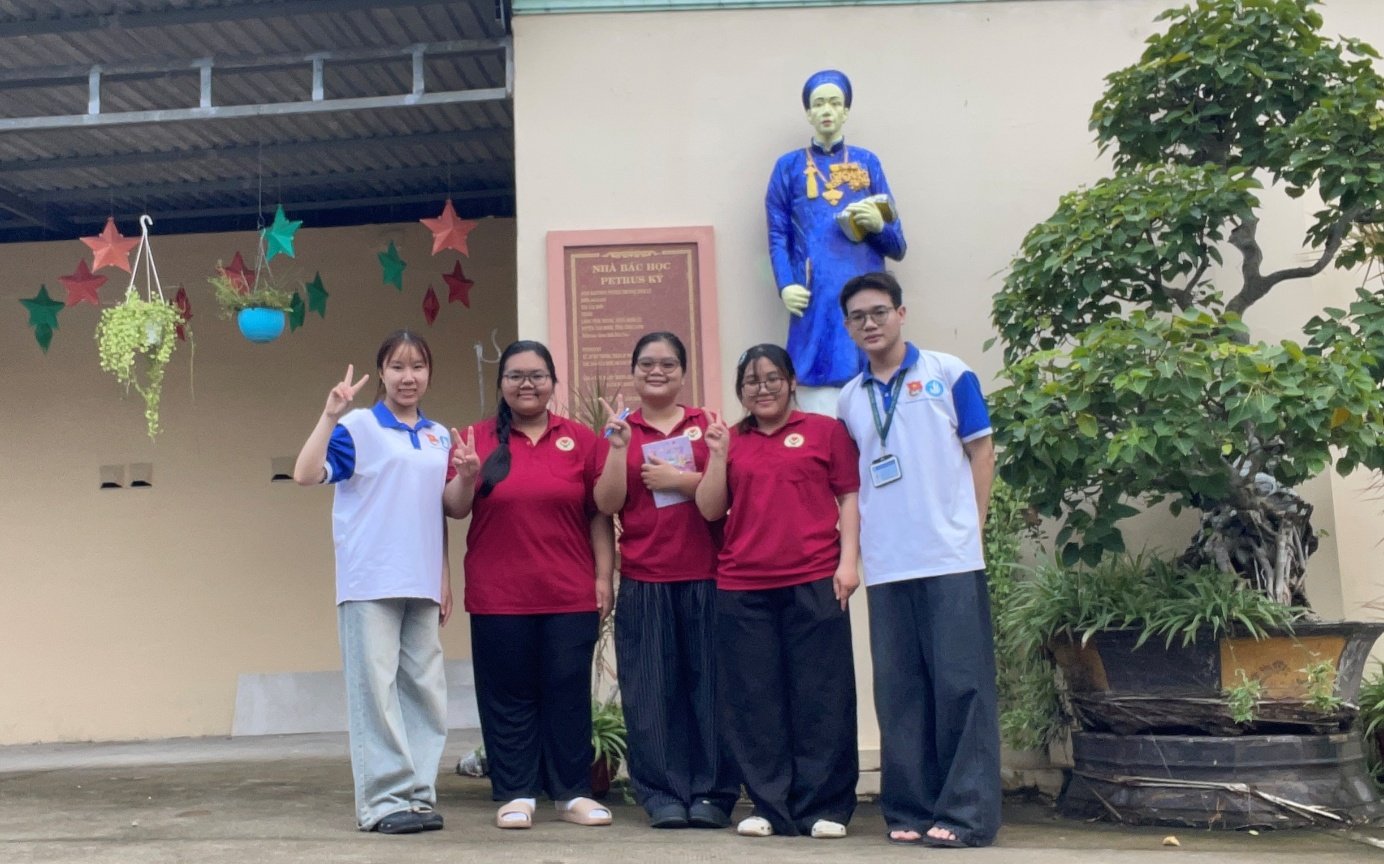
This image captures one of the most memorable moments of the team’s field survey. Standing directly beside the statue of Trương Vĩnh Ký at the stele house offered us a deeper sense of the commemorative space and his enduring presence in his native village of Cái Mơn.
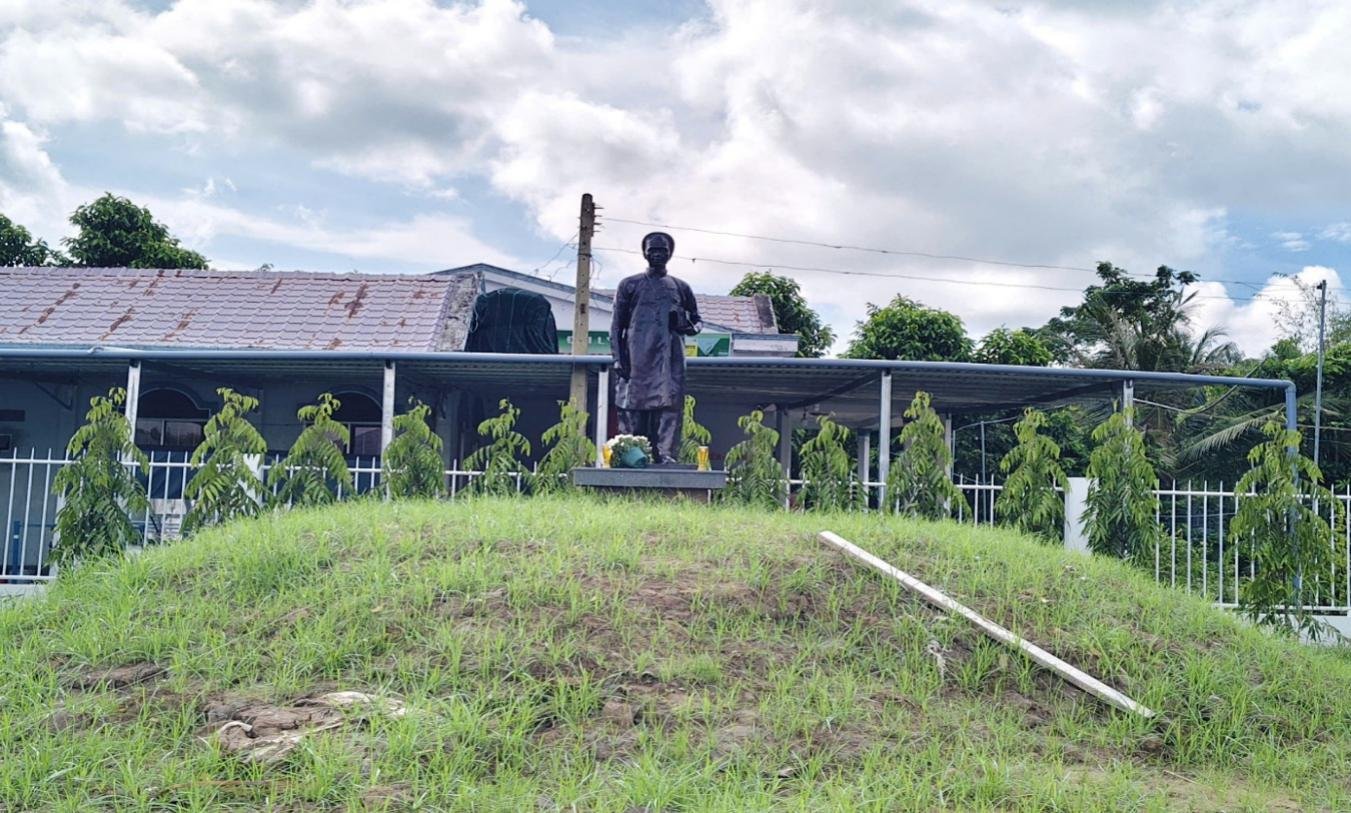
Photo source: Author team, 2026.
At the time of our visit, the stele memorial site was undergoing renovation, with construction materials like sand and cement scattered across the area alongside several unfinished structures. Nevertheless, the grounds had been cleared, creating a much more open space. Key elements — including the main gate, the statue of Trương Vĩnh Ký, and the burial plots within the complex — had been restored, while construction on the main stele house was still underway.
According to information provided by Trần Anh Thuy, the renovation project commenced on July 1, 2025, focusing on the stele house, surrounding landscape, and memorial grounds. The initial phase is slated for completion in early December 2026. [2] This underscored for me that preserving a historic memorial is not merely about maintaining an ancient structure; it is about cultivating a space where the community can continue to visit, pay tribute, and connect with their heritage.
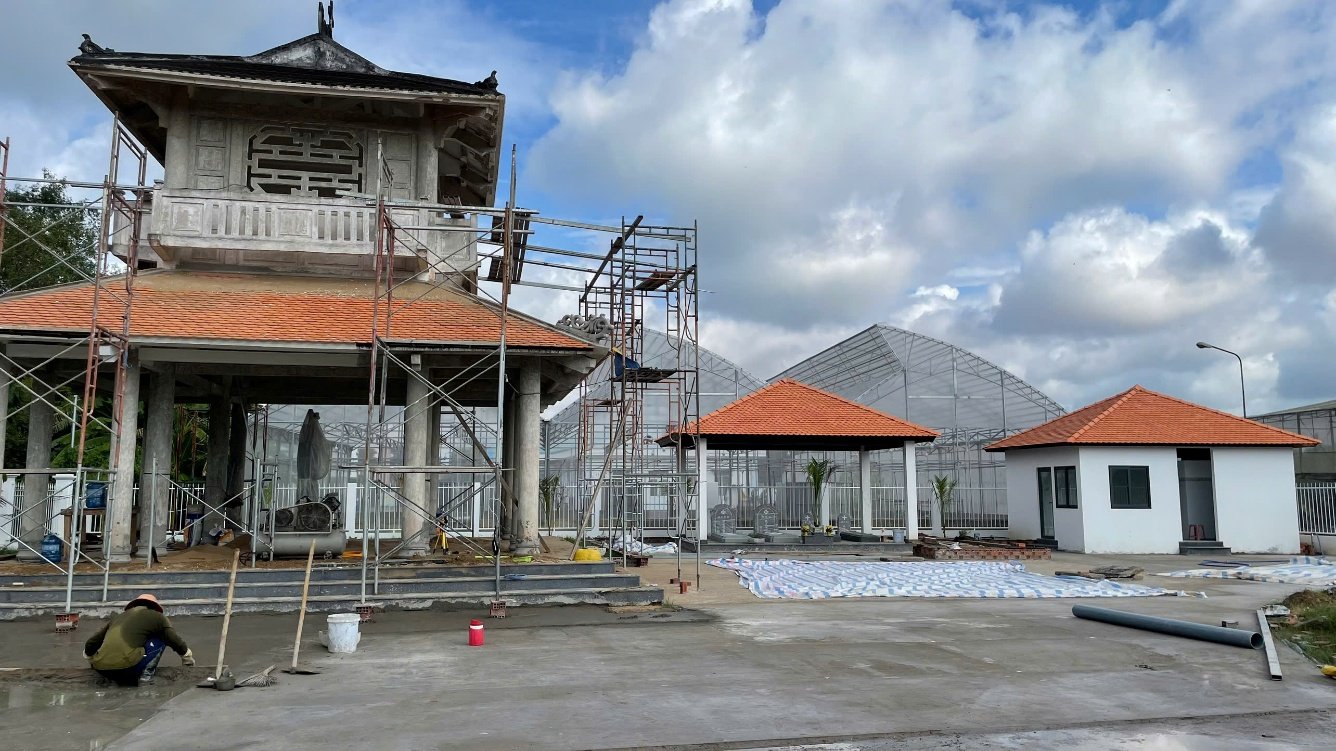
Photo source: Author team, 2026.
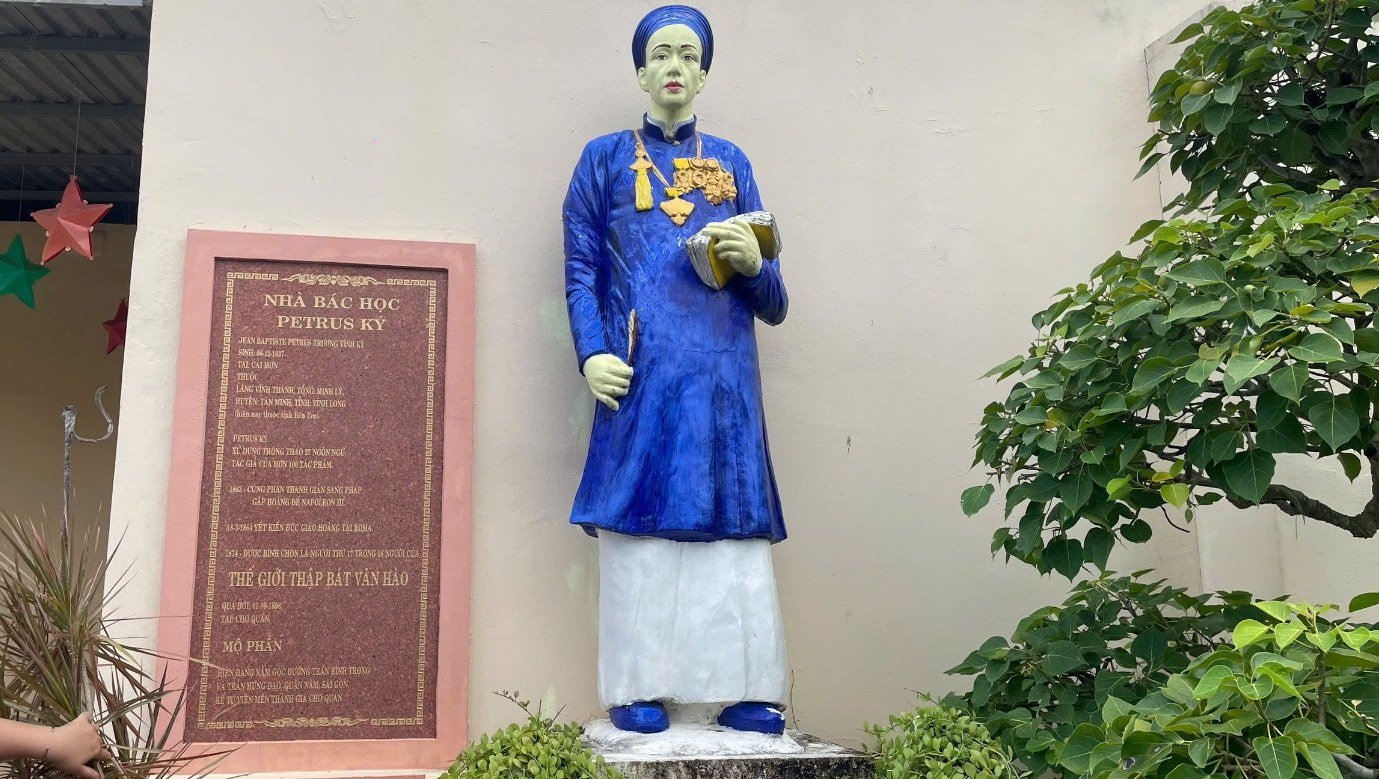
During the field survey, our team also visited Cái Mơn Church to further explore Trương Vĩnh Ký’s historical ties to the region. Upon arrival, we were initially unable to meet our intended contact. However, while exploring the grounds behind the church, we discovered another statue of Trương Vĩnh Ký erected on the premises.
Source: Author team, 2026.
Source: Author team, 2026.
This detail caught me off guard. Before the trip, I had associated Trương Vĩnh Ký’s legacy in Cái Mơn solely with his stele house. Yet, following our field survey, I realized his name is woven into numerous other landmarks. While these traces may not always draw immediate attention, the statues, street signs, schools, and bridges bearing his name demonstrate that his memory remains deeply embedded in the everyday fabric of the local community.
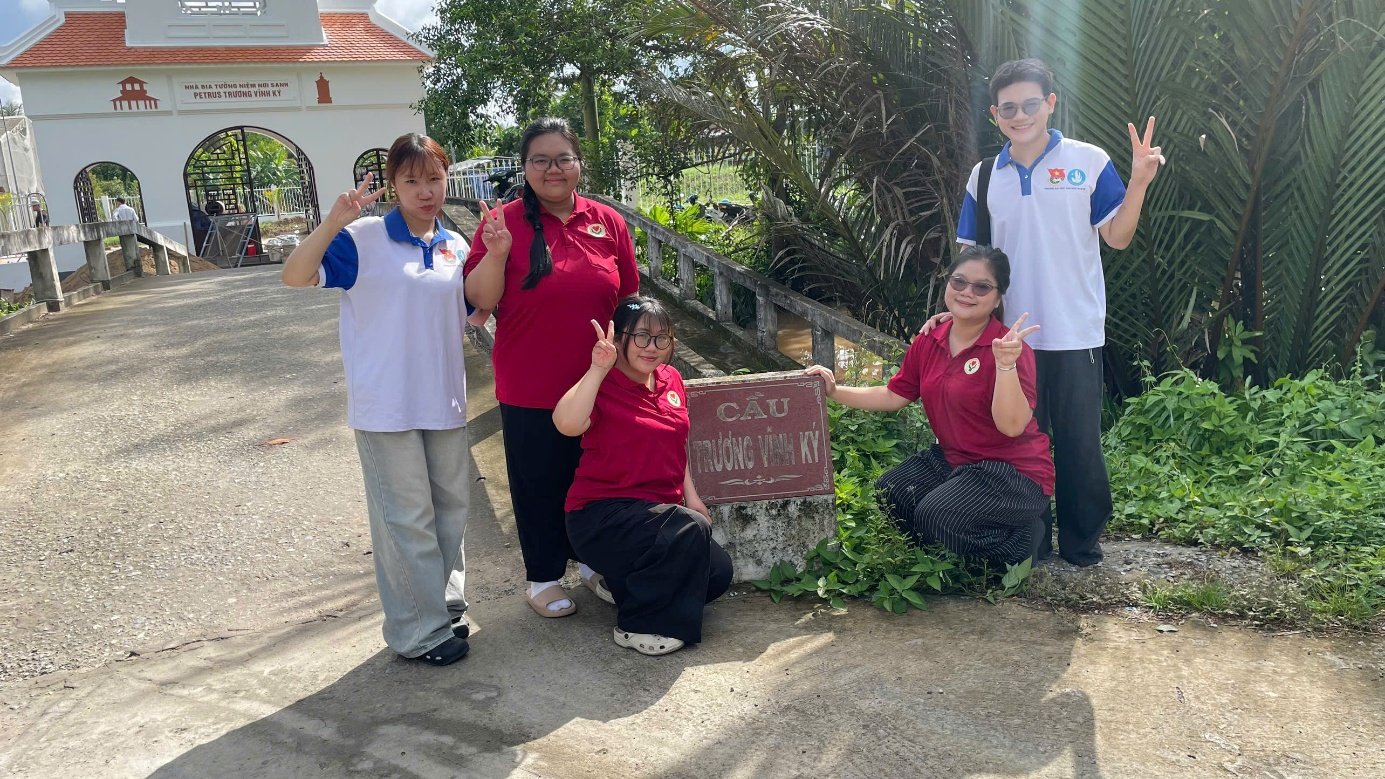
Our team then headed toward the Trương Vĩnh Ký Bridge and the thoroughfare named in his honor. Along the way, we took photographs and struck up casual conversations with residents. Though these brief encounters yielded few deep academic insights into his life, they offered a genuine, down-to-earth perspective on how the revered scholar is perceived in the community today.
Source: Authors, 2026.
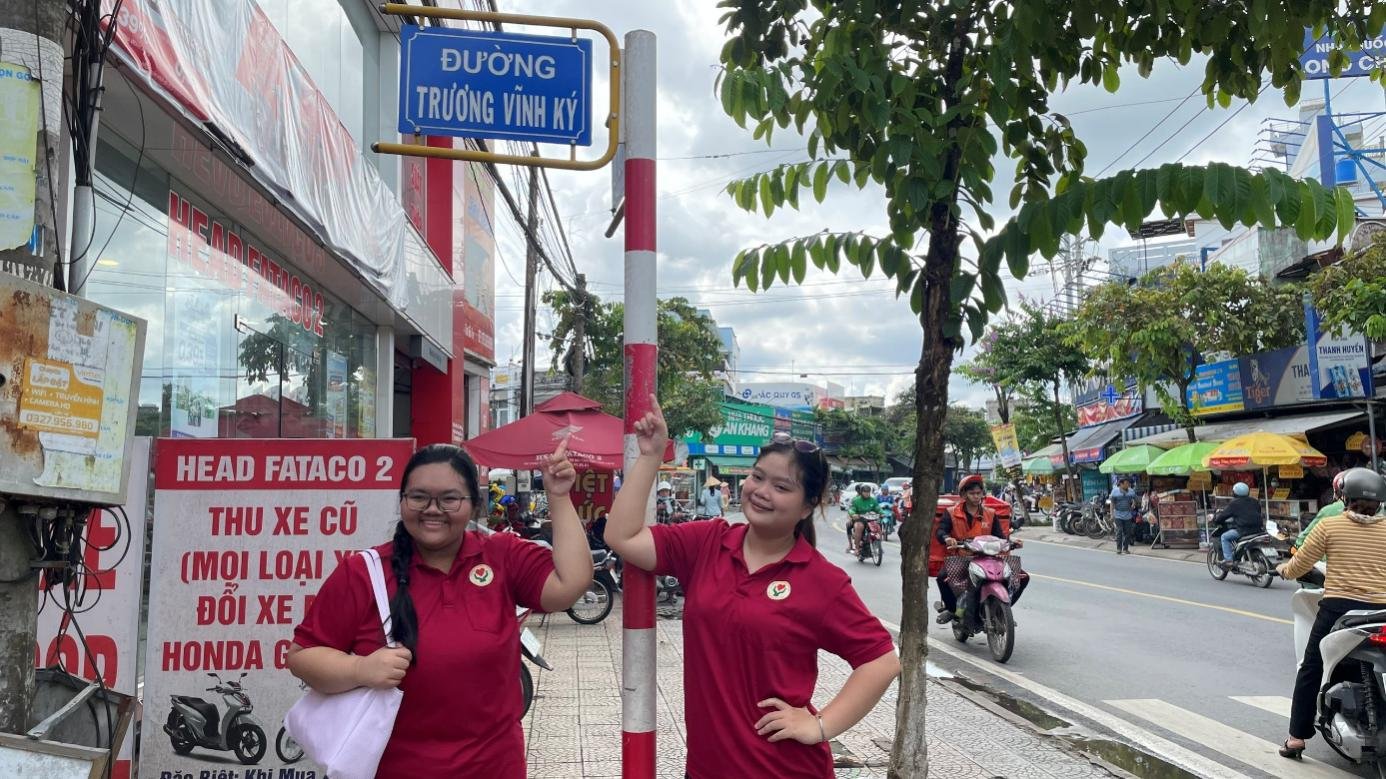
Source: Authors, 2026.
Most locals we interviewed recognized him as a legendary polymath — a form of collective memory in its own right. While not everyone has the opportunity to delve into the finer details of historical figures, the fact that his name endures across everyday landmarks shows that he still holds a cherished place in the region’s shared heritage.
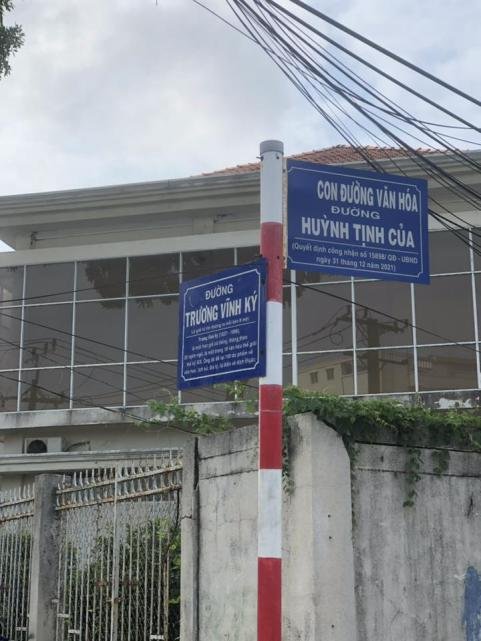
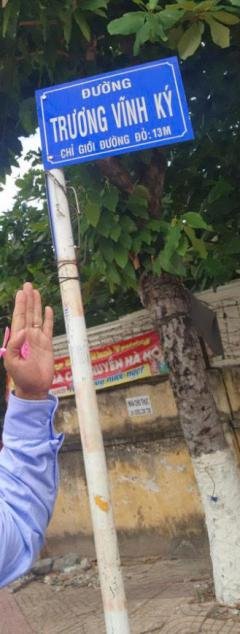
Figure 9. Truong Vinh Ky street in My Tho (left), Nha Trang.
Source: Ben Tre Youth Creative Group, 2024.
This realization
Another place the group went to was Truong Vinh Ky High School. The school named after him is a clear mark of Truong Vinh Ky’s presence in the educational space in his homeland. According to provincial information sources, currently in Truong Vinh Ky’s hometown, there is a high school named after him. [1]
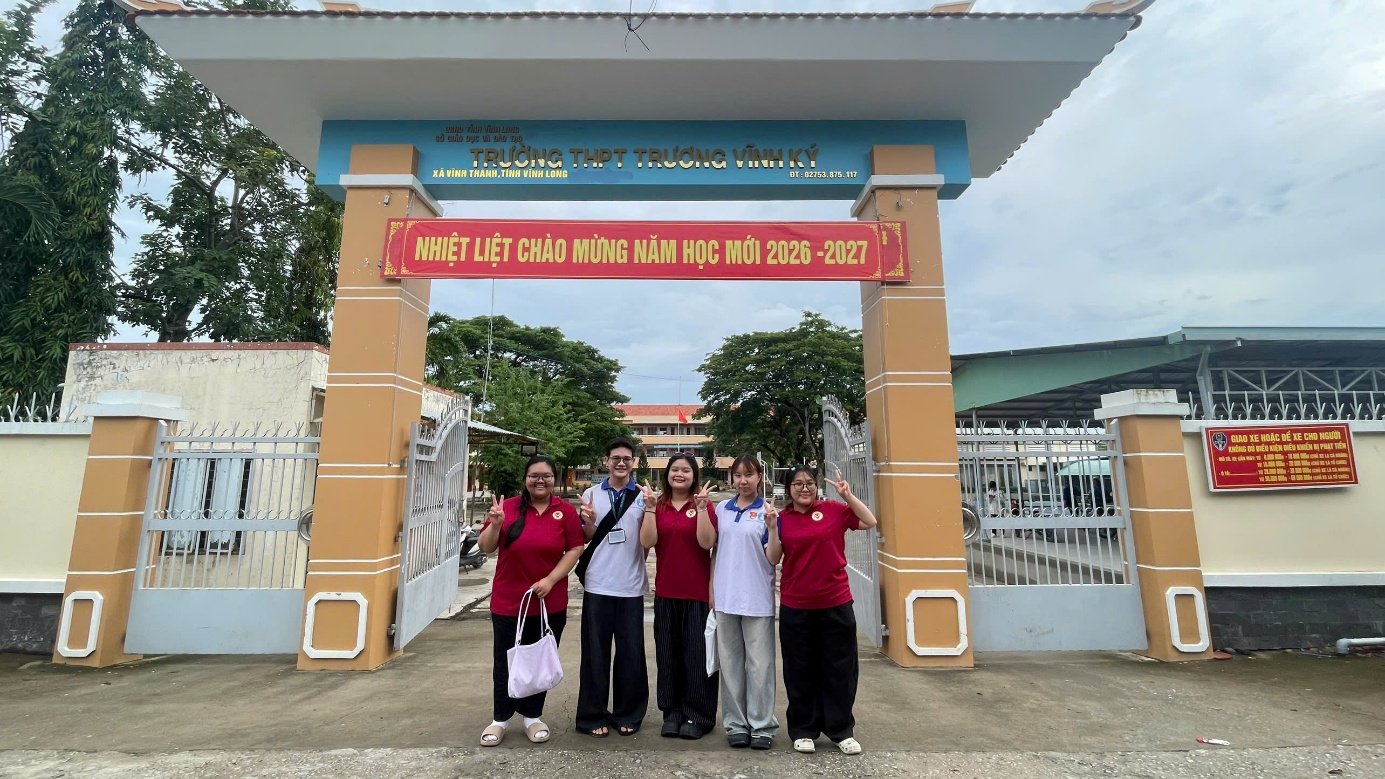
Source: Authors, 2026.
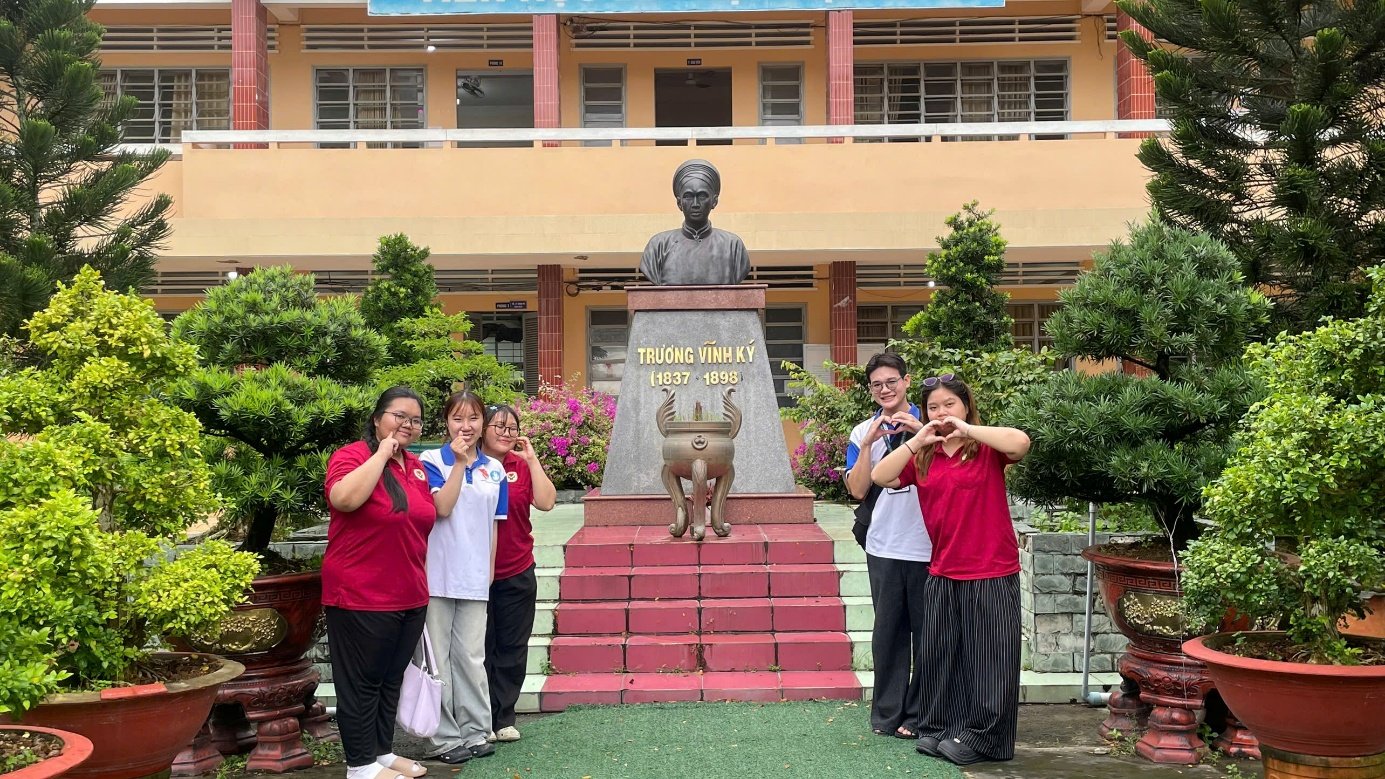
Source: Authors, 2026.
When talking with students at school, the group realized that they all knew Truong Vinh Ky but their level of knowledge was not the same. Some of you know that he is a scientist, but when the group asks deeper questions about his life and contributions, the answer is not always easy. This made me realize that just because a school is named after a historical figure does not necessarily mean that all students fully understand that figure.
This realization shifted my approach to preserving and promoting the stele house’s value. If the site remains merely a spot for offering incense or brief sightseeing, its full potential will stay untapped. However, by transforming it into an educational space where students, locals, and tourists can explore the life, homeland, and contributions of Trương Vĩnh Ký, the stele house can serve as a vital bridge connecting history with contemporary life.
During the field trip, the team also visited Nguyễn Gia Farmstay and met with Nguyễn Thanh Vũ. While not a scholar of Trương Vĩnh Ký, Vũ possesses extensive knowledge of the region’s indigenous fruits. His orchard boasts centennial mangosteen trees, including several roughly 100 years old. Through conversations with him, the team gained deeper insight into the distinct characteristics of Cái Mơn’s fruit varieties, offering a fresh perspective on the profound bond between Trương Vĩnh Ký and this land.
Provincial historical records also credit Trương Vĩnh Ký with shaping the horticulture of Cái Mơn, noting that he introduced several prized fruit varieties — including durian, rambutan, mangosteen, and langsat — from Penang back to his hometown during his return trips. [1]
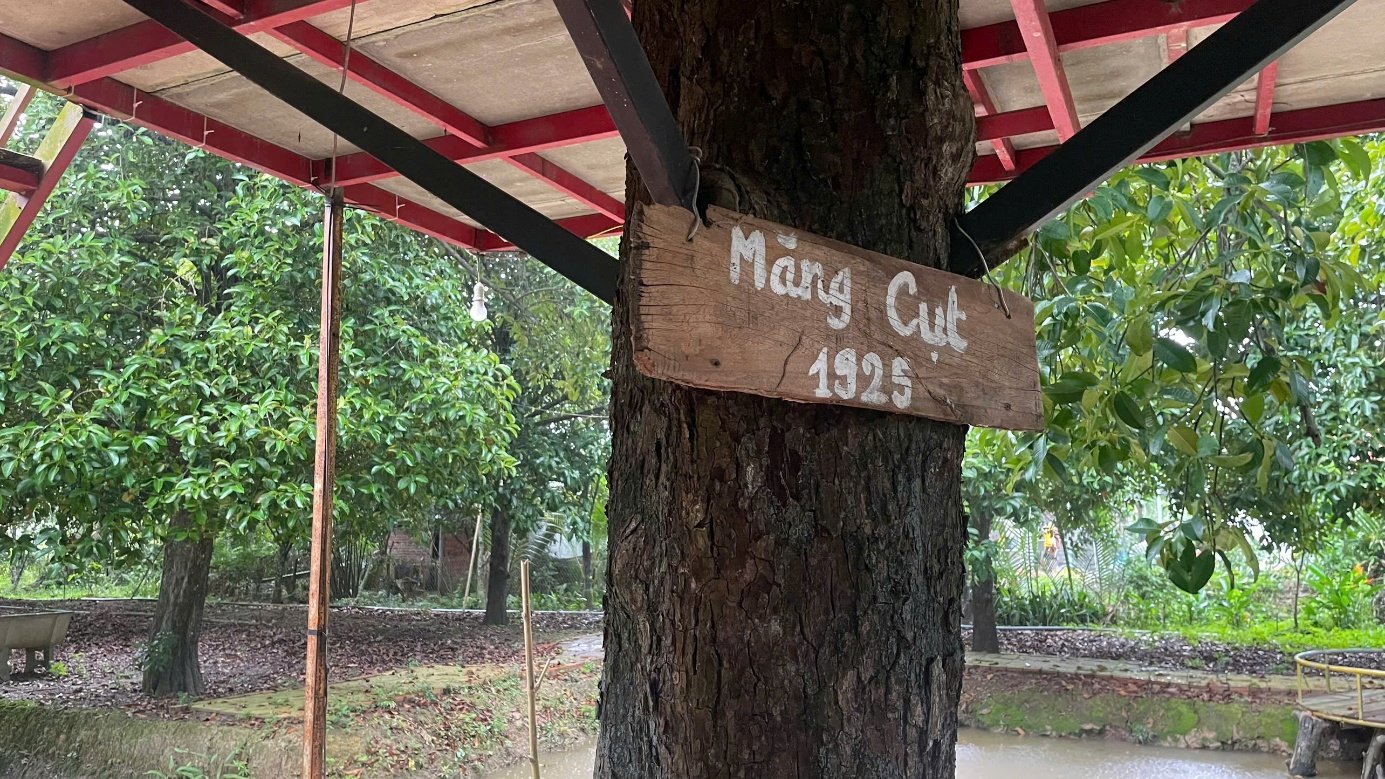
Source: Authors, 2026.
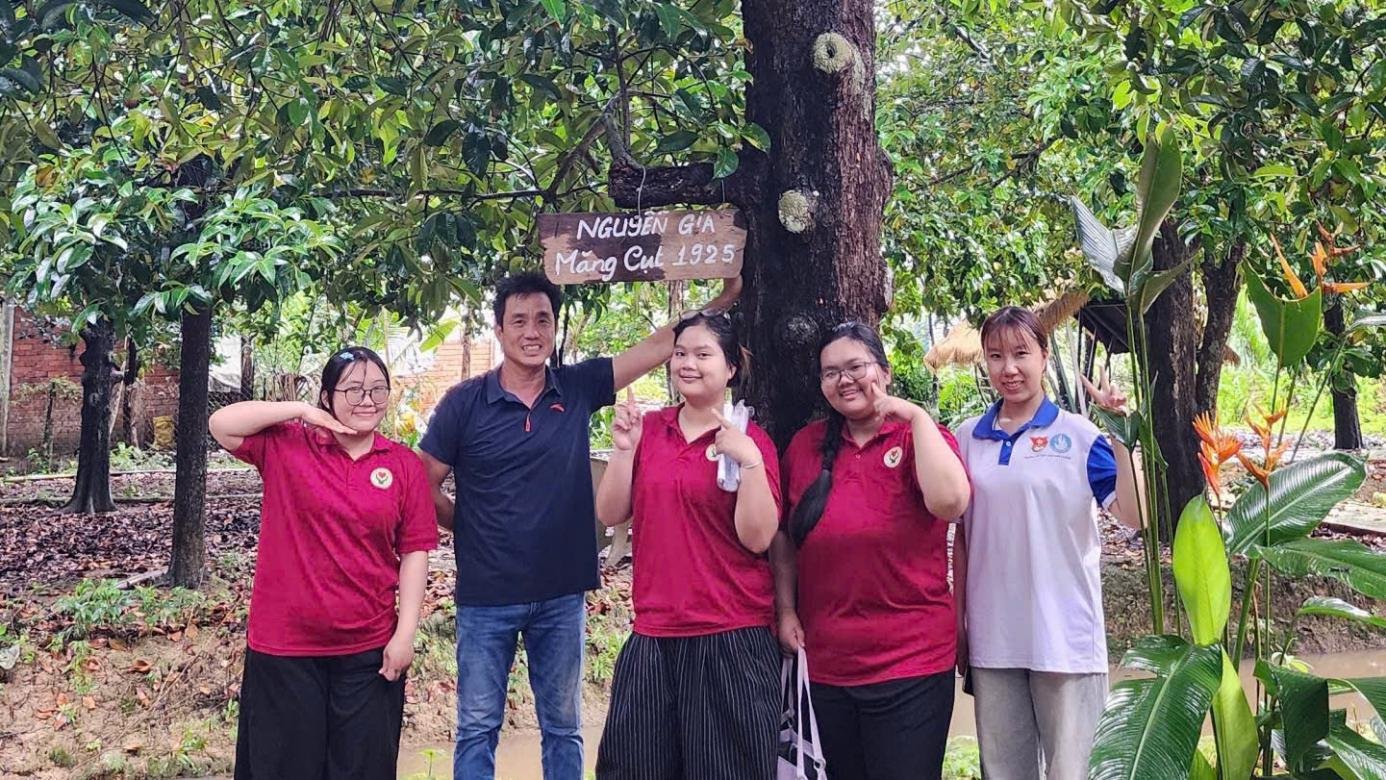
One of the most surprising experiences during the field trip was when our group visited Nguyễn Gia Farmstay and witnessed firsthand ancient mangosteen trees, including several believed to be around a century old. Before the trip, my research on Trương Vĩnh Ký had centered primarily on his intellectual legacy in education, linguistics, journalism, and research. Hearing stories about Cái Mơn’s legendary orchards offered me a fresh perspective on his life. Through a conversation with Mr. Nguyễn Thanh Vũ, a local expert on regional horticulture, our team gained deeper insights into Cái Mơn — viewing it not merely through memorial sites, but through its living spaces and signature agricultural heritage. It was a fascinating experience, as historical details originally found only in archival documents were suddenly juxtaposed with a tangible environment we could directly observe.
For me, the visit to Nguyễn Gia Farmstay brought Trương Vĩnh Ký’s legacy closer to home. I began to view him not just through the lens of his academic and journalistic achievements, but also through the narrative of his homeland — the fertile, fruit-laden land of Cái Mơn. This experience underscored a vital lesson: when researching a local historical figure, observing their living environment, traditional crafts, and the living memories of local residents can unlock rich, multifaceted perspectives that books alone can rarely convey.
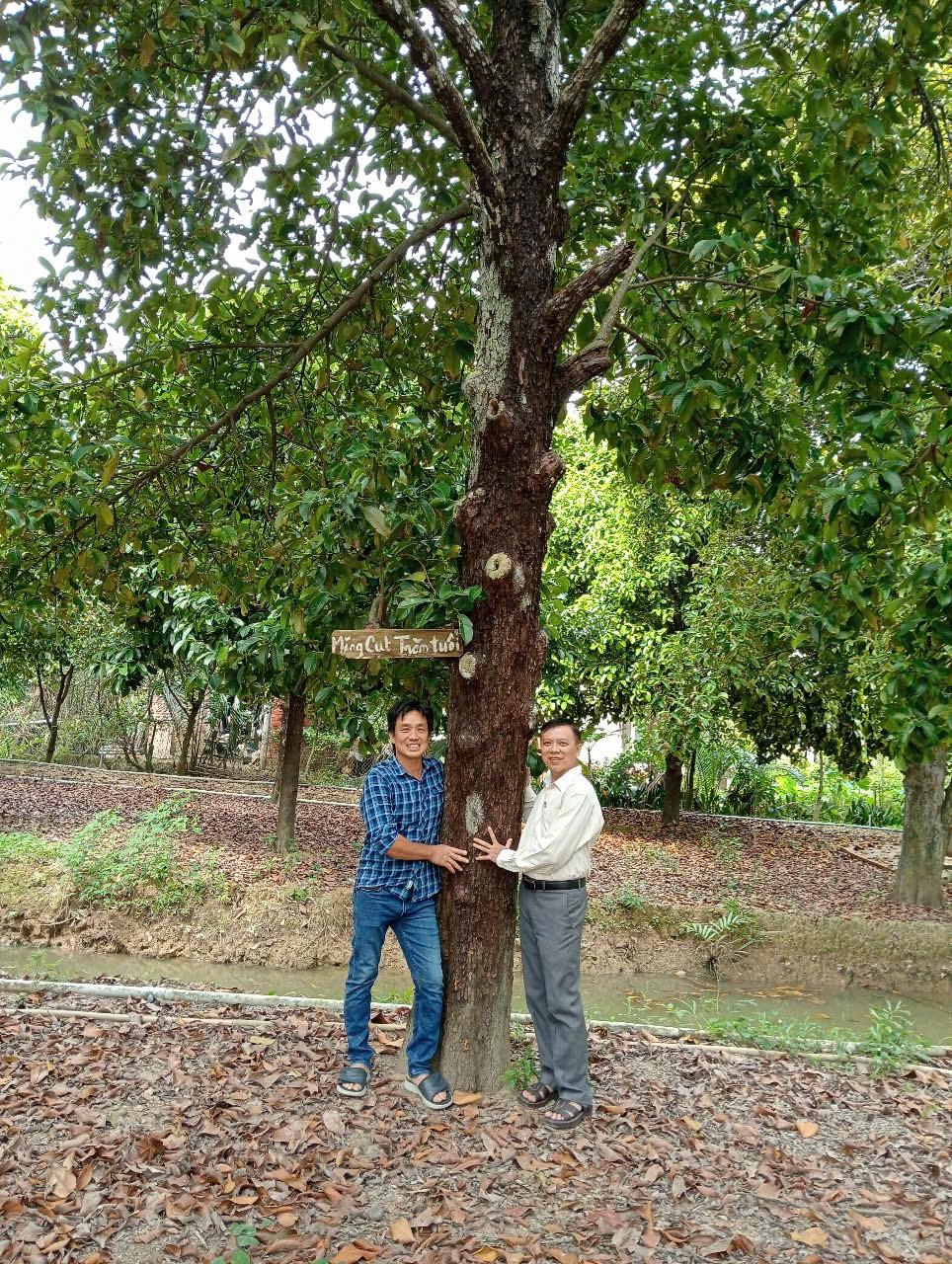
Source: Authors’ group, 2026.
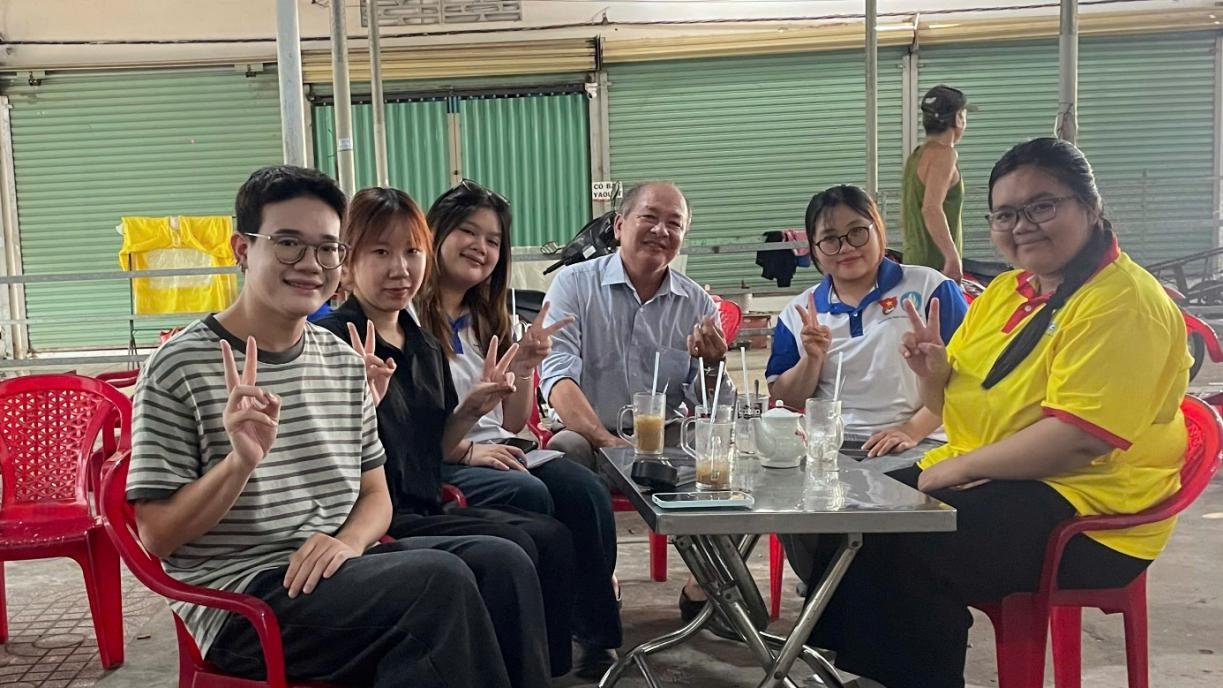
The research team also sought out Nguyen Van Ky, a local figure with close personal ties to the family of Trương Vĩnh Ký. The meeting and subsequent conversation yielded invaluable first-hand insights that online sources could hardly replicate. Ky shared stories about the scholar’s life, annual birth and death commemorations, visits by descendants returning from France, and community activities centered around the Stele House.
Source: Authors, 2026.
What resonated with me most after the interview was the theme of homecoming. Generations of descendants continue to return to their ancestral land, visiting the Stele House during memorial anniversaries to reconnect with their roots. It demonstrates that the memory of a historic figure is not merely preserved through public monuments, but actively sustained within the family and passed down through generations.
Nguyen Van Ky also offered several suggestions on how to raise awareness about Trương Vĩnh Ký and spark greater interest in the site. His insights made me realize that for a historical monument to remain truly alive within a community, the physical structure alone is not enough. It requires accessible storytelling, youth-focused educational activities, and modern interpretation methods aligned with contemporary life.
From direct observation and personal accounts, I realized that the Trương Vĩnh Ký Stele House forms part of a broader network of local heritage. This includes the memorial stele, his statue at the Cái Mơn Church, the Trương Vĩnh Ký High School, the Trương Vĩnh Ký Bridge, a major street bearing his name, historic mangosteen orchards, and oral histories cherished by the local community. While each site holds only a fragment of history, piecing them together reveals a far richer, more complete portrait of Trương Vĩnh Ký.
These vestiges show that commemorating and appreciating ancestors does not necessarily have to be expressed through major activities. Sometimes, a name is given to a road, a school or a bridge, an orchard with the Mangosteen tree recognized as a Heritage tree is a way for ancestors to continue to be present in daily life. People crossing the bridge, students going to school or people mentioning the street name may not always think deeply about the character, but that name is still repeated and continues to exist in the community space.
However, during the survey, the team also realized that there are still gaps that need to be further explored. We have not had the opportunity to go to places in Ho Chi Minh City related to Truong Vinh Ky’s descendants and have not been to the house of a female author known for a book about his life. These are the next directions my group needs to conduct a more in-depth survey for the final essay.
After the trip, what remained with me was not just the photos or the information I recorded. At first, I was quite disappointed because I thought I would find more people who understood Truong Vinh Ky better. But the more I walked, the more I realized that those incomplete answers helped the group ask more questions about how a historical figure is remembered in public life.
I also realized that sometimes my hometown has so many familiar things that I no longer pay attention. A name on a road, a school, a bridge or a memorial statue may have appeared a long time ago, but I myself have never studied in depth about their meaning before. Only when I really go, observe, ask and listen, do I begin to see the stories behind those familiar things.
Through the survey of Truong Vinh Ky Stele House, I better understand that the community value of a monument lies not only in the building itself but also in how people continue to remember, use, retell and pass on the stories associated with that place. The stele house may be a memorial, but when connected to schools, streets, bridges, families, gardens and people’s activities, the memory of Truong Vinh Ky becomes a part of Cai Mon cultural space.
For me, the survey also made learning in class more concrete. Instead of just looking at community cultural life through concepts, I had the opportunity to directly observe a case right in my hometown. From then on, I understood that for a cultural value to be maintained long-term, it requires the attention of many parties and, more importantly, a connection between heritage and people in current life must be created.
ACKNOWLEDGMENTS
I would like to express my sincere gratitude to Dr. Phạm Văn Luân, who enabled and guided our research team throughout this meaningful field trip to Cái Mơn. Thanks to this expedition, I not only gained deeper insights into Trương Vĩnh Ký and his memorial stele house, but also had the invaluable opportunity to view my own homeland through a fresh perspective.
I also extend my heartfelt thanks to everyone who generously shared their knowledge with us, particularly Mr. Nguyễn Thanh Vũ, Mr. Nguyễn Văn Kỷ, and Mr. Trần Anh Thuy. Their stories, insights, and personal experiences enriched this article, grounding our documentary research in vivid, first-hand field observations.
Though brief, this journey left a profound impression on me. While some questions remain unanswered, those very mysteries inspire me to continue exploring the legacy of Trương Vĩnh Ký and the enduring heritage preserved in my native Cái Mơn, as we look forward to the 200th anniversary of his birth.
Nguyễn Ngọc Khánh Vy
Faculty of Heritage and Ethnic Culture
REFERENCES
[1] Vĩnh Long Provincial Web Portal (2026), Trương Vĩnh Ký Stele, information on the life of Trương Vĩnh Ký, the Trương Vĩnh Ký Stele House, and his legacy in Cái Mơn.
Vĩnh Long Provincial Web Portal – Trương Vĩnh Ký Stele
[2] Trần Anh Thuy (2026), Documentation on the Restoration of the Trương Vĩnh Ký Memorial Stele House, primary research data collected during field surveys for the project.
[3] Nguyễn Thanh Vũ (2026), Fieldwork Interview on Fruit Orchards and Gardening Traditions in Cái Mơn, primary data recorded at Nguyễn Gia Farmstay, September 2026.
[4] Chú Kỷ (2026), Fieldwork Interview on Trương Vĩnh Ký, His Descendants, and the Memorial Stele House, oral history interview conducted on September 20, 2026.
[5] National Museum of History (2013), Gia Định Báo: Vietnam’s First National Script Newspaper, archival insights into Gia Định Báo and Trương Vĩnh Ký’s pioneering journalism.
National Museum of History – Gia Định Báo
[6] National Museum of History (2021), Unearthing the Archives: ‘Thông loại khóa trình’, Trương Vĩnh Ký’s Commercially Unsuccessful Periodical, overview of Trương Vĩnh Ký’s publishing, journalistic, and academic endeavors.
National Museum of History – Thông loại khóa trình