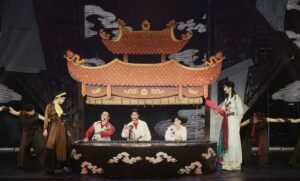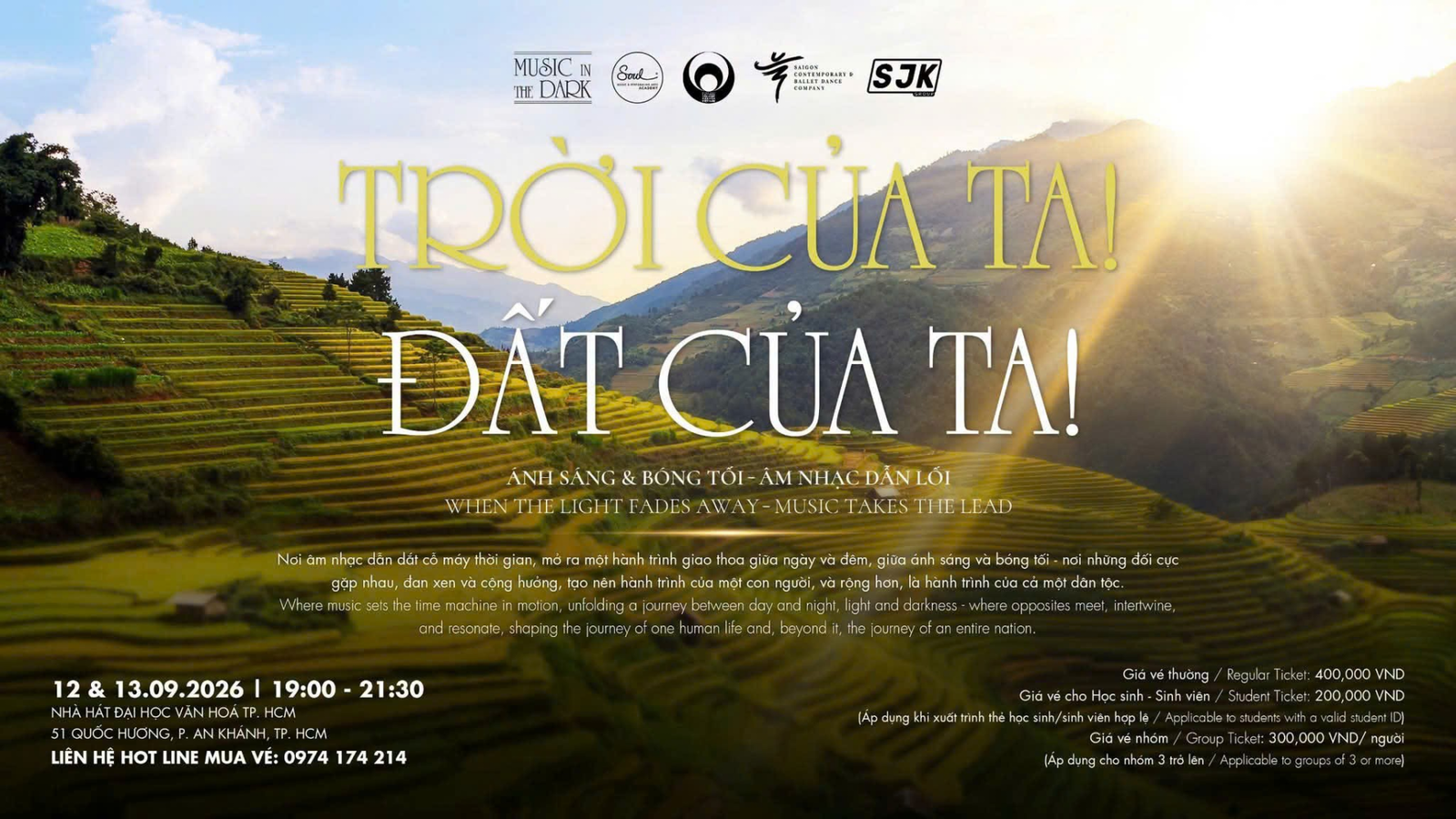
In 2026, Music in the Dark returned with the production “OUR SKY! OUR LAND!”, held on September 12–13, 2026, at the Theater of Ho Chi Minh City University of Culture. Carrying the core message “There is a Vietnam inside me,” the show narrated the story of Vietnam through vignettes of Homeland & Roots – People & Memories – Past & Present. Beyond serving as an artistic performance, the show stood out as a creative medium to recreate, convey, and revitalize Vietnamese cultural values through the lens of contemporary art.
PERSPECTIVES FROM CULTURAL THEORY ON MUSIC IN THE DARK 2026 – “OUR SKY! OUR LAND!”
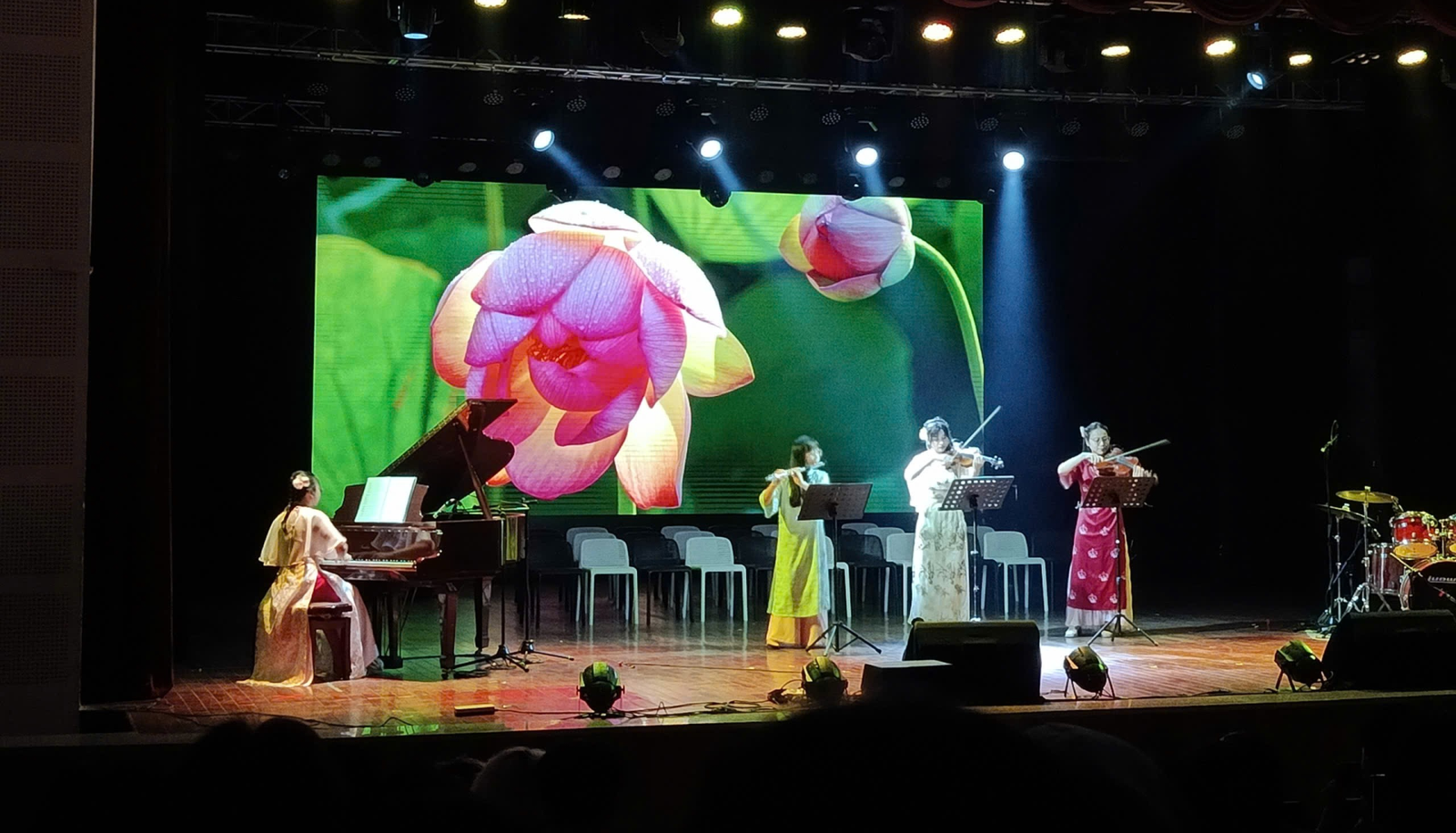
The concert unfolded across three chapters. The opening chapter presented instrumental performances such as Dawn (Rạng Đông) and The Sound of the Monochord (Tiếng Đàn Bầu), followed by a flute, piano, and violin ensemble delivering Lullaby of the Homeland (Đất nước lời ru), Mother Loves You (Mẹ yêu con), and Love Song (Tình ca). Positioning traditional instruments alongside the piano, violin, and modern ensemble arrangements showcased the capacity for cultural heritage, cross-cultural dialogue, and acculturation—placing familiar values into a new expressive framework while retaining a distinctly Vietnamese essence. The presence of a diverse audience, including international attendees, further highlighted art’s power as a vehicle for intercultural communication. Even without a shared language or historical memory, listeners could readily absorb the melody, rhythm, and emotion embedded in each work.
Chapter Two marked the hallmark feature of the program: the entire auditorium was plunged into total darkness, eliminating visual cues and elevating auditory perception as the primary sensory bridge. In this setting, darkness functioned as an artistic language in its own right. Iconic songs such as Arise and March (Dậy mà đi), Placid River (Dòng sông phẳng lặng), and The Trailblazing Girl (Cô gái mở đường)—historically anchored in times of turmoil—evoked vivid associations with wartime years as they echoed through a sightless hall. This was not a realistic simulation of war, but a deliberate staging that allowed cultural memory to be sparked through individual introspection. Classical choral and ensemble arrangements breathed fresh life into these familiar anthems, building a rich, resonant soundscape that evoked a powerful sense of community strength.
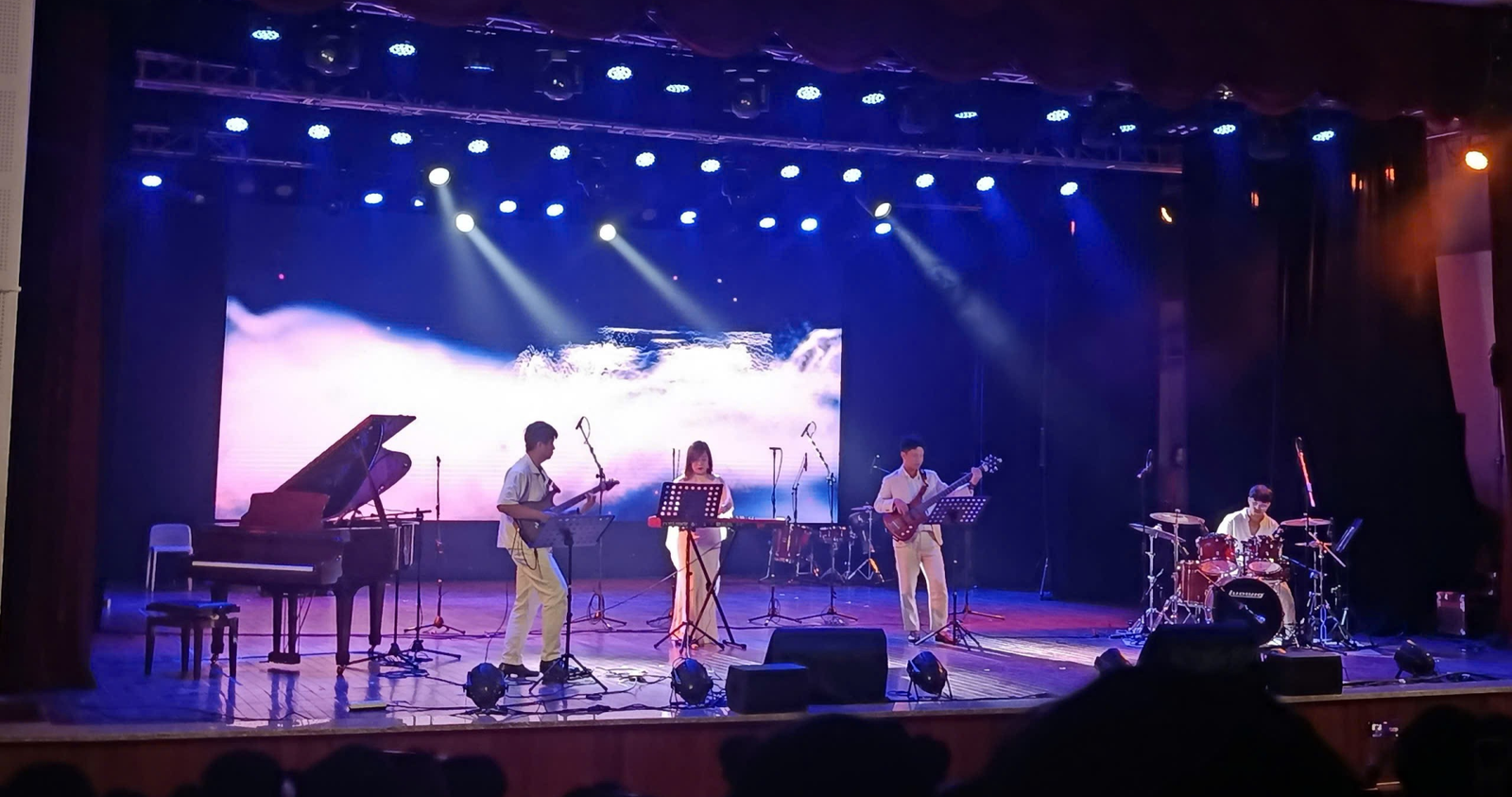
After nearly an hour in total darkness, the sudden return of light created a striking visual and emotional contrast. Tracks like Youthful City (Thành phố trẻ), Song of Construction (Bài ca xây dựng), and From the State Farm to the Border (Em ở nông trường em ra biên giới) infused the space with a lively, upbeat atmosphere, while fusion arrangements incorporating rock and jazz offered a contemporary face to cherished classics.
The transition from darkness to light was therefore more than just a theatrical device; it functioned as a compelling cultural allegory for the nation’s journey: from hardship to peace, from memory to the present day. The final chapter broadened its focus toward the collective community, evoking a spirit of solidarity in building and advancing the country. The performance “A Flag Hangs at My House” (Nhà tôi có treo một lá cờ) left the deepest emotional imprint on me. Its distinction lay not only in the music itself, but in how ceremonial drums were seamlessly integrated, creating an atmosphere that felt both solemn and modern. Traditional ceremonial elements were reinvented within a contemporary performance medium.
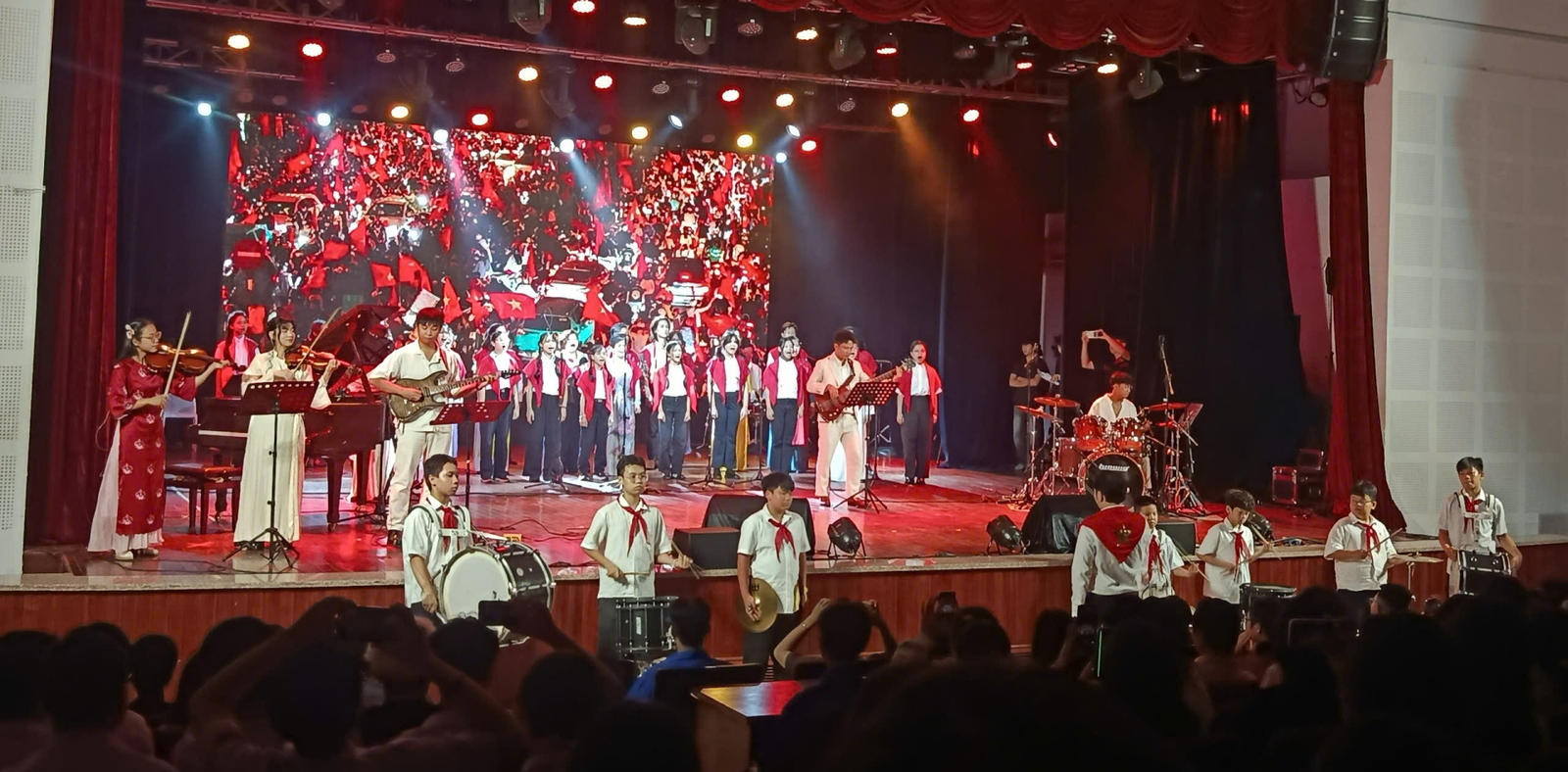
A subtle yet memorable detail came at the conclusion of the concert, when composer Nguyen Do Anh Tuan personally introduced the participating artists and production crew members on stage, rather than merely scrolling their names on a screen. This gesture underscored a deep appreciation for the individuals behind the scenes—the key agents who collectively forge the artistic value of a production.
In the wake of Music in the Dark 2026 – Our Sky! Our Land!, what stayed with me was not just the memorable melodies, but the nuanced narrative of Vietnamese culture expressed through music, light, and shadow. From the perspective of Cultural Theory, the show went beyond preserving heritage; it successfully inherited, innovated, and reinterpreted tradition within a contemporary artistic framework. Nevertheless, the experience could have been further elevated by providing English translation or live interpretation for the MC’s commentary and voiceover segments. Given the presence of international audience members, language remains a critical bridge for enabling deeper comprehension of the cultural narrative being shared. This is also a vital step toward allowing art to act as a more effective platform for cross-cultural exchange. Through this experience, I gained a deeper understanding that culture is not a static artifact to be passively preserved, but a dynamic legacy continuously received, reimagined, and passed forward.
Tran Thi Hai Yen, Class: 25DTCDDNT
Faculty of Cultural and Arts Management
Ho Chi Minh City University of Culture
REFERENCES
Soul Institute of Arts. (2026). The team – Nguyen Do Anh Tuan. Soul Institute of Arts – The Team (Soul Institute of Arts (SIA))
Soul Institute of Arts. (2026). Music in the Dark 2026 | Our Sky! Our Land! (School and College Listings)