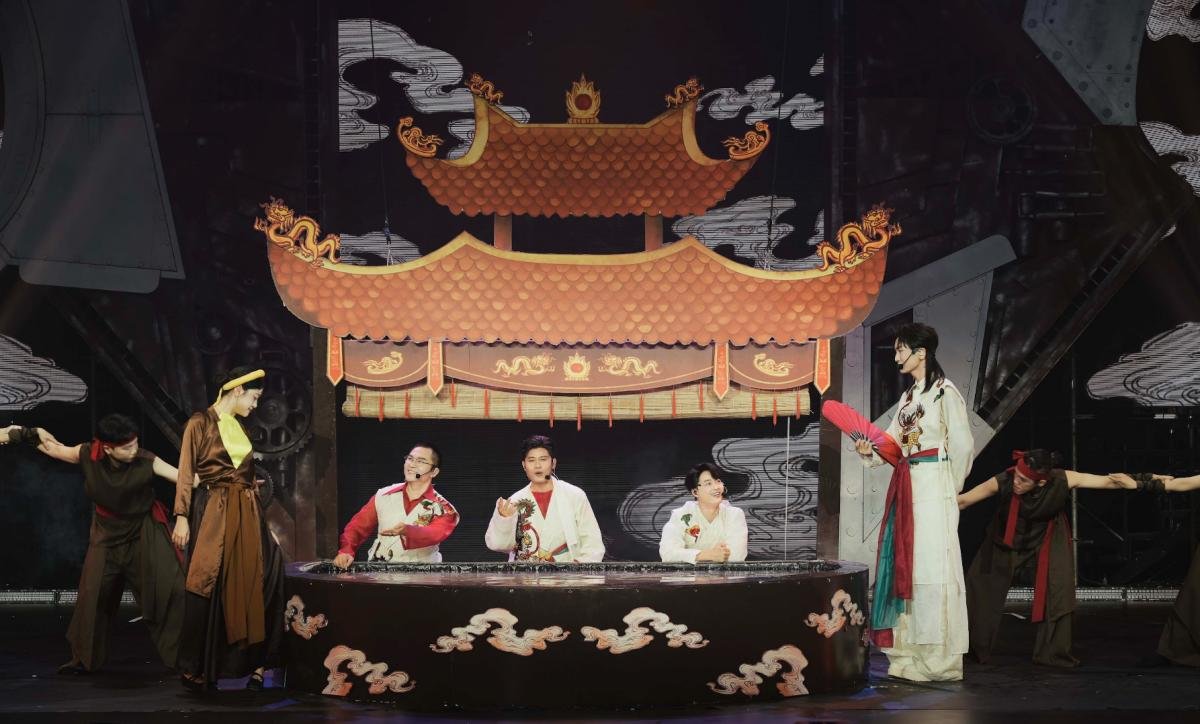
From the perspective of Cultural Theory, culture is not the static values of the past but is always moving, inherited and re-created. From that lens, War Horse House’s performance “The Old Starling Bird” at “My Brother Overcame Thousands of Thorns 2026” is not only an artistic performance, but also a harmonious combination of water puppetry, zither, flute, dragon dance and folk materials. Thereby, the performance evokes love for art, the vitality of traditional culture and gratitude to those who silently preserve art behind the lights.
On the evening of August 15, 2026, at Performance 2 of the show “The Brother Overcame Thousands of Thorns 2026”, “Flutes of the Past” of War Horse House with talents Dai Nghia, Nguyen Van Chung, Thanh Duy and BB Tran made their mark with a stage rich in traditional colors. The song composed by Nhat Sinh was renewed with lyrics and X-Parts performed by Nguyen Van Chung, expanding the story from a couple’s love to the artist’s love of art and desire to rise.
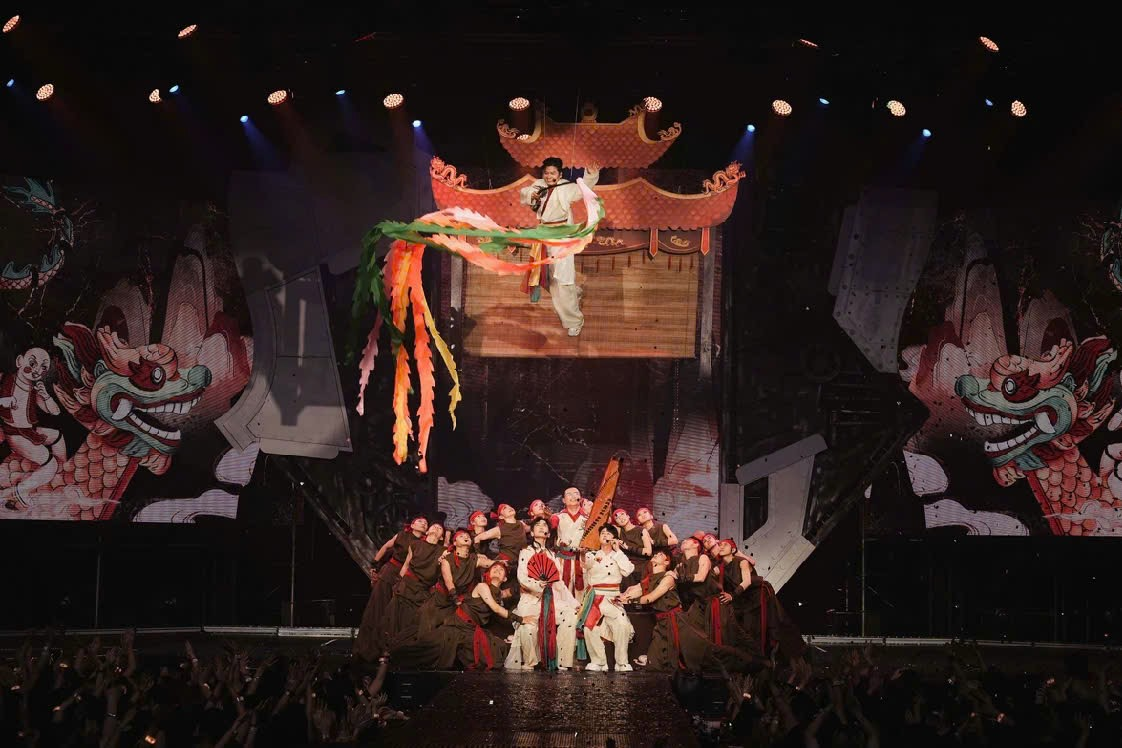
From its opening moments, the performance unfolds like a fairytale. As the resonant notes of a flute echo, gentle ripples stir across the water’s surface, and the multi-layered stage reveals itself piece by piece. At times evoking a nostalgic romance of yesteryear, the narrative seamlessly shifts to portray artists searching for their own light. This fluid transition ensures “Chim Sáo Ngày Xưa” is far more than a visually lavish spectacle; beneath the layers of light, sound, and motion lies a rich cultural narrative woven from multiple artistic mediums.
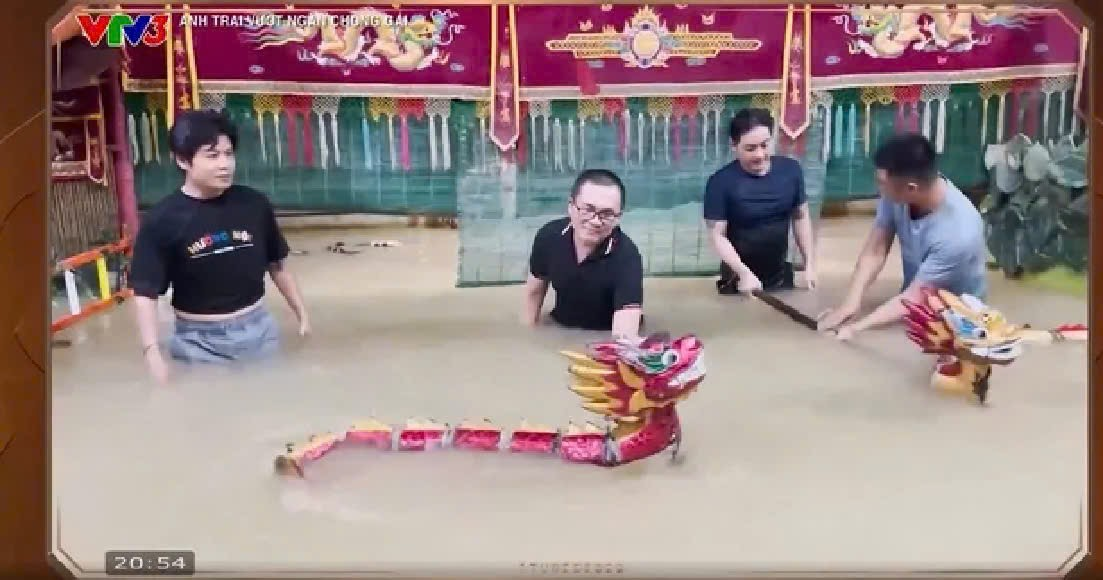
When the water surface becomes the stage, the point that makes “Once Upon a Starling” different is the bringing of water puppetry to the stage of a modern entertainment program. This idea comes from talented guy Dai Nghia. Instead of just using the image of water puppetry as a decorative element, the performance brings the unique techniques and spaces of this art form into the narrative. To prepare for the performance, all four members went to the Golden Dragon Water Puppet Theater to learn how to control puppets, even having to soak in cold water for many hours during practice. This is especially suitable for the message that the performance is aiming for: honoring the artists who work silently behind the stage. Water puppetry is an art form in which the audience often sees the puppet before seeing the person controlling it. Seemingly simple movements on the water surface are created by hands standing behind bamboo screens, in a space where the performers are almost hidden.
Thus, when *Chim Sáo Ngày Xưa* brought traditional water puppetry to the stage, the art form’s defining dynamic—performers working behind the scenes while the artwork takes center stage—became an integral part of the narrative. This allowed the performance to align naturally with the event’s theme, “Through Light and Shadow.” In the end, the spotlight shines not only on those standing front and center, but also on the unseen artists whose behind-the-scenes contributions bring the work to fruition. *Ngôi Sao* noted that artist Đại Nghĩa conceived the performance out of a deep desire to honor these unsung creators behind the curtain.
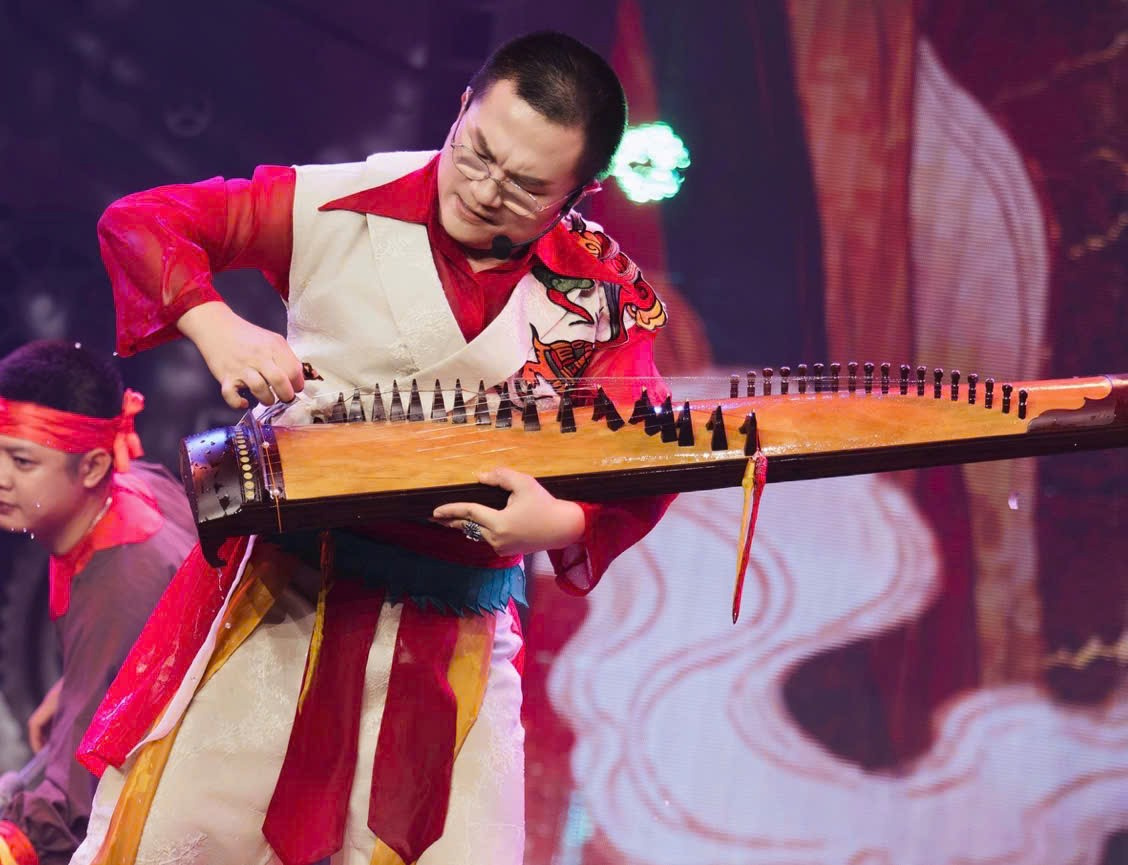
One of the things that makes the performance attractive is the way the four members are not placed in the same performance mold. Dai Nghia is associated with the image of zither and water pavilion space. The moment he sat in the middle of the water, strumming the zither, created a highlight that was both visually beautiful and reminiscent of traditional theater. This detail was also recognized by Tuoi Tre as one of the outstanding images of the performance. Nguyen Van Chung brings the sound of the flute and the aerial dragon dance performance. This is one of the highly visual performances, creating strong movement for the entire stage. Thanh Duy is in charge of the vocal part and helps divide the singing parts among the members. According to VTV, he also gave vocal guidance to the group during the preparation of the performance. BB Tran again made an impression in his image and costumes. His outfit uses white as the main color, combining details inspired by Dong Ho folk paintings with green, yellow, red, black and white colors.
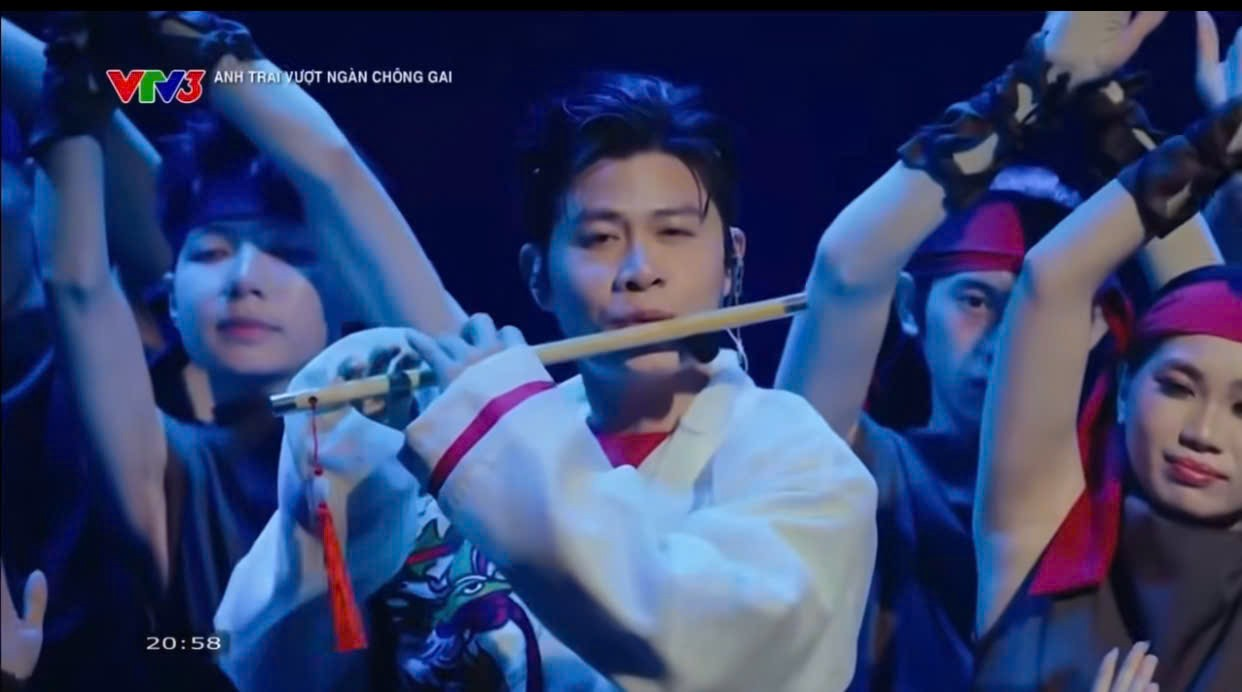
Four people, four roles, but not separate from each other. Flute, zither, singing, costumes, water puppetry and aerial performances appear together in a unified stage line. From the perspective of performance organization, this is quite a notable point: a performance with many materials is only truly convincing when those elements do not compete with each other but serve the same story.
If “The Old Starling Bird” was originally known for its love story, the remake of War Horse House has expanded the song’s meaning into another direction: love for art. Nguyen Van Chung added the lyrics about the image of the artist as a starling bird always aspiring to rise, aiming for the image of a phoenix. According to VnExpress, this X-Part is about the artist’s love of art and desire to expand. The mix also combines contemporary pop and folk genres with traditional melodies.
The interesting thing is that that image is not only expressed in words but also expressed through the journey of the four artists on stage. Nguyen Van Chung learned to play the flute and performed an aerial dragon dance; Dai Nghia learned to control water puppets and perform zither; Thanh Duy takes on the vocal part and also supports the members vocally; BB Tran both participated in the performance and was in charge of costumes. In other words, the very process of four people stepping out of what was familiar to them became part of the message of “rising”. From a song about love, the stage is expanded into a story about people who work in the arts: sometimes standing in the dark, sometimes not being seen, but still continuing to do their job and find a way to step towards the light.
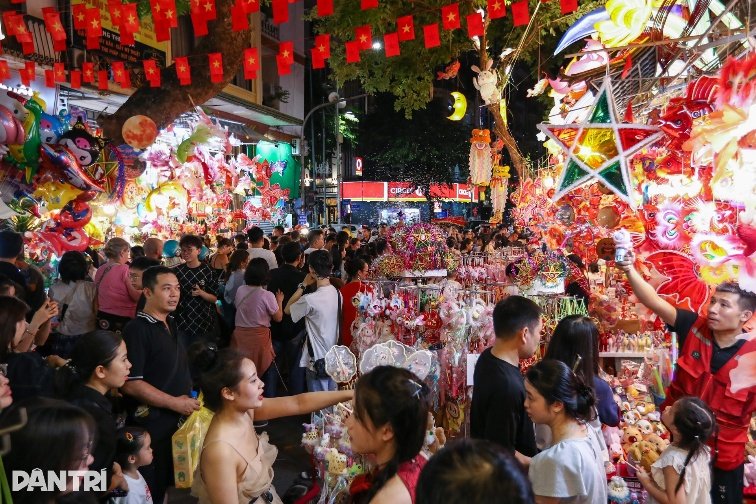
A distinct sense of nostalgia washes over the viewer watching this performance as the Mid-Autumn Festival draws near. While “Chim Sáo Ngày Xưa” does not officially take the festival as its central theme, its shimmering water, floating pavilion, evocative flute notes, puppets, vibrant folk palette, and festive air instinctively evoke memories of Mid-Autumn nights past. It conjures a realm at once familiar and ethereal—lit by stage lights, steeped in music and folklore, and echoing the wonder of childhood.
This resonance stems largely from how the production crafts its atmosphere. Media company Yeah1 described “Chim Sáo Ngày Xưa” as delivering a “vibrant, tradition-steeped festive atmosphere,” seamlessly weaving traditional folk motifs into a fresh stage presentation. Here lies the true beauty of the act: rather than forcing the audience to recall specific rituals or customs, it awakens deeply embedded cultural memories purely through sound, color, and spatial design. Perhaps heritage is ultimately remembered through the smallest details—a flute melody, ripples on the water, a dancing puppet, a familiar hue, or simply the fleeting impression of having glimpsed this very scene somewhere in one’s youth.
What makes “Chim Sáo Ngày Xưa” truly remarkable is not the sheer volume of traditional elements it features, but how seamlessly those elements are translated into a fresh performance language. Water puppetry takes center stage on television; the *đàn tranh* (zither) reverberates through state-of-the-art lighting and sound systems; delicate flute melodies accompany aerial acrobatics; and costumes inspired by traditional Đông Hồ folk prints are reimagined within a contemporary entertainment landscape. Here, heritage is not locked away behind a glass display case to be passively admired. Instead, it is actively revitalized, transformed, and retold through a medium that resonates deeply with modern audiences.
This prompted me to reflect more deeply on how traditional culture can be preserved and promoted. Preservation is not simply about keeping an old art form frozen in time; for cultural heritage to thrive in modern society, it must adapt to new spaces, new audiences, and new modes of expression. “Chim Sáo Ngày Xưa” demonstrates precisely this approach. Audiences might initially tune in for popular artists like Đại Nghĩa, Nguyễn Văn Chung, Thanh Duy, or BB Trần, but they walk away with a newfound appreciation for traditional water puppetry, the *đàn tranh* (zither), or Đông Hồ folk art. In my view, this underscores a vital strength of pop culture: reintroducing heritage—which young people might otherwise overlook—in a way that feels fresh, relevant, and accessible.
From the perspective of a Cultural Management student, what caught my attention was not merely how visually striking the performance was, but how it was conceived and delivered to the public. A stage production like “Chim Sáo Ngày Xưa” (The Starling of Yore) could never be born from a single vision alone. Behind the scenes lies a collaborative effort uniting performers, music producers, choreographers, set designers, costumiers, stage technicians, and traditional arts specialists. Show credits reveal that SlimV served as music producer, Javix handled the arrangements, Mạnh Quyền directed the choreography, and Huỳnh Trung choreographed the water puppetry. From both a theoretical and managerial standpoint, this serves as a vivid example of mobilizing resources to transform heritage into a product of the cultural industry—broadening the touchpoints between traditional arts and modern audiences. ===END_SEG===
Cultural management is far more than executing a show on time, filling seats, or sticking strictly to a script. On a broader scale, it centers on identifying cultural values, finding effective ways to foster them, and bringing them closer to the public. In this instance, water puppetry was not detached from modern life. Instead, it was seamlessly integrated into an entertainment program tailored for a younger audience, creating an authentic touchpoint between traditional heritage and today’s viewers. This allowed me to appreciate the performance not just as a spectator, but through the lens of a student learning how to comprehend and curate cultural heritage.
If I had to pick a defining image to remember from “Chim Sáo Ngày Xưa” (*The Starling of Yesteryear*), it would be the water’s surface. From those waters, the puppets emerged. From those same waters, the resonant strains of the *đàn tranh* (zither) echoed, followed by the haunting melody of the flute, aerial choreography, light, and music in seamless succession. It felt like a scene plucked straight out of a fairytale—not one left dormant in memory, but a story retold through the vibrant lens of contemporary theater.
That, perhaps, is the true secret behind the performance’s captivating appeal. “The Starling of Yesteryear” makes no attempt to turn tradition into something distant or overly academic. Instead, it allows heritage to surface organically through music, imagery, and narrative. Ultimately, what lingers is more than just a visually stunning stage or an elaborately crafted production. It is a poignant reminder that behind every spotlight, people are working tirelessly in the shadows. Some take center stage, others remain behind the curtain, and some work beneath the water—yet every single one plays an essential role in bringing the masterpiece to life.
When the music fades, the true triumph lies in the audience taking away far more than just a performance by four artists: they reconnect with a traditional art form, a piece of folk imagery, a familiar melody, or a long-forgotten cultural memory. To me, this marks the moment where culture is no longer merely preserved, but truly lives on in modern life. To gain these deep insights and empathy, I express my sincere gratitude to the producers of “Anh Trai Vượt Ngàn Chông Gai 2026” (Call Me by Fire Vietnam), the “Chiến Mã” (War Horse) house, and the entire production crew for their dedicated efforts in creating a visually stunning, deeply inspiring spectacle that elevated national cultural heritage onto a modern stage. In particular, I extend my heartfelt thanks to Senior Lecturer Dr. Phạm Văn Luân, instructor of the Cultural Theory module, whose passionate lectures and pioneering theoretical framework provided me with a solid intellectual foundation to understand, appreciate, and analyze contemporary cultural and artistic phenomena in this piece.
By Student Nguyễn Thị Thanh Trúc
Faculty of Cultural and Arts Management
REFERENCES
[1] Dan Tri (2026). Nguyen Van Chung plays the flute, Dai Nghia brings a water puppet to the stage “Anh boy”. Publication date: August 16, 2026. Accessed September 13, 2026, from https://dantri.com.vn/giai-tri/nguyen-van-chung-thoi-sao-dai-nghia-dua-roi-nuoc-len-san-khau-anh-trai-20260816073914750.htm
[2] Tuoi Tre Online (2026). The brother overcomes thousands of obstacles: Dai Nghia plays the zither, Nguyen Van Chung swings the rope and dances the dragon. Publication date: August 16, 2026. Retrieved September 13, 2026, from https://tuoitre.vn/anh-trai-vuot-ngan-chong-gai-dai-nghia-gay-dan-tranh-nguyen-van-chung-du-day-mua-rong-10026081522331051.htm
[3] VnExpress (2026). Dai Nghia team performs water puppetry at “The brother overcomes thousands of obstacles thorns”. Publication date: August 16, 2026. Accessed September 13, 2026, from https://vnexpress.net/doi-dai-nghia-dien-mua-roi-nuoc-o-anh-trai-vuot-ngan-chong-gai-5109593.html
[4] VTV (2026). The traditional art of water puppetry is honored on the stage of Brother Overcoming Thousands of Thorns 2026. Publication date: August 16, 2026. Retrieved September 13, 2026, from https://vtv.vn/chuong-van-hoa-duoc-trong-doi-o-anh-trai-vuot-ngan-chong-gai-tap-11-100260911234858404.htm
[5] Yeah1 (2026). The beauty of traditional culture in “Starlings in the past.” Publication date: August 17, 2026. Retrieved September 13, 2026, from https://yeah1.com/am-nhac/net-dep-van-hoa-truyen-thong-trong-chim-sao-ngay-xua-cp9j1j
[6] YEAH1 Music (2026). Chim Sáo Ngày Xưa – Đại Nghĩa, Nguyễn Văn Chung, Thanh Duy, BB Trần | ATVNCG 2026 Group Performance [Video]. YouTube. Published August 15, 2026. Accessed September 13, 2026, from https://www.youtube.com/watch?v=2p89byK07mY